
What should be paid attention to when installing combustible gas detector?
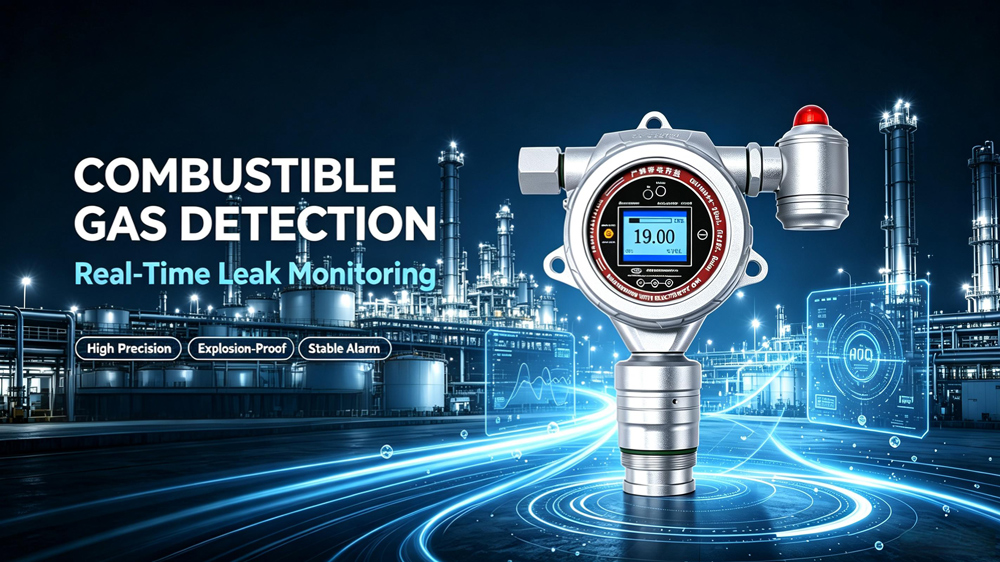
Publication Date:2025/05/09In industrial production, commercial places and home environment, combustible gas detector is an important safety equipment to prevent fire and explosion accidents. The correct installation of combustible gas detector can not only effectively monitor the concentration of combustible gas, but also give an alarm in time when danger occurs, so as to ensure the safety of personnel's life and property. However, the installation process involves several key links, which need to be strictly followed. Do you know what to pay attention to when installing a combustible gas detector? The following is an introduction to yiyuntian electronic editor:

1. understand the gas characteristics, precision Selection
Before installation, it is necessary to fully understand the characteristics of the target detection gas, including its specific gravity, diffusion, toxicity and explosion limit. Different gases have different requirements on the sensitivity, response speed and installation position of the detector. For example, gases heavier than air (such as LPG) should be installed at a lower position, while gases lighter than air (such as natural gas) should be installed at a higher position.In addition, the appropriate type of detector should be selected according to the detection requirements, such as catalytic combustion, infrared absorption or semiconductor, to ensure the accuracy and reliability of the detector.
2. reasonable installation location planning
Ensure representativeness: the detector should be installed in areas where gas may leak or accumulate, such as valves, pipeline interfaces, near storage tanks, etc., to ensure that the test results can truly reflect the ambient gas concentration.
Easy to maintain: Choose a location that is convenient for daily inspection, calibration and maintenance, and reserve enough space to avoid difficult operation after installation.
3. strictly follow installation specifications
Secure: mount the tester securely on the wall or bracket using suitable fixings to prevent displacement due to vibration or external forces.
Correct wiring: Connect the power and signal lines according to the instructions to ensure correct polarity and firm connection to avoid short circuit or poor contact.
Grounding treatment: Reliable grounding of the detector in the metal case to prevent the accumulation of static electricity.
4. commissioning and calibration
Zero calibration: zero calibration in clean air to eliminate background gas interference and ensure accurate detection reference.
Range calibration: Use standard gas to calibrate the range of the detector and adjust its sensitivity to ensure the accuracy of the measurement results.
5. Periodic Maintenance and Inspection
Cleaning and maintenance: regularly clean the detector housing and sensor to prevent dust and oil from affecting performance.
Function verification: Regularly use standard gas to verify the response speed and accuracy of the detector to ensure that it is in good working condition.
Record Management: Establish a maintenance record file to record the time and content of each calibration, repair and replacement part for easy tracking and management.
6. compliance with regulations and standards
7. Personnel Training and Emergency Preparedness
Operation Training: provide professional training to personnel responsible for installation, maintenance and use to ensure that they are familiar with the performance, operation methods and maintenance requirements of the detector.
emergency drills: formulate emergency plans and organize regular drills to improve personnel's ability to respond to emergencies such as gas leakage.
To sum up, we can see that the installation of combustible gas detector is an important measure to ensure safety, and every link from selection, installation, debugging to maintenance should be strictly checked. Through scientific planning, standardized operation and regular maintenance, it can ensure the long-term stable operation of the detector and provide reliable guarantee for the prevention of fire and explosion accidents.
Related information
-
How to Calibrate a Portable four-in-one Gas Detectors?
Portable four-in-one gas detectors are core protective equipment in the industrial safety field. However, sensors can experience z...
2026-09-18 -
What are the application scenarios for portable four-in-one gas detectors?
Portable four-in-one gas detectors typically monitor oxygen (O₂), flammable gas (LEL), carbon monoxide (CO), and hydrogen sulfide...
2026-09-16 -
Portable four-in-one Gas Detectors User Manual
The portable four-in-one gas detectors is a core piece of personal protective equipment (PPE) for ensuring the safety of personnel...
2026-09-14 -

Calibration Specifications for Ammonia gas Detectors
Calibration of ammonia gas detectors is a core step in ensuring their measurement accuracy and alarm reliability. However, ammonia...
2026-09-11 -
What is the appropriate installation height for an ammonia gas detectors?
Ammonia (NH₃) has a relative density of only 0.59, much lighter than air. This means that in the event of a leak, the gas will qu...
2026-09-09
 info@eranntexgas.com sale1@eranntexgas.com


 15914124845