
Installation Location Guidelines for Carbon Dioxide Detectors
In industrial settings, ensuring workplace safety and compliance is paramount. As critical equipment for monitoring atmospheric carbon dioxide concentrations, the strategic placement of carbon dioxide detectors plays a decisive role in accurate detection and timely warning. For those engaged in industrial-related work, understanding how to properly install CO₂ detectors is essential. Below, Yiyuntian Eranntex provides a detailed introduction.
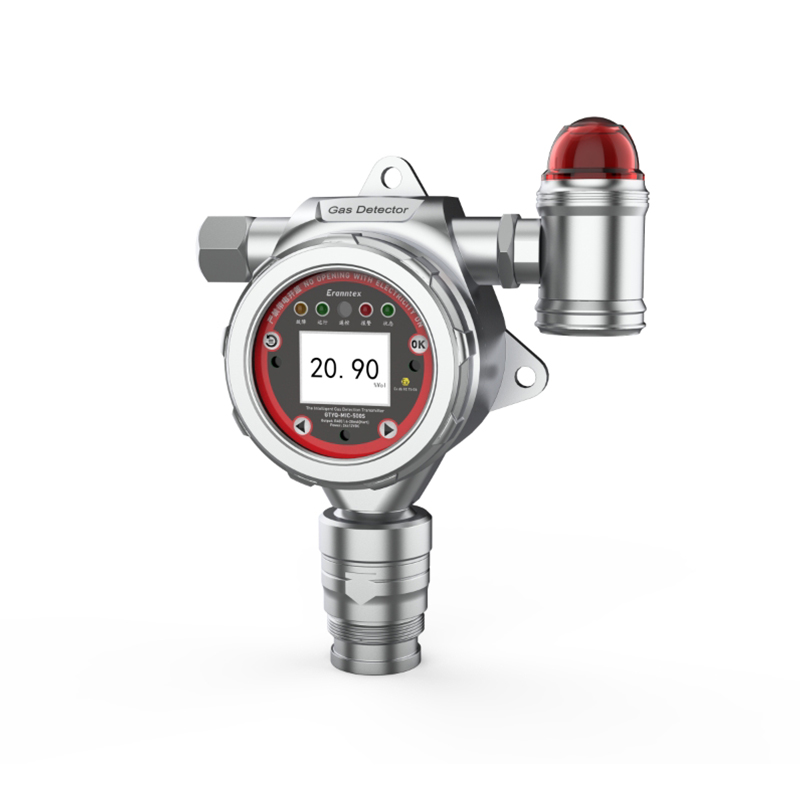
Determine Location Based on Gas Sources
In industrial production, CO₂ originates from numerous sources. Identifying these sources is the primary step in determining detector placement. In certain chemical production workshops, specific chemical reactions release CO₂. For instance, in processes where carbonates react with acids to produce CO₂, areas near reactors become high-concentration zones. Detectors should be installed close to reactors in poorly ventilated locations, as CO₂ is heavier than air and tends to accumulate in low-lying areas. This placement ensures timely detection of concentration changes, triggering immediate alerts if safety thresholds are exceeded.
In the brewing industry, fermentation processes generate significant amounts of carbon dioxide. Large fermentation tank areas are critical monitoring targets. Since fermentation tanks are typically large and enclosed, carbon dioxide accumulates both inside the tanks and in surrounding spaces. Detectors should be installed near both the top and bottom of fermentation tanks. The top position monitors potential gas leaks within the tank, while the bottom detects carbon dioxide that accumulates due to gravity. Additionally, detectors should be placed near ventilation openings in fermentation workshops to monitor ventilation effectiveness and the dispersion of carbon dioxide.
Consideration for High-Traffic and Personnel-Dense Areas
In industrial settings, areas with high personnel density and frequent activity require prioritized monitoring. Within large warehouses, workers move and organize goods between shelving units. If the warehouse stores items prone to CO₂ production—such as fermenting agricultural products—installing CO₂ detectors above the aisles between shelves is prudent. This enables real-time monitoring of CO₂ concentrations in the air surrounding workers, ensuring their safety during operations.
Detectors should also be placed in connecting passageways between factory office areas and production zones. While office personnel are relatively stationary, they frequently traverse between production and administrative areas. Should a CO₂ leak occur in production areas, detectors in these passageways can promptly detect gas dispersion, providing advance warning to office personnel. This allows sufficient time for protective measures or evacuation.
Integration with Ventilation System Layout
Ventilation systems play a critical role in air circulation and gas dilution within industrial facilities. CO₂ detector placement should be coordinated with the ventilation system layout. In workshops with mechanical ventilation systems, detectors should be installed near both the intake and exhaust vents. Detectors at the intake vent monitor CO₂ concentrations in incoming air, ensuring it meets safety standards. Detectors at the exhaust vent measure CO₂ levels after air circulation through the workshop, evaluating the ventilation system's effectiveness.
For naturally ventilated spaces, such as open industrial buildings, detectors should be installed in areas with relatively slow airflow, like corners or behind equipment. These locations are prone to dead zones where CO₂ can accumulate. Placing detectors here enables timely detection of potential CO₂ concentration exceedances, preventing safety hazards caused by stagnant air.
The placement of industrial CO₂ detectors requires comprehensive consideration of multiple factors, including gas emission sources, personnel activity zones, and ventilation system layouts. Only through proper installation can detectors accurately and promptly monitor airborne CO₂ levels, providing reliable safety assurance for industrial operations and safeguarding workers' health and well-being.
Related information
-
What are the maintenance strategies for carbon monoxide detectors?
Carbon monoxide detectors are critical devices for ensuring safety in homes, industrial settings, and public buildings. As a color...
2026-02-27 -

Detection Range of Oxygen Detectors
Oxygen detectors are indispensable tools in industrial safety, confined space operations, medical support, and environmental mon...
2026-02-25 -
What is the maintenance cycle for nitrogen oxide detectors?
In industrial emissions monitoring, chemical production process control, and environmental health and safety management, nitrogen ...
2026-02-06 -
How Does a Carbon Dioxide Detectors Work?
A carbon dioxide detectors is an electronic device used to measure CO₂ concentrations in the environment. It finds widespread app...
2026-02-04 -
How often should a four-in-one detectors be tested?
In industrial safety and environmental monitoring, the four-in-one detectors is a critical portable device widely used in high-ris...
2026-02-03
 info@eranntexgas.com


 13480931872