Shenzhen Eranntex Electronics Co., Ltd

首页> Product>Control Alarm

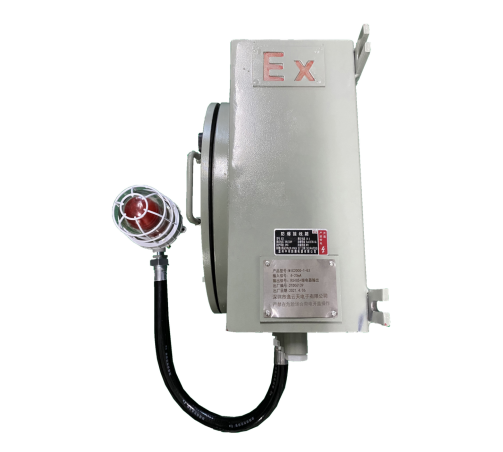
Explosion-proof gas alarm MIC2000-Ex

Detection Method: The gas alarm controller has a remote transmission function, and the controller displays the real-time concentration of the on-site probe.

Detection Gas: Two-in-one gas detector Four-in-one gas detector Four-in-one detector Four-in-one gas detectorMulti-gas detector Multi-in-one gas detector Multi-functional gas detector Laser dust PM2.5 Carbon dioxide (infrared) CO2 Carbon dioxide (laser TDLAS) CO2 Flammable detector Ex Flammable (infrared) Ex METHane CH4 Methane (Infrared) CH4 Methane (Laser TDLAS) CH4Ethane (Infrared) C2H6 Ethane Detector (Laser) C2H6 Propane (Infrared) C3H8 Non-Methane Hydrocarbons CxHy Carbon Monoxide CO Carbon Monoxide (Infrared) CO Hydrogen Sulfide H2S Hydrogen sulfide (TDLAS tunable diode laser) H2S Oxygen O2 Nitrogen N2 Ammonia NH3Chlorine CL2 Hydrogen H2 Helium He Argon Ar Formaldehyde CH2O Ozone O3 Nitrogen Oxide NO Nitrogen Dioxide NO2 Nitrogen Oxides NOX Sulfur Dioxide SO2 Ethylene Oxide ETO Ethylene Oxide (Infrared) C2H4O Phosphine PH3 Hydrogen Chloride HCL Hydrogen Cyanide HCNPhosgene COCL2 Chlorine dioxide CLO2 Silane SiH4 Methyl bromide (infrared) CH3Br Methyl bromide (PID) CH3Br Sulphuryl fluoride (infrared) SO2F2 Fluorine gas F2 Hydrogen fluoride HF Hydrogen bromide HBr Boron hydride B2H6 Arsenic hydride AsH3 Germanium hydrage GeH4Hydrazine N2H4 Hydrazine N2H4 Dicyandiamide C2H8N2 Nitrous oxide N2O4 Nitrogen trichloride NCl3 Tert-butyl mercaptan TBM Phosphorus pentafluoride PF5 Boron trichloride BCl3 Phosphorus trichloride PCL3 Phosphorus oxychloride POCL3 Phosphorus trifluoride PF3Boron trifluoride BF3 Azide HN3 Methyl sulfide C2H6S Dimethyl sulfate C2H6O4S Acetonitrile CH3CN Acetic acid C2H4O2 Acetic acid C2H4O2 Methyl acrylate MA Ethyl acrylate EA Dimethyl disulfide C2H6S2 Dimethyl ether C2H6O Dimethyl disulfide C2H6S2 Dichlorosilane SiH2Cl2Chlorosilane SiH3Cl Tetrahydrothiophene THT Bromine gas Br2 Acetylene (infrared) C2H2 Acetylene C2H2 Carbon disulfide CS2 Carbon disulfide (infrared) CS2 Acrylonitrile C3H3N Methyl ethyl ketone MEK Methyl ketone MDK Methyl ketone (infrared) C3H6O Sulfur hexafluoride (infrared) SF6Ethylene C2H4 Ethylene (infrared) C2H4 Isopropyl alcohol (infrared) C3H8O Ethanol C2H6O Ethanol (infrared) C2H6O Methanol CH4 Methanol (infrared) CH4O Methylamine CH5N Methyl mercaptan CH3SH Vinyl chloride C2H3Cl Vinyl chloride (infrared) C2H3Cl Trichloroethylene C2HCl3Tetrachloroethylene C2Cl4 Chloromethane (infrared) CH3Cl Dichloroethane (infrared) C2H4Cl2 Dichloromethane (infrared) CH2Cl2 Trichloromethane (IR) CHCl3 Nitrous oxide (IR) N2O Nitrogen trifluoride NF3 Nitrogen trifluoride (IR) NF3 Hydrogen peroxide H2O2 Styrene (PID) C8H8Tetrahydrofuran (PID) THF TVOC (PID) TVOC TVOC (Infrared) TVOC VOC (PID) VOC (Infrared) Benzene (PID) C6H6 Toluene (PID) C7H8 Toluene (Infrared) C7H8 Xylene (PID) C8H10 Xylene (Infrared) C8H10 PID gas Odor OU Diesel (infrared) diesel Jet fuel (infrared) JETButane (infrared) C4H10 Isobutane (infrared) C4H10 Pentane (infrared) C5H12 Cyclopentane (infrared) C5H10 Hexane (infrared) C6H14 Propylene (infrared) C3H6 Methyl ethyl ketone (infrared) C4H8O Carbonyl sulfide (infrared) COS Refrigerant (infrared) R134a HePtafluoropropane (infrared) C3HF7 Freon CFC Refrigerant CFC

(Over 500 detectable gas types available, please consult our customer service)

Measurement Range: It mainly detects VOCs exhaust gas emissions, flue gas emissions, desulfurization and denitrification, boiler exhaust gas, sewage pipeline gas detection and analysis, natural gas pipelines, etc.

(Customizable measurement ranges available, please consult our customer service)

Customization: Supports on-demand customization

Hotline: 13480931872

Get Quote Download Manual Back to List

Product ParametersCommon Gas ListProduct IntroductionProduct Details

Item Parameter
Detection Gas It can be connected to various gas detectors, temperature and humidity transmitters, pressure transmitters, wind speed transmitters, dust detectors, etc.
Product Features 1. Explosion-proof
2. Chinese and English can be selected
3. Connect 4-20mA and RS485 signals at the same time, and can output 4-20mA and RS485
4. Support wireless transmission
Detection Range Customizable, digital display 0~99999
Resolution 1. 0.1, 0.01, 0.001 can be selected
Typical Accuracy ±0.1%FS
Detection Method The gas alarm controller has a remote transmission function, and the controller displays the real-time concentration of the on-site probe.
Display 3.5-inch high-definition color screen
Power Supply AC 180~240V 50H/60H
Maximum Power Consumption Less than 15W
Operating Environment -20℃~+70℃
0~95%RH, used in non-condensation occasions
Data Storage Large-capacity data record storage
Printing Function C+U44+N2:O44+N2:O45+U4+N2:O44
Signal Output RS485 (standard MODBUS protocol),Optional: 4-20mA (4-way, 8-way optional), wireless (4G/3G/2G/433M/LoRa/Zigbee), Ethernet interface output, etc.
Alarm Method Sound and light alarm, three-level alarm, each loop can set the high and low limit alarm values separately, and each loop can bind the three-way relay linkage output.
Fall Alarm Can be customized
Wireless Transmission Hold out
Dimensions: L*W*H 600*400*270mm (L×H×W)
Weight About 6.8KG
Protection Level IP 65
Standard Accessories Instruments, instructions, warranty cards, qualification certificates
Optional Accessories It can be selected according to customer needs.
Partial list of detectable gases:
Detect gases Range Maximum allowable error value Minimum reading Response time T90
Combustible Gas (EX) 0-100%LEL <±2%(F.S) 0.1%LEL ≤10 seconds
Combustible Gas (EX) 0-100%Vol <±2%(F.S) 0.1%Vol ≤10 seconds
Methane (CH4) 0-100%LEL <±2%(F.S) 0.1%LEL ≤10 seconds
Methane (CH4) 0-100%Vol <±2%(F.S) 0.1%Vol ≤10 seconds
Oxygen (O2) 0-30%Vol <±2%(F.S) 0.01%Vol ≤10 seconds
Oxygen (O2) 0-100%Vol <±2%(F.S) 0.01%Vol ≤10 seconds
Oxygen (O2) 0-5000ppm <±2%(F.S) 1ppm ≤30 seconds
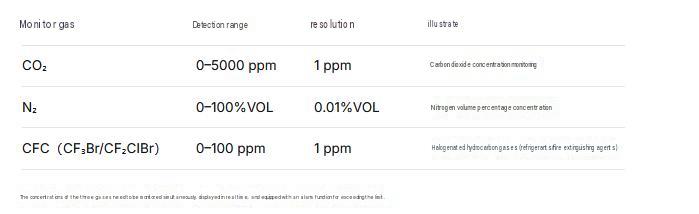
Nitrogen (N2) 0-100%Vol <±2%(F.S) 0.01%Vol ≤10 seconds
Carbon monoxide (CO) 0-100ppm <±2%(F.S) 0.1ppm ≤25 seconds
Carbon monoxide (CO) 0-1000ppm <±2%(F.S) 0.1ppm ≤25 seconds
Carbon monoxide (CO) 0-2000ppm <±2%(F.S) 0.1ppm ≤25 seconds
Carbon monoxide (CO) 0-20000ppm <±2%(F.S) 1ppm ≤25 seconds
Carbon monoxide (CO) 0-100000ppm <±2%(F.S) 1ppm ≤25 seconds
Carbon dioxide (CO2) 0-500ppm <±2%(F.S) 1ppm ≤20 seconds
Carbon dioxide (CO2) 0-2000ppm <±2%(F.S) 1ppm ≤20 seconds
Carbon dioxide (CO2) 0-5000ppm <±2%(F.S) 1ppm ≤20 seconds
Carbon dioxide (CO2) 0-50000ppm <±2%(F.S) 1ppm ≤30 seconds
Carbon dioxide (CO2) 0-20%Vol <±2%(F.S) 0.01%Vol ≤30 seconds
Carbon dioxide (CO2) 0-100%Vol <±2%(F.S) 0.01%Vol ≤30 seconds
Formaldehyde (CH2O) 0-10ppm <±2%(F.S) 0.001ppm ≤30 seconds
Formaldehyde (CH2O) 0-10ppm <±2%(F.S) 0.01ppm ≤30 seconds
Formaldehyde (CH2O) 0-100ppm <±2%(F.S) 0.01ppm ≤30 seconds
Formaldehyde (CH2O) 0-5000ppm <±2%(F.S) 1ppm ≤50 seconds
Ozone (O3) 0-1ppm <±2%(F.S) 0.001ppm ≤20 seconds
Ozone (O3) 0-5ppm <±2%(F.S) 0.001ppm ≤20 seconds
Ozone (O3) 0-50ppm <±2%(F.S) 0.01ppm ≤20 seconds
Ozone (O3) 0-100ppm <±2%(F.S) 0.01ppm ≤20 seconds
Ozone (O3) 0-2000ppm <±2%(F.S) 0.1ppm ≤30 seconds
Ozone (O3) 0-30000ppm <±2%(F.S) 1ppm ≤30 seconds
Hydrogen sulfide (H2S) 0-10ppm <±2%(F.S) 0.001ppm ≤30 seconds
Hydrogen sulfide (H2S) 0-50ppm <±2%(F.S) 0.01ppm ≤30 seconds
Hydrogen sulfide (H2S) 0-100ppm <±2%(F.S) 0.01ppm ≤30 seconds
Hydrogen sulfide (H2S) 0-2000ppm <±2%(F.S) 0.1ppm ≤30 seconds
Hydrogen sulfide (H2S) 0-10000ppm <±2%(F.S) 1ppm ≤45 seconds
Sulfur dioxide (SO2) 0-10ppm <±2%(F.S) 0.001ppm ≤30 seconds
Sulfur dioxide (SO2) 0-20ppm <±2%(F.S) 0.01ppm ≤30 seconds
Sulfur dioxide (SO2) 0-100ppm <±2%(F.S) 0.01ppm ≤30 seconds
Sulfur dioxide (SO2) 0-500ppm <±2%(F.S) 0.1ppm ≤30 seconds
Sulfur dioxide (SO2) 0-2000ppm <±2%(F.S) 0.1ppm ≤30 seconds
Sulfur dioxide (SO2) 0-10000ppm <±2%(F.S) 1ppm ≤30 seconds
Nitric oxide (NO) 0-10ppm <±2%(F.S) 0.001ppm ≤30 seconds
Nitric oxide (NO) 0-100ppm <±2%(F.S) 0.01ppm ≤30 seconds
Nitric oxide (NO) 0-2000ppm <±2%(F.S) 0.1ppm ≤30 seconds
Nitric oxide (NO) 0-5000ppm <±2%(F.S) 1ppm ≤30 seconds
Nitrogen dioxide (NO2) 0-10ppm <±2%(F.S) 0.001ppm ≤25 seconds
Nitrogen dioxide (NO2) 0-100ppm <±2%(F.S) 0.01ppm ≤25 seconds
Nitrogen dioxide (NO2) 0-1000ppm <±2%(F.S) 0.1ppm ≤30 seconds
Nitrogen dioxide (NO2) 0-5000ppm <±2%(F.S) 1ppm ≤30 seconds
Nitrogen oxides (NOX) 0-10ppm <±2%(F.S) 0.001ppm ≤30 seconds
Nitrogen oxides (NOX) 0-100ppm <±2%(F.S) 0.01ppm ≤30 seconds
Nitrogen oxides (NOX) 0-2000ppm <±2%(F.S) 0.1ppm ≤30 seconds
Nitrogen oxides (NOX) 0-5000ppm <±2%(F.S) 1ppm ≤30 seconds
Chlorine (CL2) 0-10ppm <±2%(F.S) 0.001ppm ≤30 seconds
Chlorine (CL2) 0-20ppm <±2%(F.S) 0.01ppm ≤30 seconds
Chlorine (CL2) 0-200ppm <±2%(F.S) 0.1ppm ≤30 seconds
Chlorine (CL2) 0-2000ppm <±2%(F.S) 0.1ppm ≤30 seconds
Ammonia (NH3) 0-50ppm <±2%(F.S) 0.01ppm ≤30 seconds
Ammonia (NH3) 0-100ppm <±2%(F.S) 0.01ppm ≤30 seconds
Ammonia (NH3) 0-1000ppm <±2%(F.S) 0.1ppm ≤30 seconds
Ammonia (NH3) 0-5000ppm <±2%(F.S) 1ppm ≤30 seconds
Ammonia (NH3) 0-100%LEL <±2%(F.S) 0.1%LEL ≤10 seconds
Hydrogen (H2) 0-100%LEL <±2%(F.S) 0.1%LEL ≤10 seconds
Hydrogen (H2) 0-1000ppm <±2%(F.S) 0.1ppm ≤30 seconds
Hydrogen (H2) 0-20000ppm <±2%(F.S) 1ppm ≤30 seconds
Hydrogen (H2) 0-40000ppm <±2%(F.S) 1ppm ≤30 seconds
Hydrogen (H2) 0-100%Vol <±2%(F.S) 0.01%Vol ≤20 seconds
Helium (He) 0-100%Vol <±2%(F.S) 0.01%Vol ≤20 seconds
Argon (Ar) 0-100%Vol <±2%(F.S) 0.01%Vol ≤20 seconds
Xenon (Xe) 0-100%Vol <±2%(F.S) 0.01%Vol ≤20 seconds
Hydrogen cyanide (HCN) 0-30ppm <±2%(F.S) 0.01ppm ≤30 seconds
Hydrogen cyanide (HCN) 0-100ppm <±2%(F.S) 0.01ppm ≤30 seconds
Hydrogen chloride (HCL) 0-20ppm <±2%(F.S) 0.01ppm ≤30 seconds
Hydrogen chloride (HCL) 0-200ppm <±2%(F.S) 0.1ppm ≤30 seconds
Phosphine (PH3) 0-5 ppm <±2%(F.S) 0.001ppm ≤30 seconds
Phosphine (PH3) 0-25 ppm <±2%(F.S) 0.01ppm ≤30 seconds
Phosphine (PH3) 0-2000 ppm <±2%(F.S) 1ppm ≤30 seconds
Chlorine dioxide (CLO2) 0-1ppm <±2%(F.S) 0.001ppm ≤30 seconds
Chlorine dioxide (CLO2) 0-10ppm <±2%(F.S) 0.01ppm ≤30 seconds
Chlorine dioxide (CLO2) 0-200ppm <±2%(F.S) 0.01ppm ≤30 seconds
Ethylene oxide (ETO) 0-100ppm <±2%(F.S) 0.01ppm ≤30 seconds
Ethylene oxide (ETO) 0-1000ppm <±2%(F.S) 0.1ppm ≤30 seconds
Ethylene oxide (ETO) 0-100%LEL <±2%(F.S) 1%LEL ≤30 seconds
Phosgene (COCL2) 0-1ppm <±2%(F.S) 0.001ppm ≤20 seconds
Phosgene (COCL2) 0-50ppm <±2%(F.S) 0.01ppm ≤20 seconds
Silane (SiH4) 0-1ppm <±2%(F.S) 0.001ppm ≤30 seconds
Silane (SiH4) 0-50ppm <±2%(F.S) 0.01ppm ≤30 seconds
Fluorine (F2) 0-1ppm <±2%(F.S) 0.001ppm ≤30 seconds
Fluorine (F2) 0-10ppm <±2%(F.S) 0.01ppm ≤30 seconds
Fluorine (F2) 0-50ppm <±2%(F.S) 0.01ppm ≤30 seconds
Hydrogen fluoride (HF) 0-10ppm <±2%(F.S) 0.01ppm ≤30 seconds
Hydrogen fluoride (HF) 0-50ppm <±2%(F.S) 0.01ppm ≤30 seconds
Hydrogen bromide (HBr) 0-50ppm <±2%(F.S) 0.01ppm ≤30 seconds
Diborane (B2H6) 0-10ppm <±2%(F.S) 0.001ppm ≤30 seconds
Arsine (AsH3) 0-1ppm <±2%(F.S) 0.001ppm ≤30 seconds
Arsine (AsH3) 0-10ppm <±2%(F.S) 0.01ppm ≤30 seconds
Arsine (AsH3) 0-50ppm <±2%(F.S) 0.01ppm ≤30 seconds
Germane (GeH4) 0-2ppm <±2%(F.S) 0.001ppm ≤30 seconds
Germane (GeH4) 0-20ppm <±2%(F.S) 0.01ppm ≤30 seconds
Hydrazine (N2H4) 0-1ppm <±2%(F.S) 0.001ppm ≤30 seconds
Hydrazine (N2H4) 0-300ppm <±2%(F.S) 0.1ppm ≤30 seconds
Tetrahydrothiophene (THT) 0-100mg/m3 <±2%(F.S) 0.01 mg/m3 ≤60 seconds
Bromine (Br2) 0-10ppm <±2%(F.S) 0.001ppm ≤30 seconds
Bromine (Br2) 0-100ppm <±2%(F.S) 0.01ppm ≤30 seconds
Bromine (Br2) 0-2000ppm <±2%(F.S) 1ppm ≤30 seconds
Acetylene (C2H2) 0-100%LEL <±2%(F.S) 0.1%LEL ≤30 seconds
Acetylene (C2H2) 0-100ppm <±2%(F.S) 0.01ppm ≤30 seconds
Acetylene (C2H2) 0-1000ppm <±2%(F.S) 0.1ppm ≤30 seconds
Ethylene (C2H4) 0-100%LEL <±2%(F.S) 0.1%LEL ≤30 seconds
Ethylene (C2H4) 0-100ppm <±2%(F.S) 0.01ppm ≤30 seconds
Ethylene (C2H4) 0-2000ppm <±2%(F.S) 0.1ppm ≤30 seconds
Acetaldehyde 0-10ppm <±2%(F.S) 0.01ppm ≤30 seconds
Ethanol (C2H6O) 0-100ppm <±2%(F.S) 0.01ppm ≤30 seconds
Ethanol (C2H6O) 0-2000ppm <±2%(F.S) 1ppm ≤30 seconds
Methanol (CH4O) 0-100ppm <±2%(F.S) 0.01ppm ≤30 seconds
Methanol (CH4O) 0-2000ppm <±2%(F.S) 1ppm ≤30 seconds
Carbon disulfide (CS2) 0-50ppm <±2%(F.S) 0.01ppm ≤30 seconds
Carbon disulfide (CS2) 0-5000ppm <±2%(F.S) 0.01ppm ≤30 seconds
Acrylonitrile (C3H3N) 0-50ppm <±2%(F.S) 0.01ppm ≤30 seconds
Acrylonitrile (C3H3N) 0-2000ppm <±2%(F.S) 1ppm ≤30 seconds
Methylamine (CH5N) 0-50ppm <±2%(F.S) 0.01ppm ≤30 seconds
Iodine (I2) 0-50ppm <±2%(F.S) 0.01ppm ≤30 seconds
Styrene (C8H8) 0-200ppm <±2%(F.S) 0.1ppm ≤30 seconds
Styrene (C8H8) 0-5000ppm <±2%(F.S) 1ppm ≤30 seconds
Vinyl chloride (C2H3Cl) 0-100ppm <±2%(F.S) 0.01ppm ≤30 seconds
Trichloroethylene (C2HCl3) 0-100ppm <±2%(F.S) 0.01ppm ≤30 seconds
Tetrachloroethylene (C2Cl4) 0-100ppm <±2%(F.S) 0.01ppm ≤30 seconds
Nitrous oxide (N2O) 0-100ppm <±2%(F.S) 0.01ppm ≤30 seconds
Nitrogen trifluoride (NF3) 0-100ppm <±2%(F.S) 0.01ppm ≤30 seconds
Hydrogen peroxide (H2O2) 0-100ppm <±2%(F.S) 0.01ppm ≤30 seconds
Methyl bromide (CH3Br) 0-100ppm <±2%(F.S) 0.01ppm ≤30 seconds
Methyl bromide (CH3Br) 0-30000ppm <±2%(F.S) 1ppm ≤30 seconds
Methyl bromide (CH3Br) 0-200g/m3 <±2%(F.S) 0.1g/m3 ≤30 seconds
Sulfuryl fluoride (SO2F2) 0-100ppm <±2%(F.S) 0.01ppm ≤30 seconds
Sulfuryl fluoride (SO2F2) 0-5000ppm <±2%(F.S) 1ppm ≤30 seconds
Sulfuryl fluoride (SO2F2) 0-10000ppm <±2%(F.S) 1ppm ≤30 seconds
Benzene (C6H6) 0-10ppm <±2%(F.S) 0.01ppm ≤30 seconds
Benzene (C6H6) 0-100ppm <±2%(F.S) 0.01ppm ≤30 seconds
Benzene (C6H6) 0-2000ppm <±2%(F.S) 1ppm ≤30 seconds


Explosion-proof gas alarm MIC2000-Ex overview:

MIC2000-Ex explosion-proof gas alarm is mainly used in the gas analysis industry, mainly detection Occasions: VOCs exhaust gas emission, flue gas emission, desulfurization and denitrification, boiler exhaust gas, sewage pipeline gas detection and analysis, natural gas pipeline, etc.

The main principle is: the sampling unit collects the flue gas or the measured gas at the site, the pretreatment unit cools the gas, dehumidifies, filters the dust, and constantizes the temperature and humidity of the measured gas within a certain range. The gas detection unit detects the transported gas and displays the gas on the display screen in real time. Measure the gas concentration and transmit the data signal to terminals such as PLC or computer.

The whole process is automated and does not require human intervention.


Explosion-proof gas alarm MIC2000-Ex product features:

1. The main power supply adopts AC220V 50Hz (the mainboard working voltage is24VDC), 24V battery is used for standby power, which is easy to use

2. The controller is simple and convenient to install 3. Built-in microprocessor, intelligent alarm and fault judgment

4. With self-diagnosis function, it can detect the fault of the on-site detector

< P> 5. The controller adopts the technologically advanced digital bus protocol and has strong control performance

6. Supports RS485 input, RS485 output and 4-20mA input, 4-20mA output

7. Multiple controllers can network work, master and and slow Machine operation mode

8. Display the concentration value, unit, alarm status, working status and other information of the multi-channel probe at the same time

9.Data storage function, which can record concentration value, fault alarm, concentration alarm and other information


Explosion-proof gas alarm MIC2000-Ex technical characteristics:

(1) Power supply: AC220V (built-in AC220V to 24VDC switching power supply) or 24V battery

(2) Power consumption: less than 15W

(3) Measurement range: synchronized with the connected detector

(4) Installation method : Wall-mounted

(5) Alarm setting: It can be set freely according to the online detector, and the probe can control three sets of relays

(6) Input signal;RS485/4-20mA

(7) Alarm mode: sound and light alarm

(8) Output signal: RS485, 4-20mA output, of which 4-20mA output is an optional function. This controller has a total of four sets of conventional contacts (24VDC/3A, AC220V/1A) and a set of common contacts (24VDC/5A, AC220V/1A); it can be expanded to 9 groups of normally open/normally closed passive contact output

(9) Temperature: -20~ 70℃, humidity: 0~95%RH

(10) Explosion-proof level: IICT6

(11) Executive standard: a, GB 3836.1-2010 General Requirements for Electrical Equipment in Explosive Gas Environments b, GB 38 36.2—2010 "Electrical Equipment for Explosive Gas Environment Explosion-proof Type "d""

(12) Dimensions: 600*400*270MM(L×H×W)


Working principle, structure, size and surface Board introduction:

image.pngimage.Png


4.1 Working principle of the controller

The CPU cycle of the alarm controller detects the working status of the detector. When the detector detects that the gas concentration in the environment exceeds the alarm set value, the controller emits sound and light alarm. Alarm and output linkage control signal according to the settings.

4.2 Structure of the controller

This product adopts a wall-mounted structure, and firstThe wall-mounted structural part is fixed in the appropriate position on the wall, the power line, signal line and output control line are connected, and then the controller is hung on the structural part.

4.3 Case size of the controller

Case size: 600*400*270MM (length*width*height).

4.4 Controller Panel Introduction

Figure (1) Controller Panel

image.png


(1) Working status indicator: divided into main power work, standby power work, working state.

Main power working light: red, always on when the main power supply is working;

standby working light: red, always on when the standby power supply is working;

Working status light: green/yellow, when the controller is working normally, the green light shines; yellow light when the controller fails Shiny;

(2) Concentration alarm light: red, when the gas concentration of the monitoring environment exceeds the alarm set value, the red indicator light shines and is accompanied by a sound alarm;

(3) Linked status indicator light: a total of 4 indicator lights from No. 1 to No. 4.In the "Relay Output Settings" function, it can be specified that a detector emits one or more linkage signals when the gas concentration reaches low concentration or high concentration alarm.

When a linkage signal is output, the corresponding indicator light is always on and the linkage signal is output. When the gas concentration is lower than the alarm value, the indicator light is turned off and the linkage signal stops outputting.

(4) Key description: There are a total of 8 buttons under the display, as follows:

Reset: If there is a historical alarm in the controller, the "concentration alarm" status light will be on all the time. At this time, press "Reset" to eliminate the alarm status

Menu/Back: Press this key to enter the menu. When entering the menu, press this button to return to the upper menu, and press continuously to exit the main menu

Confirm: When entering the controller menu, press this button to confirm the operation

Mute: When the controller is in the alarm state, the buzzer will keep ringing. Press this button to mute the sound, and then press this button to restore the sound
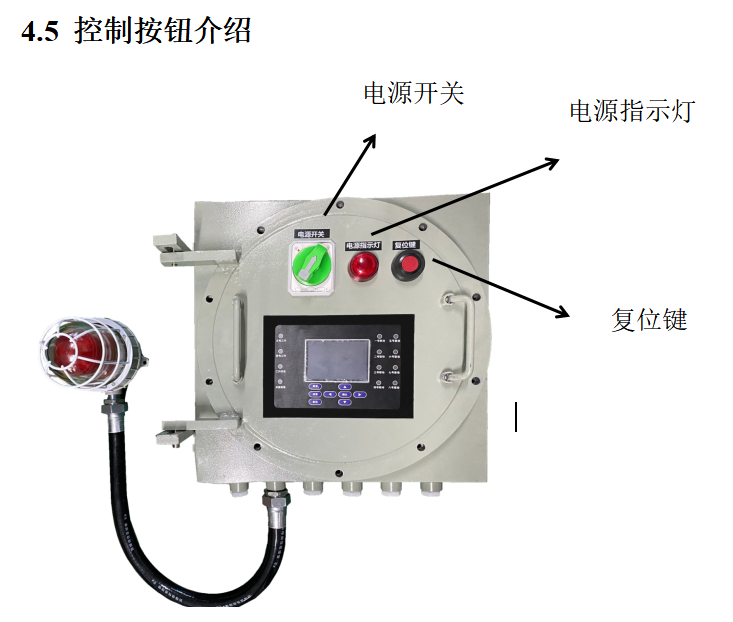
image.png


1. Power switch: Twist the button to control the switch of the instrument. The left (part) is to turn off, and the right (to) is to turn on.

two Power indicator light: The power indicator light is used to indicate the power status of the controller, and the light indicates the normal operation of the instrument.

3. Reset key: Clear the historical alarm status and alarm output, and re-obtain new alarm information


Product HighlightsNew process formula enhances performance to meet stricter application requirements

500+ Detectable Gases

500+ Detectable Gases

Customize according to requirements 1-18 typesDetecting gas combinations

← Swipe left/right to view full content →

Complete Certifications, Reliable Quality

Trusted Manufacturer

Trusted Manufacturer

Wide Applications Across 20+ Industries

Trusted by 5000+ Industry Leaders

Service Guarantee

19+ Years of Industry-leading Brand

Eranntian, founded in 2006, is a national high-tech enterprise integrating design, R&D, production and sales. Our R&D team includes over 30 senior engineers with strong development capabilities, investing over 17% of annual revenue in technological innovation. We maintain long-term collaborations with 14 universities including Tsinghua University, Sichuan University, Xi'an Jiaotong University, Qingdao University of Technology, and Central South University.

  • 2006

    Eranntian established

  • 30+

    Senior R&D engineers

  • 14

    Partner universities

  • 100+

    Patents & achievements

Strong Production Capacity Ensures Fast Delivery

Application CasesMore+

Professional engineer

24-hour online serviceSubmit your needs and quickly recommend the right products for you

13480931872