
Deployment of ammonia safety monitoring system
I. Solution Background
Requirement: Deployment of a 24/7 Uninterrupted Ammonia Safety Monitoring System for Large Vessels
Client Background: A shipping company needs to equip its ocean-going cargo ships with an online ammonia concentration monitoring system that requires no wiring, has long endurance, and can wirelessly self-organize a network to meet international maritime safety regulations and the actual operational needs of the vessels.
Core Challenges:
(1) There are no charging facilities on board except outside the bridge; the equipment needs long endurance, with a minimum operating time of ≥10 days.
(2) The ship has a complex structure; the signal needs to penetrate multiple decks to achieve full coverage without blind spots.
(3) 24/7 uninterrupted monitoring and data transmission are required, placing extremely high demands on equipment endurance and network stability.
(4) Installation and maintenance must be simple and must not affect the normal structure and operation of the ship.
II. Solution: Customized Low-Power Magnetic Self-Organizing Network System
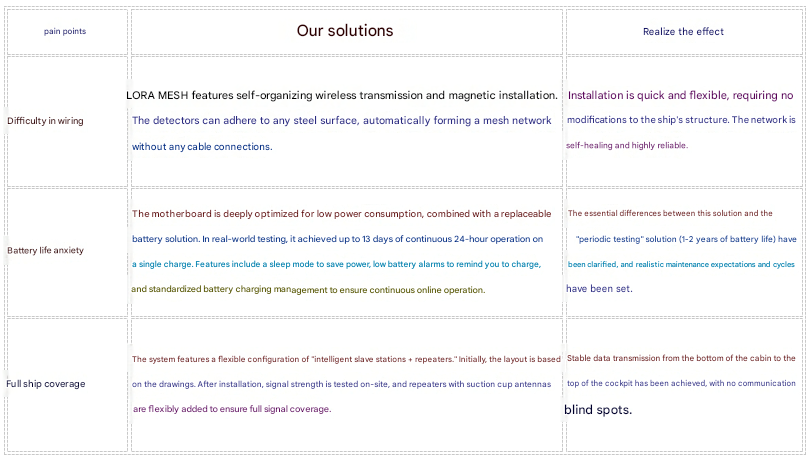
III. System Configuration List (Core Equipment)
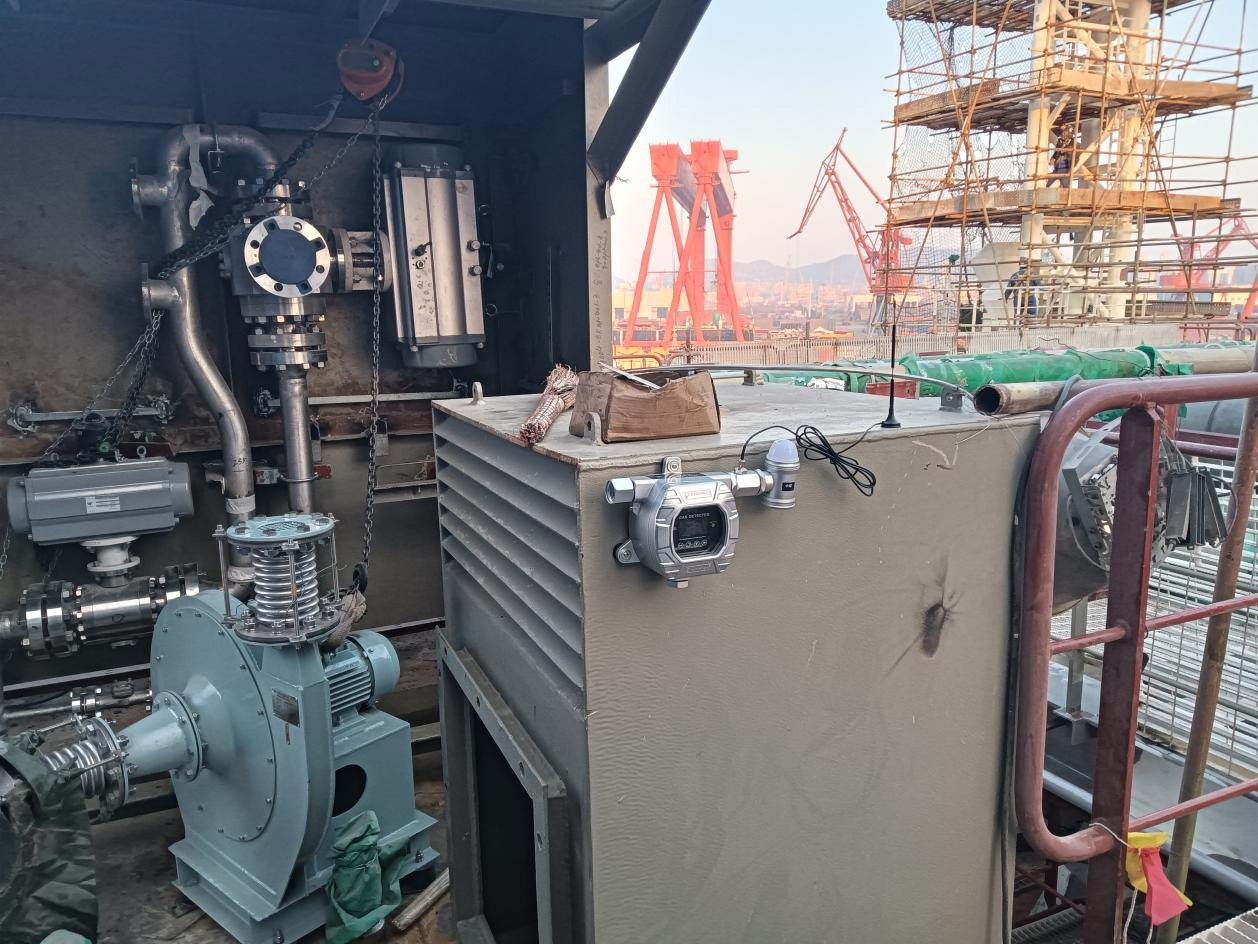
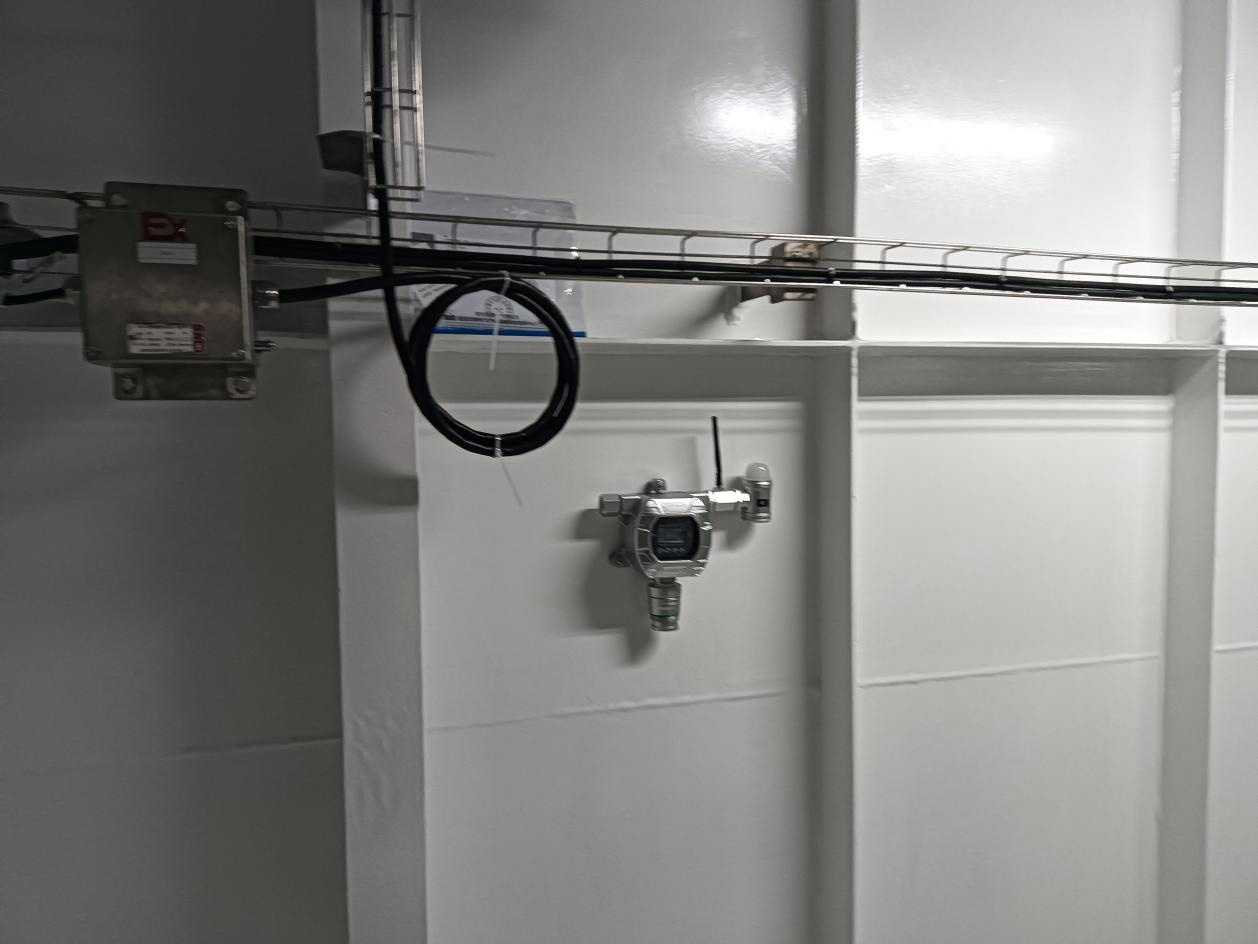
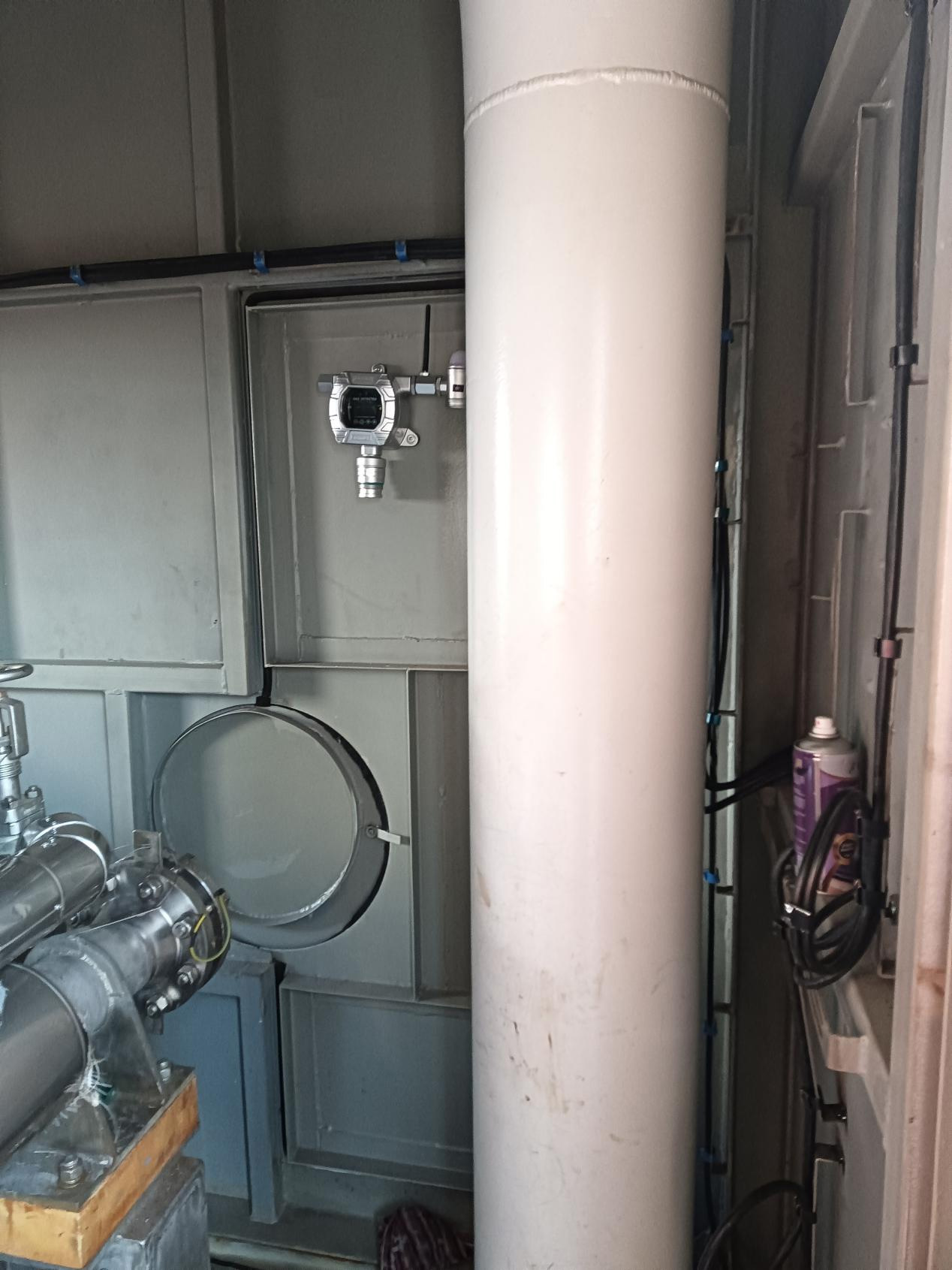
(1) Intelligent Self-Organizing Network Slave Stations (Detectors) × N units
Model: MIC-600-L
Key Features: Magnetic installation, low-power motherboard, rechargeable battery, 255 LORA MESH terminal module.
Function: Responsible for ammonia concentration detection and data upload, also serves as a network relay.
Battery Life: ≥10 days (actually measured approximately 13 days).
(2) Monitoring Host (Main Station) × 1 unit
Model: BTYQ-PTM600-S-YP-NH3
Key Features: Capacitive touchscreen, ≥45 detector interfaces, 255 LORA MESH gateway module, built-in battery.
Function: Data aggregation, real-time display, over-limit alarm. Installed in the driver's cab, requires periodic charging (standby time 15-20 hours).
(3) Monitoring Host (Receiver) × 1 unit
Model: BTYQ-PTM600-S-YP-NH3-2
Key Features: Receiver data, built-in battery.
Function: Provides redundant display in the engine room control room and other locations, improving system reliability.
IV. Project Value and Customer Benefits
Safety and Compliance: Enables 24-hour real-time online monitoring and alarm of ammonia concentration in key areas of the ship, greatly improving the ship's safety level and meeting and exceeding regulatory requirements.
Quick Deployment: Magnetic installation and wireless networking allow the entire system to be deployed during the ship's berthing intervals, without affecting the schedule, and with extremely low installation costs.
Easy Operation and Maintenance: Local display, automatic operation upon startup, automatically displays gas concentration data, and automatically alarms when the gas concentration exceeds the alarm value, requiring no daily maintenance.
Charging Time: 8-10 hours to fully charge, utilizing overnight sleep time for charging.
Flexible and reliable: The self-organizing network has strong anti-interference capabilities and self-healing ability. The number and location of detectors can be flexibly adjusted according to the actual ship type, and the system has strong scalability.
V. Experience Summary and Subsequent Project Recommendations
(1) Clearly Define Needs: It is crucial to differentiate between "online monitoring" and "timed detection" in terms of power consumption and battery life, clearly communicating this to the customer (in this example, the customer required continuous 24-hour monitoring in online mode, with a battery life of approximately 13 days).
(2) Seamless Main Unit Monitoring: The main unit can view the real-time power level of each ammonia detector, allowing for timely charging. The sleep function saves daily power consumption. It can also check the online status of each device and monitor real-time gas concentration, ensuring seamless monitoring.
(3) On-site Testing is Essential: Wireless signals are significantly affected by the ship's structure. On-site signal testing after deployment is necessary to determine the final number and location of repeaters, ensuring full coverage. The solution must be flexible and adjustable.
(4) Training and System Guarantee: Before the equipment is officially put into use, necessary training should be provided to every on-site worker. An emergency response mechanism should be established to ensure that in case of emergencies, the emergency response plan can be activated immediately to extinguish safety hazards and guarantee the safety of personnel and property. Conclusion: This project successfully verified the high feasibility of the innovative model of "low-power sensing + LORA MESH self-organizing network + magnetic installation + long endurance" in the complex environment of ships, and provided a reliable, economical and easy-to-promote standardized solution for similar ship gas monitoring projects.

 info@eranntexgas.com sale1@eranntexgas.com


 15914124845