
Magnetic-Rod Style Multi-Gas Detector Solves Monitoring Challenges in Aviation Workshops
1. Solution Background:
An aircraft manufacturing company requires real-time, online monitoring of the concentrations of three specific gases in designated areas during production to ensure operational safety and process stability. The specific gases to be monitored are:
Carbon dioxide (CO₂)
Nitrogen (N₂)
CFCs (halogenated hydrocarbon gases; specifically CF₃Br/CF₂ClBr)
The concentration ranges for these three gases vary significantly: CO₂ is in the ppm range, N₂ is measured in percentage concentrations, and CFCs are in the low ppm range. Therefore, a multi-gas detection device capable of meeting the monitoring requirements for all three gases simultaneously is required.
2. Parameter Requirements:
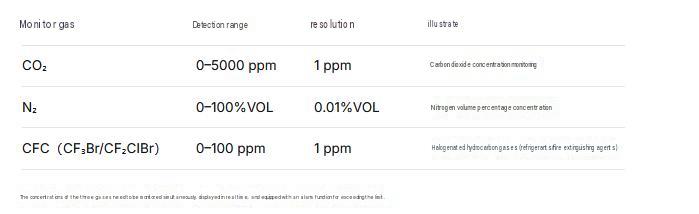
3. Solution:
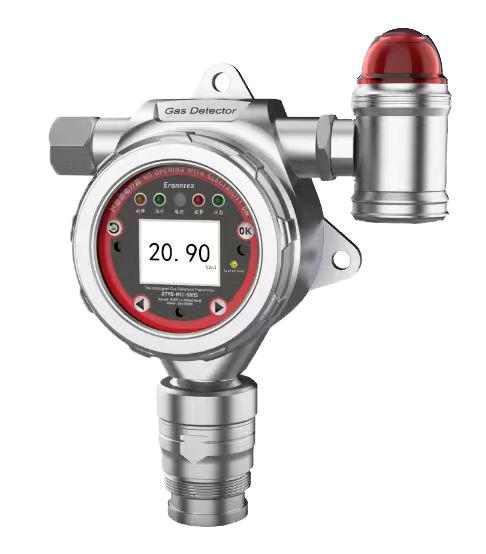
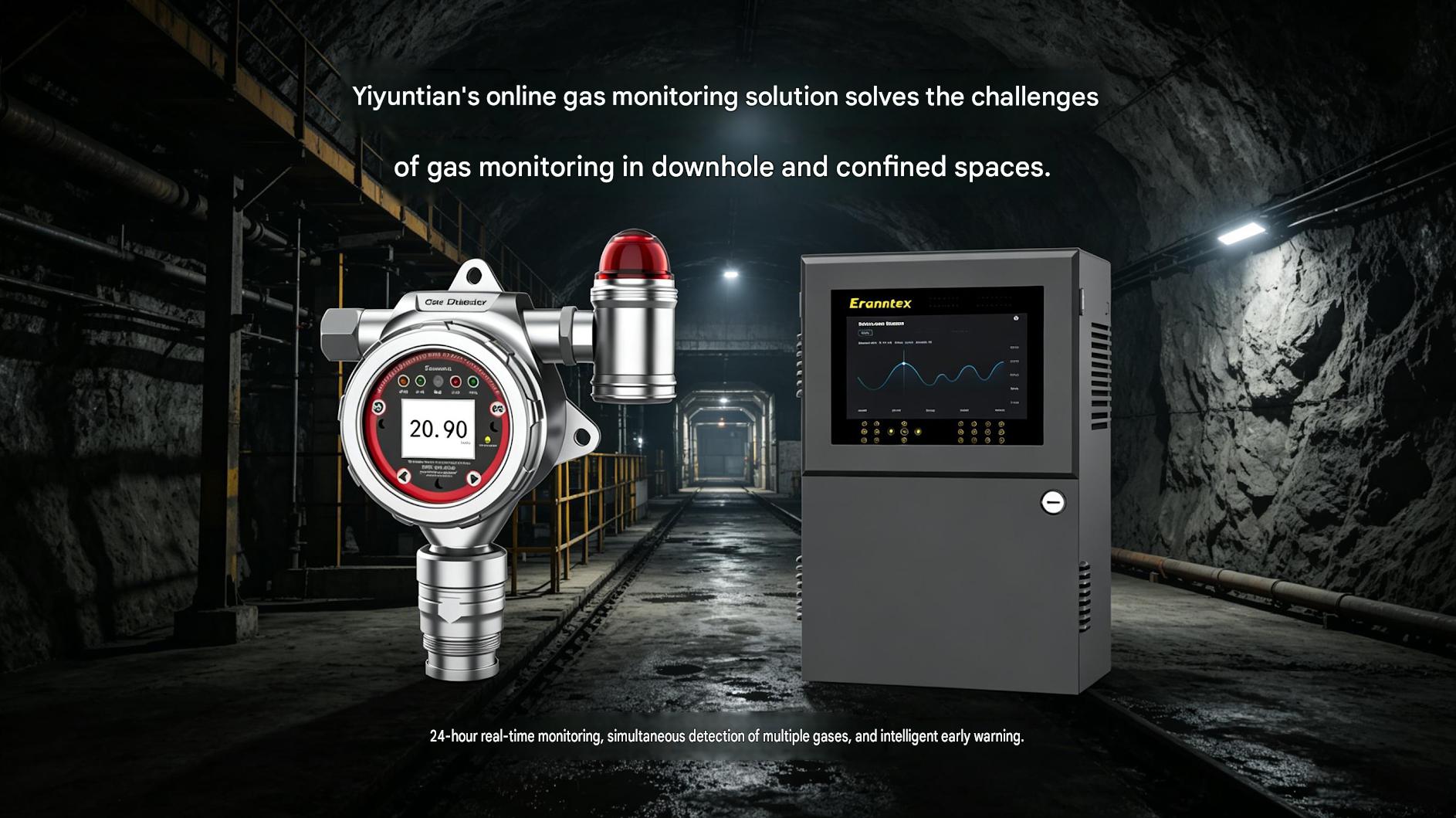
Equip the system with the GTYQ-MIC-500S (magnetic wand version) multi-gas detector to simultaneously monitor CO₂, N₂, and CFC concentrations.
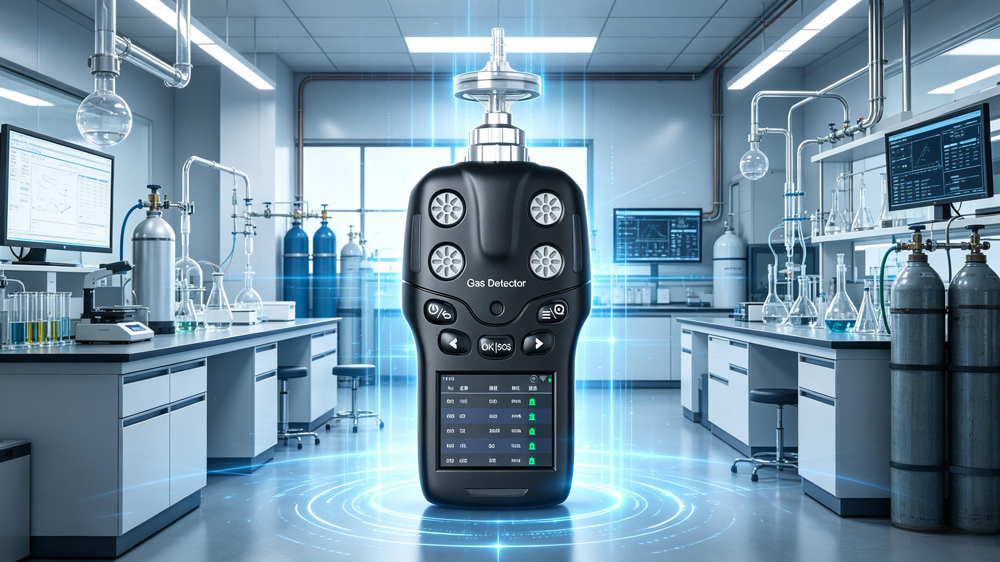
This solution recommends the GTYQ-MIC-500S (magnetic wand version) multi-gas detector. This device supports the simultaneous detection of up to four gases and can be configured with sensors for CO₂, N₂, and CFCs at the same time, enabling multi-purpose use and reducing redundant equipment investment.
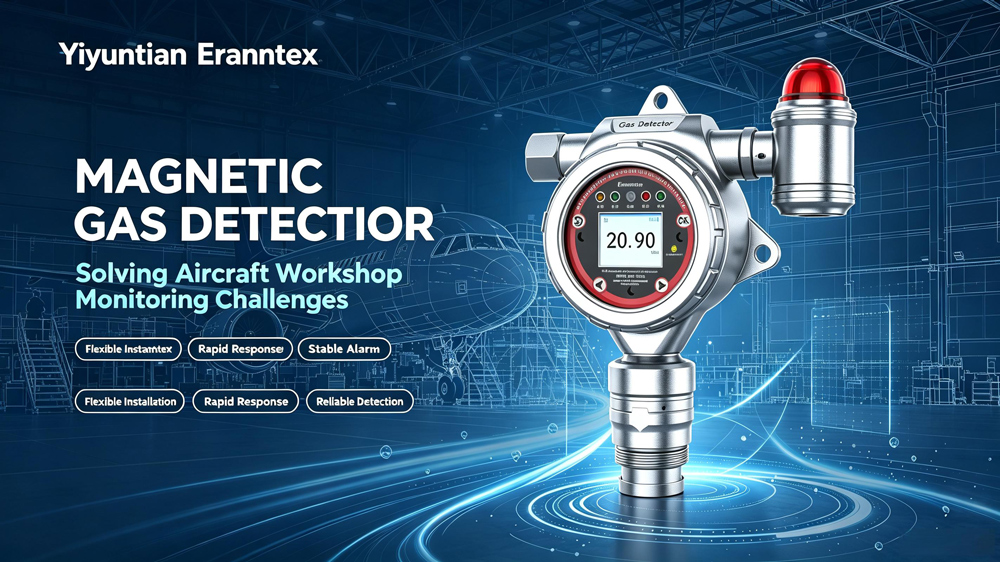
Key highlights of the solution are as follows:
(1) Detection Principle Selection
Given the distinct characteristics of the three gases, appropriate detection principles must be selected for each:
CO₂: Uses Non-Dispersive Infrared (NDIR) detection. It offers strong anti-interference capabilities, is unaffected by oxygen or other gases, covers a range of 0–5000 ppm, and provides a resolution of 1 ppm.
N₂: Uses electrochemical detection. It is suitable for the precise measurement of high-concentration (percentage-level) gases, with a range of 0–100% VOL and a resolution of 0.01% VOL.
CFCs (CF₃Br/CF₂ClBr): Uses NDIR detection. It targets the characteristic absorption wavelengths of halogenated hydrocarbons, offering excellent selectivity and high sensitivity; it can detect low concentrations in the 0–100 ppm range with a resolution of 1 ppm.
(2) Magnetic Wand Operation (No-Open-Cover)
The device comes standard with a magnetic wand control function. In hazardous environments or situations where opening the housing is inconvenient, users can view parameters, calibrate the zero point, and set alarm thresholds using the magnetic wand without opening the cover, thereby ensuring operational safety.
(3) Real-time Output and Alarm Functions
The device offers the following output and alarm capabilities:
Supports simultaneous 3-wire 4–20mA standard signal output and RS485 bus output (RTU format), allowing for flexible integration with DCS, PLC systems, or host computers for centralized monitoring.
Equipped with an audible and visual alarm that activates on-site when concentration levels reach preset values; also supports 1–2 sets of relay dry contact outputs to trigger external equipment such as exhaust systems or shut-off valves.
(4) Industrial-Grade Protection and Environmental Adaptability
Explosion-proof rating: Ex db IIC T6 Gb; suitable for various hazardous locations.
Ingress protection rating: IP66; dust-proof, corrosion-resistant, and anti-static.
Operating temperature: -40°C to +70°C (wider temperature ranges available upon request); relative humidity: 10–95% RH.
Features built-in automatic zero-point tracking and multi-level calibration to ensure long-term operational stability.
(5) Data Storage and Traceability
The device supports the storage of over 100,000 data records. Data can be exported, analyzed, and printed by connecting to host computer software via a USB interface or an RS485/RS232 converter, facilitating process parameter traceability and report generation.
4. Compatible Product:
GTYQ-MIC-500S (CO2/N2/CFC) Magnetic Wand Model
CO2: Detection range: 0–5000 ppm; Resolution: 1 ppm
N2: Detection range: 0–100% VOL; Resolution: 0.01% VOL
CFC: Detection range: 0–100 ppm; Resolution: 1 ppm
 info@eranntexgas.com sale1@eranntexgas.com


 15914124845