
Portable ammonia detector for testing internal combustion engine exhaust
I. Background of the Solution:
The ammonia (NH3) in the exhaust gas of an internal combustion engine reaches a concentration as high as 10,000 ppm, with a sample gas temperature of 500°C.
The customer's key measurement requirements: Accurate measurement of NH3 concentration unaffected by other gases or water vapor in the high-temperature engine exhaust.
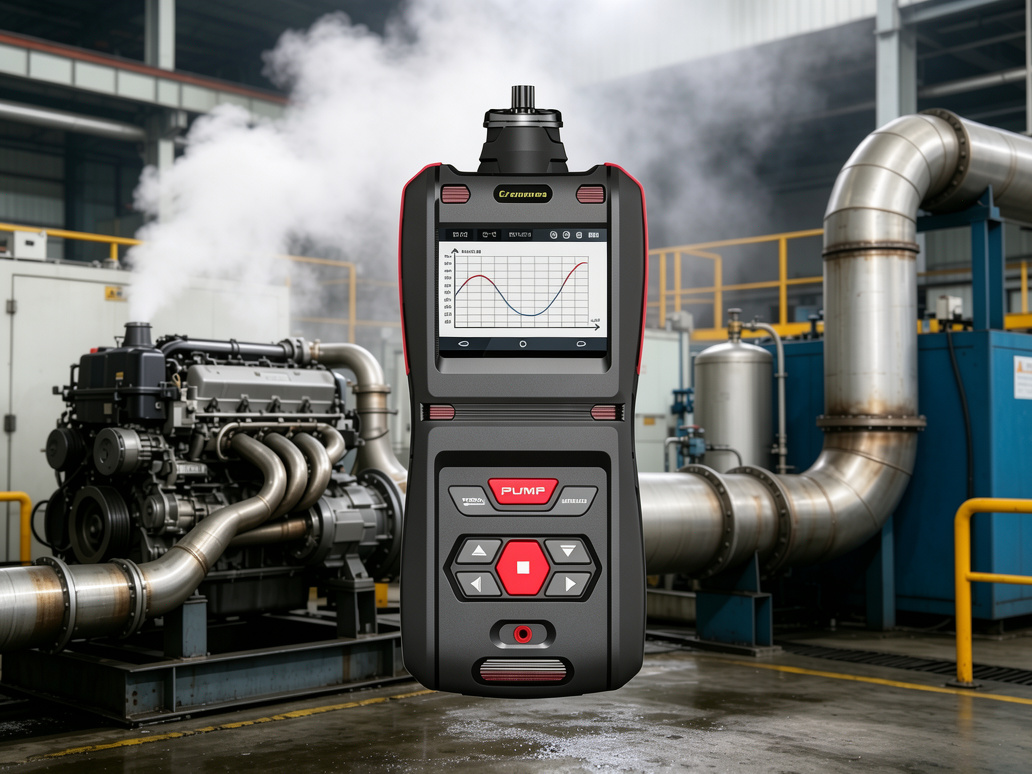
Why is it necessary to detect and monitor ammonia concentration?
(I) Ensuring equipment safety and preventing severe corrosion and damage
1. High-temperature, highly corrosive environment: The high temperature of the exhaust gas at 500°C significantly exacerbates the chemical activity of ammonia. Ammonia dissolves in water vapor to form weakly alkaline ammonia water, which can cause electrochemical corrosion with metal components in the exhaust system (such as turbine blades, exhaust pipes, valves, sensors, etc.), especially damaging to materials such as copper, aluminum, and iron. At such high concentrations, the corrosion rate increases exponentially, potentially leading to rapid thinning, pitting, cracking, and even catastrophic failure, resulting in huge repair or replacement costs.
2. Catalyst and Downstream Equipment Damage: If the exhaust gas passes through an SCR (Selective Catalytic Reduction) denitrification system, excess ammonia will "escape" and deposit on downstream equipment such as air preheaters and flues. It reacts with sulfur trioxide (SO₃) in the flue gas to form viscous ammonium bisulfate, causing equipment blockage, increased pressure drop, and accelerated corrosion, severely shortening equipment lifespan.
(II) Ensuring Environmental Compliance and Avoiding Excessive Emissions and Penalties
1. Ammonia Itself is a Controlled Pollutant: According to regulations such as the "Integrated Emission Standard of Air Pollutants" (GB 16297-1996), ammonia (NH₃) has clearly defined emission limits (e.g., 8.7 mg/m³). A concentration of 10,000 ppm far exceeds the safety threshold; direct emission will result in serious exceedances, triggering environmental warnings and facing legal risks such as hefty fines and production shutdowns.
2. Increased NOx Formation: Ammonia decomposes and participates in complex chemical reactions under high-temperature combustion conditions, which in turn promotes the formation of nitrogen oxides (NOx). This contradicts the original intention of denitrification, leading to a surge in NOx concentration in exhaust gas, further exacerbating environmental pollution and compliance pressures.
(III) Maintaining Stable System Operation and Improving Efficiency
1. Disruption of Combustion Process: The combustion characteristics of ammonia differ significantly from conventional fuels (such as natural gas), with a high ignition temperature and slow combustion rate. Such a high concentration of ammonia in the intake or combustion chamber of an internal combustion engine severely disrupts flame stability, leading to incomplete combustion, knocking, and a decrease in thermal efficiency (some data indicate that thermal efficiency can drop from 38% to 32%), and causing load fluctuations and unplanned shutdowns.
2. Optimization of Denitrification System Operation: In scenarios equipped with SCR systems, accurate detection of ammonia slip concentration is key to achieving "precise ammonia injection." The detection data is used to control the ammonia injection rate, ensuring efficient NOx removal while minimizing ammonia waste and escape, achieving a win-win situation for both economy and environmental protection.
II. Parameter Requirements:
Portable ammonia detector, capable of detecting ammonia at 10000 PPM in internal combustion engine exhaust, at a temperature of 500°C, unaffected by other gases or water vapor.
III. Solution:
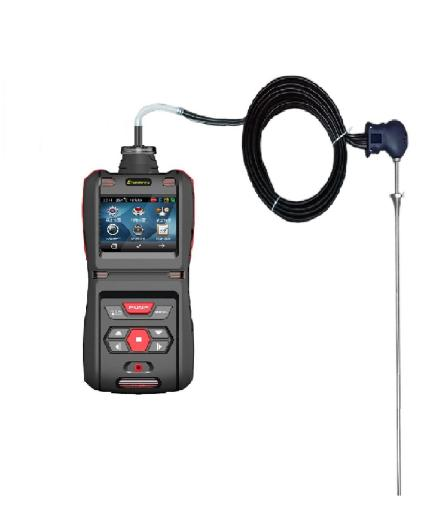
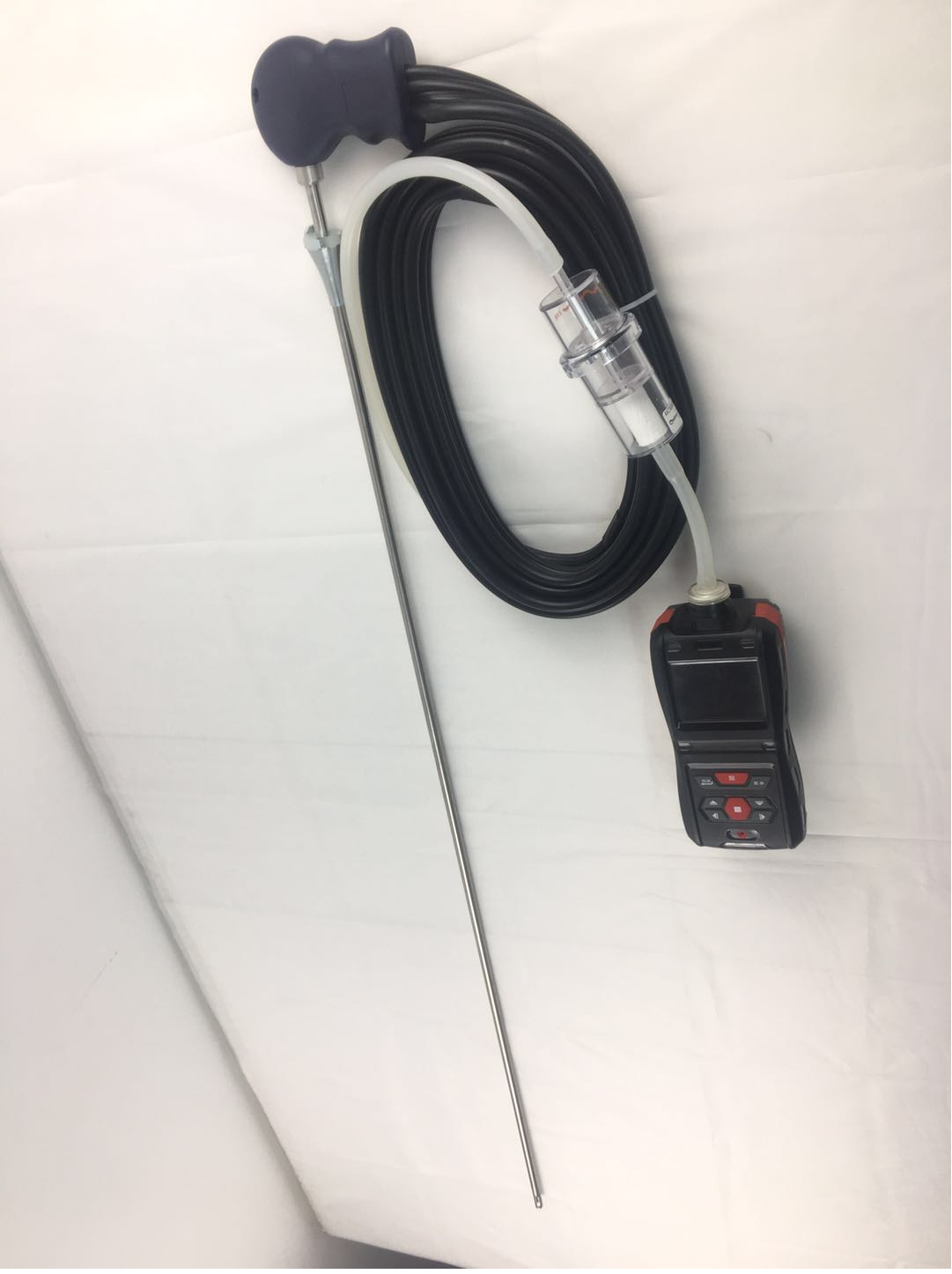
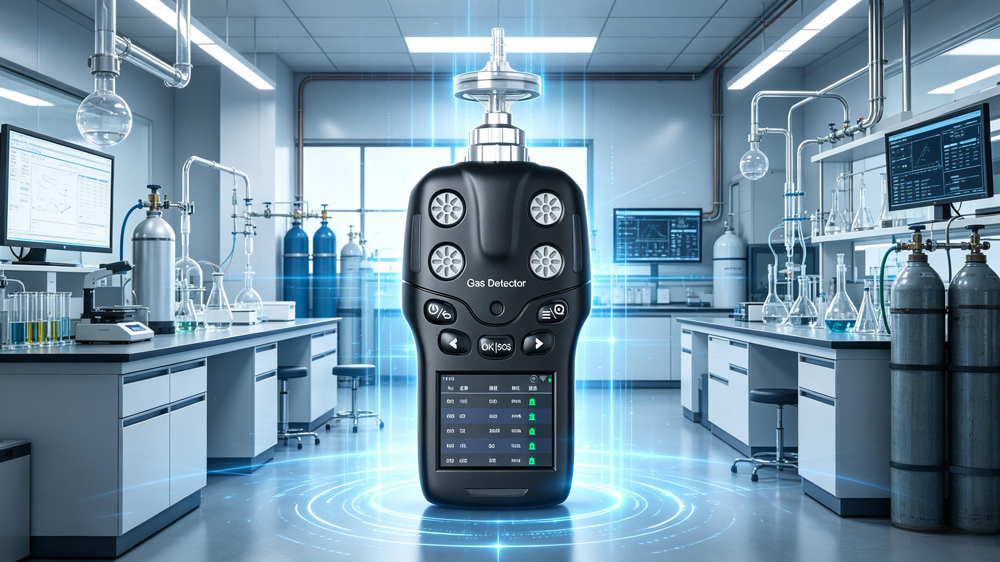
Portable laser-based ammonia detector + 1.2-meter high-temperature cooling sampling handle.
IV. Matching Products:
Product Model: MS500-NH3-TDLAS + High-Temperature Cooling Sampling Handle
 info@eranntexgas.com sale1@eranntexgas.com


 15914124845