
Five-Point Inspection Method for Nitrogen Oxide Detectors
Publication Date:2026/04/10For users, the reliability of Nitrogen Oxide Detectors is directly linked to environmental compliance, industrial safety, and public health. Whether in fixed source monitoring, vehicle emissions testing, or emergency response scenarios, conducting regular systematic inspections is the cornerstone of ensuring data accuracy. Below are five inspection methods for Nitrogen Oxide Detectors, summarized by the Yiyuntian Eranntex editorial team, that comply with European and American EHS practice standards. These methods are applicable to mainstream technical platforms such as electrochemical, chemiluminescence, and infrared.
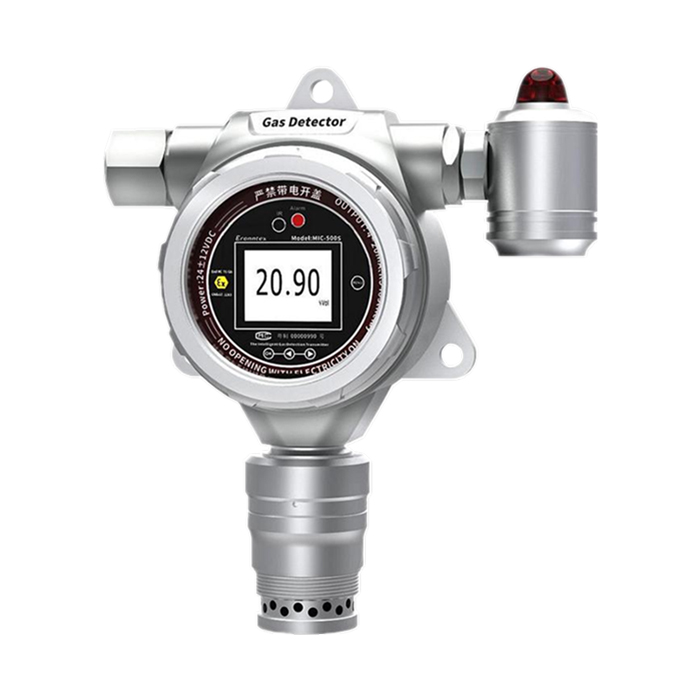
1. Zero Calibration
Verify that the instrument reading returns to zero in clean air free of NOₓ interference. A significant deviation may indicate sensor aging, circuit drift, or contamination of the optical window. This step should be performed before each use or upon daily startup and serves as the primary indicator for assessing the baseline health of the Nitrogen Oxide Detectors.
2. Span Calibration
Use standard gases with known concentrations of NO or NO₂ to test whether the Nitrogen Oxide Detectors responds accurately. Key points to check:
Whether the reading error falls within the manufacturer’s tolerance range (typically ±5%);
Whether the response time meets specifications (generally <60 seconds);
Whether it can correctly distinguish between NO and NO₂ (some devices require a molybdenum converter to convert NO₂ to NO for measurement).
Span calibration is recommended weekly or after every 10 uses, especially following exposure to high concentrations.
3. Cross-Interference Testing
NOₓ detection is susceptible to interference from other gases. For example:
Electrochemical sensors may be interfered with by ozone, sulfur dioxide (SO₂), or carbon monoxide;
Indirect NO₂ measurement using chemiluminescence relies on NO conversion efficiency; failure of the conversion furnace may result in underestimation of NO₂.
Selectivity should be verified using a mixed calibration gas containing potential interfering gases. If the reading deviation exceeds 10%, the filter must be replaced or the sensor module repaired.
4. Sampling System Integrity Check
Piping, filters, and connectors in pump-drawn or extraction-type analyzers are common failure points. The inspection includes:
Whether the gas flow is stable (flowmeter reading within 0.5–1.0 L/min);
Whether PTFE tubing shows signs of aging or cracking;
Whether the particulate filter is clogged (increased pressure differential causing response delay).
In high-dust or high-humidity environments, this check should be performed daily.
5. Verification of Data Logging and Alarm Functions
Modern NOx analyzers typically feature audible and visual alarms, 4–20 mA output, and Bluetooth/Wi-Fi data transmission capabilities. It is essential to confirm:
Whether the local alarm is triggered when gas concentrations exceed the alarm threshold;
Whether data is fully stored in the internal log or on a remote platform (for compliance reporting to EPA, EU ETS, etc.);
Whether the battery charge is sufficient (low battery power may cause sampling interruptions).
Summary: These five verification points not only meet the requirements of international standards such as ISO 17025, EPA Method 7E, or EN 14791, but are also core measures for preventing the risk of “false negatives.” Remember: an unverified Nitrogen Oxide Detectors may be more dangerous than one that provides no readings at all. Regular maintenance, proper operation, and complete record-keeping are the true commitments of professional users to the environment and safety.
Related information
-
How to Calibrate a Portable four-in-one Gas Detectors?
Portable four-in-one gas detectors are core protective equipment in the industrial safety field. However, sensors can experience z...
2026-09-18 -
What are the application scenarios for portable four-in-one gas detectors?
Portable four-in-one gas detectors typically monitor oxygen (O₂), flammable gas (LEL), carbon monoxide (CO), and hydrogen sulfide...
2026-09-16 -
Portable four-in-one Gas Detectors User Manual
The portable four-in-one gas detectors is a core piece of personal protective equipment (PPE) for ensuring the safety of personnel...
2026-09-14 -

Calibration Specifications for Ammonia gas Detectors
Calibration of ammonia gas detectors is a core step in ensuring their measurement accuracy and alarm reliability. However, ammonia...
2026-09-11 -
What is the appropriate installation height for an ammonia gas detectors?
Ammonia (NH₃) has a relative density of only 0.59, much lighter than air. This means that in the event of a leak, the gas will qu...
2026-09-09

 info@eranntexgas.com sale1@eranntexgas.com


 15914124845