
Why is the nitrogen oxide detectors sounding an alarm?
Publication Date:2026/05/15What Does It Mean When a Nitrogen Oxide Detectors Sounds an Alarm? When your nitrogen oxide detectors starts beeping, don’t panic—but don’t ignore it either. The alarm is the detector’s way of communicating with you, and you need to learn to understand what it’s saying. Below, the Yiyuntian Eranntex editorial team will explain this in detail.
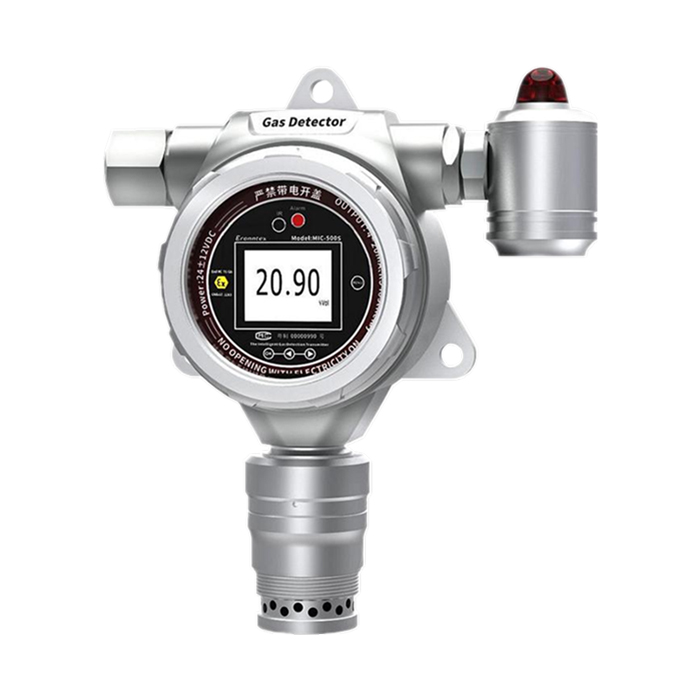
An alarm from a nitrogen oxide detectors doesn’t necessarily mean “something’s wrong”
First, let’s clarify a key fact: alarms from nitrogen oxide detectors fall into two completely different categories. The first is a genuine concentration exceedance alarm—meaning the nitrogen oxide levels in the environment have indeed surpassed your set safety threshold. This is not uncommon in scenarios such as exhaust emissions from chemical plants, flue gas monitoring at coal-fired power plants, and areas with heavy urban traffic. NOx is one of the primary culprits of air pollution; even long-term exposure to low concentrations can cause chronic damage to human health. Therefore, when a high-concentration alarm sounds, you must act immediately: verify whether there is an actual emission exceedance, activate ventilation to reduce concentrations, shut down the pollution source if necessary, and organize personnel to evacuate to a safe area.
The second type is an alarm caused by a device malfunction—and this is the “real culprit” in most cases. Low flow rate, high pressure, abnormal cooler temperature, failure of the zero-air system… These internal faults can also trigger alarms, even though the NOx concentration in the environment may be completely normal.
The most common causes of failure: From the pump to the sensor
Based on extensive on-site troubleshooting experience with mainstream chemiluminescence NOx analyzers, here are the top five culprits behind NOx analyzer alarms:
1. Sampling pump failure—the number one culprit. Alarms indicating high pressure and low flow are almost always caused by a pump issue. A dirty pump diaphragm can lead to loose vertical movement and insufficient suction; cleaning with alcohol will usually resolve the issue. A ruptured pump diaphragm, however, requires immediate replacement.
2. Contamination of the Reaction Chamber Window — The Hidden Killer. The core principle of chemiluminescence is the reaction between NO and ozone (O₃) to produce photons; the photomultiplier tube (PMT) calculates concentration by detecting light intensity. If the reaction chamber window is contaminated, the number of photons reaching the PMT decreases, causing sensitivity to drop sharply.
3. Failure of the Zero Gas System — The Starting Point of a Chain Reaction. Once the color-changing silica gel in the desiccator turns completely red and loses its drying function, moisture will directly enter the ozone generator, causing severe rusting of the discharge electrodes and reducing ozone output to zero. Without ozone, there is no chemiluminescence reaction, and the nitrogen oxide analyzer naturally cannot detect any concentration—this is the reason why data remains virtually unchanged during span checks.
4. Capillary tube blockage—an easily overlooked detail. Flow alarms may also be caused by dust accumulation inside the capillary tube, turning it black and obstructing gas flow. In one case, a loose nut at the filter outlet allowed some gas to bypass the filter and enter the instrument directly; over time, dust accumulated and blocked the capillary tube. The issue was easily resolved by soaking and cleaning the tube with alcohol.
5. Cooler Malfunction — A Problem with the PMT’s Protective Shield. PMTs must operate in a low-temperature environment to minimize interference. If the cooler triggers a high-temperature alarm, it may be due to dust buildup on the fan filter causing poor heat dissipation—cleaning will resolve this; alternatively, it could be caused by loose connections at the terminals leading to a power interruption—reconnecting the terminals will restore normal operation.
Standard Response Procedure Following an Alarm on a Nitrogen Oxide Detectors
Step 1: Identify the alarm type. Check whether the nitrogen oxide detectors is displaying a concentration alarm or a device malfunction Nitrogen Oxide Detectoralarm.
Step 2: If it is a concentration alarm, immediately activate the emergency response plan—evacuate personnel, shut off the gas supply, activate ventilation, maintain continuous monitoring, and contact professional emergency services.
Step 3: If it is a device malfunction alarm, troubleshoot by priority: first, use a plug to test for leaks in the piping; then check the condition of the pump diaphragm; next, inspect the capillary tube and filter; finally, check the zero-air system and ozone generator.
Step 4: Regardless of the type of alarm, document it thoroughly. The nitrogen oxide detectors features data logging capabilities, supporting the export of calibration logs and maintenance records as well as remote monitoring. This is not only a compliance requirement but also crucial for tracing the root cause of issues.
Final Thoughts
Every alarm from a nitrogen oxide detectors serves as a risk warning—whether it pertains to environmental or equipment risks. Rather than waiting until an accident occurs and regretting it too late, treat every alarm as a timely reminder. Regular calibration, timely replacement of desiccants and pump membranes, and maintaining clean tubing—these seemingly mundane maintenance tasks are the true safeguards that ensure your instrument won’t fail when it matters most.
Related information
-
How to Calibrate a Portable four-in-one Gas Detectors?
Portable four-in-one gas detectors are core protective equipment in the industrial safety field. However, sensors can experience z...
2026-09-18 -
What are the application scenarios for portable four-in-one gas detectors?
Portable four-in-one gas detectors typically monitor oxygen (O₂), flammable gas (LEL), carbon monoxide (CO), and hydrogen sulfide...
2026-09-16 -
Portable four-in-one Gas Detectors User Manual
The portable four-in-one gas detectors is a core piece of personal protective equipment (PPE) for ensuring the safety of personnel...
2026-09-14 -

Calibration Specifications for Ammonia gas Detectors
Calibration of ammonia gas detectors is a core step in ensuring their measurement accuracy and alarm reliability. However, ammonia...
2026-09-11 -
What is the appropriate installation height for an ammonia gas detectors?
Ammonia (NH₃) has a relative density of only 0.59, much lighter than air. This means that in the event of a leak, the gas will qu...
2026-09-09


 info@eranntexgas.com sale1@eranntexgas.com


 15914124845