
What is the alarm concentration for nitrogen oxide detectors?
Publication Date:2026/04/14In the fields of industrial safety, environmental monitoring, and occupational health, nitrogen oxides (NOₓ)—especially nitric oxide (NO) and nitrogen dioxide (NO₂)—are of great concern due to their significant toxicity and environmental hazards. For international users, understanding the alarm settings for nitrogen oxide detectors is crucial, as it not only relates to compliance but also directly impacts personnel safety and environmental protection. Below, Yiyuntian Eranntex will systematically introduce the common alarm concentration setting criteria for nitrogen oxide detectors, starting from mainstream international standards.
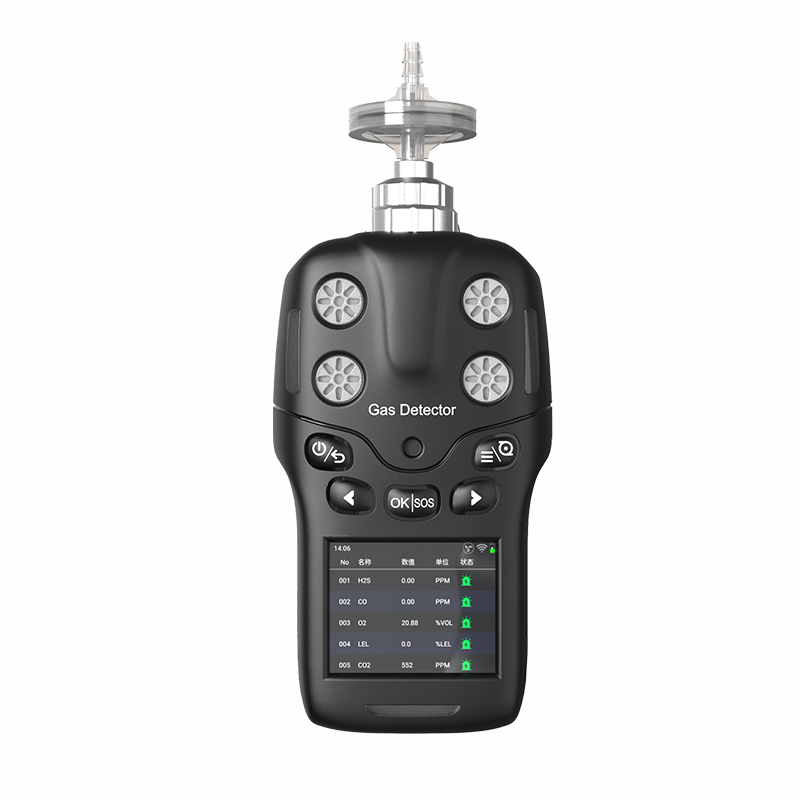
Occupational Exposure Limits: Standards from OSHA, NIOSH, and ACGIH
In the United States, occupational exposure limits for nitrogen oxides are primarily set by three agencies: the Occupational Safety and Health Administration (OSHA), the National Institute for Occupational Safety and Health (NIOSH), and the American Institute of Governmental Industrial Hygiene (AICH).
The statutory limit (PEL) set by OSHA is: a time-weighted average concentration (TWA) of 5 ppm (approximately 9 mg/m³) for nitrogen dioxide (NO₂) applicable to an 8-hour workday.
NIOSH's Recommended Exposure Limits (RELs) are more stringent, recommending a TWA of NO₂ not exceeding 1 ppm (approximately 1.8 mg/m³) and setting a 1 ppm 15-minute short-term exposure limit to prevent acute health risks.
ACGIH's Threshold Limits (TLVs) are also 1 ppm (TWA), with an additional 2 ppm 15-minute Short-Term Exposure Limit (STEL).
Therefore, when setting up fixed or portable nitrogen oxide detectors in the workplace, Level 1 alarms are typically set at 0.8–1 ppm, and Level 2 alarms at 1.5–2 ppm to ensure timely warnings before reaching statutory or recommended limits.
Ambient Air Quality Standards: EPA's NAAQS
If the purpose of testing is ambient air monitoring (such as urban air quality assessment or monitoring around emission sources), the National Ambient Air Quality Standards (NAAQS) established by the U.S. Environmental Protection Agency (EPA) should be consulted:
The EPA sets two standards for NO₂:
1-hour standard: 100 ppb (0.1 ppm), designed to prevent respiratory irritation caused by short-term high-concentration exposure;
Annual average standard: 53 ppb (approximately 0.053 ppm), used to control long-term chronic health effects.
This means that the alarm threshold of nitrogen oxide detectors used for environmental monitoring is usually much lower than in industrial settings, potentially triggering alarms in the range of 0.05–0.1 ppm, especially in areas with heavy traffic or near industrial emission outlets.
In short, the alarm concentration of nitrogen oxide detectors is not a fixed value, but a dynamic setting based on scientific assessment and regulatory requirements. Understanding the logic behind these standards helps global users deploy and use these critical safety devices more effectively.
Related information
-
How to Calibrate a Portable four-in-one Gas Detectors?
Portable four-in-one gas detectors are core protective equipment in the industrial safety field. However, sensors can experience z...
2026-09-18 -
What are the application scenarios for portable four-in-one gas detectors?
Portable four-in-one gas detectors typically monitor oxygen (O₂), flammable gas (LEL), carbon monoxide (CO), and hydrogen sulfide...
2026-09-16 -
Portable four-in-one Gas Detectors User Manual
The portable four-in-one gas detectors is a core piece of personal protective equipment (PPE) for ensuring the safety of personnel...
2026-09-14 -

Calibration Specifications for Ammonia gas Detectors
Calibration of ammonia gas detectors is a core step in ensuring their measurement accuracy and alarm reliability. However, ammonia...
2026-09-11 -
What is the appropriate installation height for an ammonia gas detectors?
Ammonia (NH₃) has a relative density of only 0.59, much lighter than air. This means that in the event of a leak, the gas will qu...
2026-09-09
 info@eranntexgas.com sale1@eranntexgas.com


 15914124845