
Why Does a Four-in-One Detectors Not Respond After Powering On?
Publication Date:2026/04/21In industrial safety, confined space entry, or emergency response scenarios, a four-in-one detectors is a critical piece of equipment for ensuring personnel safety. However, when an operator presses the power button and the device shows no response—the screen remains dark, there is no sound, and no indicator lights are visible—this situation is not only cause for concern but can also delay work schedules and even jeopardize safety. For users, understanding the common causes of such malfunctions and mastering systematic troubleshooting methods are essential for ensuring the device’s reliability and compliance. Below, the Yiyuntian Eranntex team will guide users through a logical sequence—from simplest to most complex—to quickly pinpoint the root cause of the problem.
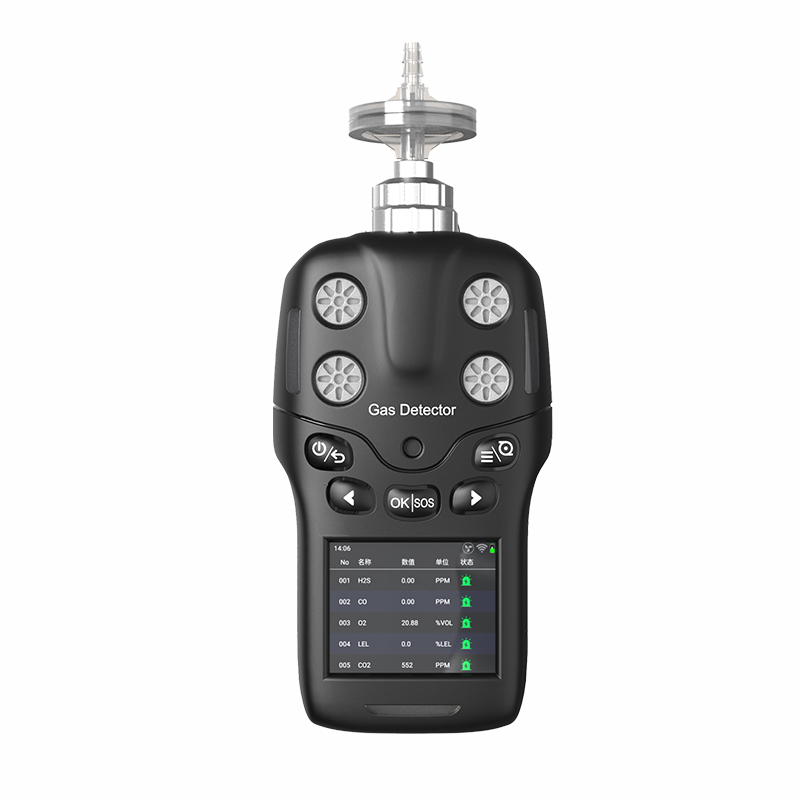
1. Battery Issues: The Most Common Yet Easily Overlooked
The vast majority of 4-in-1 testers rely on rechargeable lithium-ion batteries or disposable alkaline batteries for power. The primary cause of no response upon startup is almost always a power issue. Please check the following in order:
Dead battery: Even if the device displays “Last used normally,” prolonged storage may cause self-discharge, dropping the voltage below the startup threshold. Try connecting the original charger and wait 5–10 minutes before turning it on.
Incorrect battery installation: For models using AA or CR123A batteries, verify that the polarity is correct and that the contacts are clean and free of corrosion.
Faulty charger or cable: Using a non-original charger may result in voltage mismatch. We recommend measuring the output voltage with a multimeter or testing with known-good charging accessories.
Note that some devices enter a deep sleep mode when the battery is severely discharged and require continuous charging for over 30 minutes to wake up.
2. Ambient temperature exceeds operating range
Although industrial-grade gas detectors are designed to be rugged, their electronic components and batteries are sensitive to temperature. According to IEC 60079-0 and manufacturer specifications, the operating temperature range for most devices is -20°C to +50°C. If you attempt to power on the device in extremely cold or hot environments, it may refuse to start due to protective mechanisms. The solution is to move the instrument to a room-temperature environment and let it sit for 15–30 minutes before trying again.
3. Sensor or Mainboard Hardware Failure
If both power and temperature are normal but the device still shows no response, an internal hardware failure may be the cause:
Mainboard damage: Severe impact, drops, or liquid ingress may cause circuit breaks;
Blown fuse: Some models have built-in overcurrent protection fuses that trip after abnormal voltage or a short circuit;
Firmware crash: In rare cases, software errors may cause the device to “freeze”; in such instances, holding the power button for more than 15 seconds may force a reboot.
These issues typically cannot be resolved on-site; contact an authorized service center for diagnosis. Do not attempt to disassemble the device yourself, as this may void explosion-proof certification or warranty coverage.
4. Software lockout or configuration errors
Some high-end 4-in-1 analyzers support password protection, regional locking, or remote management features. If the device has been disabled via software by the IT or EHS department, or if a firmware update fails, it may also appear unresponsive. In this case, you should:
Check whether a deactivation command has been issued from the management platform;
Try connecting to the official calibration cradle to see if the device is recognized;
Contact technical support to obtain instructions for entering recovery mode.
Although a four-in-one detectors failing to respond upon startup may seem straightforward, it can involve multiple factors such as power supply, environmental conditions, hardware, or software. For international users, following the troubleshooting logic of “starting with the power supply, working from the outside in, and documenting the process” not only enables rapid restoration of device functionality but also demonstrates professional EHS management competence. Remember: In the field of gas safety, equipment reliability begins with meticulous daily maintenance.
Related information
-
How to Calibrate a Portable four-in-one Gas Detectors?
Portable four-in-one gas detectors are core protective equipment in the industrial safety field. However, sensors can experience z...
2026-09-18 -
What are the application scenarios for portable four-in-one gas detectors?
Portable four-in-one gas detectors typically monitor oxygen (O₂), flammable gas (LEL), carbon monoxide (CO), and hydrogen sulfide...
2026-09-16 -
Portable four-in-one Gas Detectors User Manual
The portable four-in-one gas detectors is a core piece of personal protective equipment (PPE) for ensuring the safety of personnel...
2026-09-14 -

Calibration Specifications for Ammonia gas Detectors
Calibration of ammonia gas detectors is a core step in ensuring their measurement accuracy and alarm reliability. However, ammonia...
2026-09-11 -
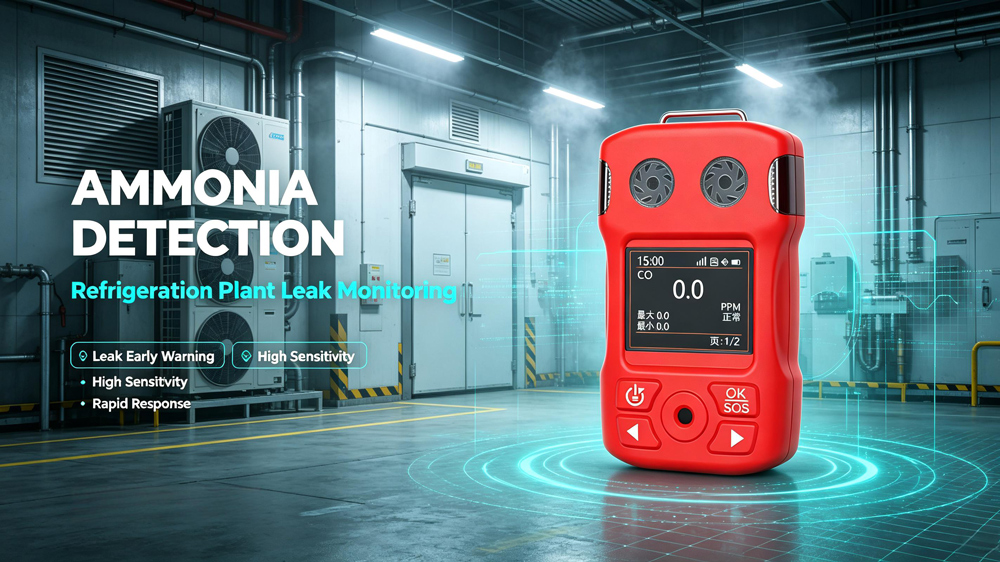
What is the appropriate installation height for an ammonia gas detectors?
Ammonia (NH₃) has a relative density of only 0.59, much lighter than air. This means that in the event of a leak, the gas will qu...
2026-09-09
 info@eranntexgas.com sale1@eranntexgas.com


 15914124845