
How often should combustible gas detectors be calibrated?
Publication Date:2026/04/22In high-risk industries such as oil and gas, chemicals, manufacturing, and confined space operations, combustible gas detectors serve as a critical line of defense against fire and explosion accidents. However, the reliability of combustible gas detectors is not guaranteed forever—sensors can drift, age, or be affected by environmental interference over time. Therefore, “how often to calibrate” is not merely a technical issue, but a core concern regarding compliance, safety, and legal liability. For users, the answer is not simply a matter of time, but requires a systematic assessment that takes into account regulatory requirements, usage scenarios, and the type of combustible gas detectors.
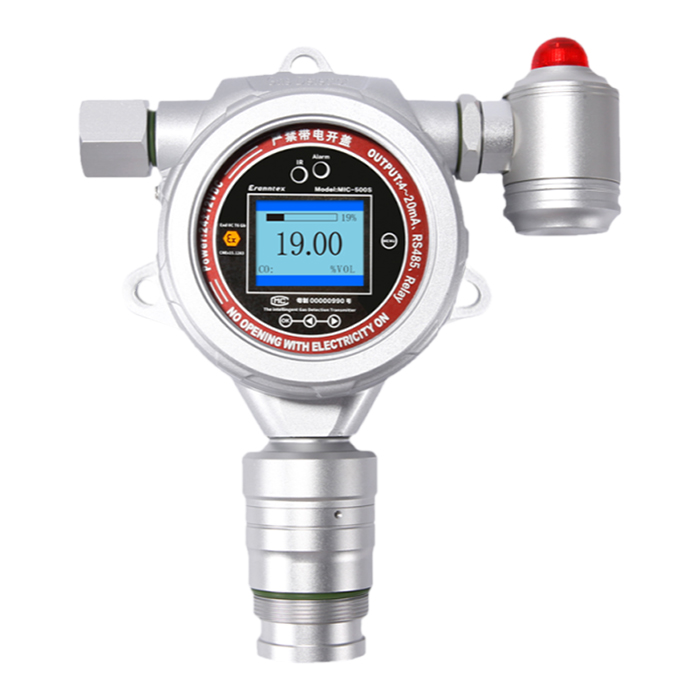
Regulatory Requirements: Basic Standards from OSHA, NFPA, and ISO
Although there is no globally unified mandatory calibration cycle, mainstream safety standards provide clear guidance:
While the U.S. OSHA does not specify a specific frequency, 29 CFR 1910.146 emphasizes that the functionality of gas detectors must be verified before entry. This is typically achieved through daily functional tests; if a test fails, calibration must be performed immediately.
NFPA 7000 recommends that fixed combustible gas detection systems be calibrated every 3–6 months, while the frequency for portable devices depends on usage intensity.
ISO 13734:2015 states that calibration frequency should be based on a “risk assessment,” but performing a full calibration at least every 6 months is the generally accepted industry baseline.
Manufacturers of ATEX/IECEx-certified equipment typically specify in their user manuals that calibration should be performed every 1–6 months and emphasize the necessity of regular functional testing.
Thus, “monthly calibration” is a common practice in high-risk industries, while “every 6 months” represents the minimum compliance threshold.
Functional Testing vs. Full Calibration: Two Different Levels of Verification
In international EHS management practices, it is crucial to distinguish between the following two types of operations:
Functional Testing
Daily or before each use, briefly expose the device to a standard gas slightly above the alarm threshold to verify that the sensor response and audible/visual alarms are functioning normally. This procedure does not adjust the instrument’s readings; it merely confirms that the device “works.” OSHA and CGA strongly recommend performing this daily.
Full CalibrationCombustible gas detectors
Using NIST- or ISO 17025-certified standard gases, adjust the zero point and span to ensure accurate readings. Calibration must be performed immediately when any of the following conditions occur:
Functional test failure;
After the device has been exposed to high-concentration gases, extreme temperatures or humidity, or physical impact;
Abnormal drift in readings or inconsistencies with other devices;
Exceeding the manufacturer’s recommended calibration interval.
Key Factors Affecting Calibration Frequency
Calibration intervals are not fixed; the following variables can significantly shorten them:
Frequency of use: Equipment used daily is more prone to wear and tear than equipment used occasionally;
Environmental conditions: High dust levels, high humidity, and corrosive gases can accelerate sensor poisoning or contamination;
Gas type: Certain combustible gases can “poison” catalytic combustion sensors, requiring more frequent calibration;
Regulatory audit requirements: Insurance companies or clients may require stricter calibration records.
Records and traceability: Meeting audit and liability exemption requirements
In the event of an accident, calibration records serve as critical evidence for a company’s liability exemption. International best practices require:
Maintain electronic or paper logs for every functional test and calibration, including date, operator, standard gas lot number, and pre- and post-calibration readings;
Use smart detectors with data export capabilities or automatic calibration docks to automatically generate reports compliant with ISO 9001/45001;
Ensure standard gases are within their validity period and accompanied by certificates traceable to national metrology institutes.
The calibration frequency for combustible gas detectors is fundamentally a balance between risk management and compliance obligations. For users, adhering to a dual-track strategy of “daily functional testing + full calibration every 1–6 months” not only ensures the equipment remains in a reliable state but also demonstrates the company’s serious commitment to personnel safety and regulatory compliance. Remember: In the field of explosion safety, “assume it’s broken until proven otherwise” is the correct safety culture.
Related information
-
How to Calibrate a Portable four-in-one Gas Detectors?
Portable four-in-one gas detectors are core protective equipment in the industrial safety field. However, sensors can experience z...
2026-09-18 -
What are the application scenarios for portable four-in-one gas detectors?
Portable four-in-one gas detectors typically monitor oxygen (O₂), flammable gas (LEL), carbon monoxide (CO), and hydrogen sulfide...
2026-09-16 -
Portable four-in-one Gas Detectors User Manual
The portable four-in-one gas detectors is a core piece of personal protective equipment (PPE) for ensuring the safety of personnel...
2026-09-14 -

Calibration Specifications for Ammonia gas Detectors
Calibration of ammonia gas detectors is a core step in ensuring their measurement accuracy and alarm reliability. However, ammonia...
2026-09-11 -
What is the appropriate installation height for an ammonia gas detectors?
Ammonia (NH₃) has a relative density of only 0.59, much lighter than air. This means that in the event of a leak, the gas will qu...
2026-09-09
 info@eranntexgas.com sale1@eranntexgas.com


 15914124845