
Can a carbon dioxide detectors detect natural gas?
Publication Date:2026/04/03This is a seemingly simple yet critical question regarding safety. The short answer is: No. Carbon dioxide detectors and natural gas detectors are fundamentally different in terms of chemical properties, safety risks, and detection principles; they are not interchangeable. For users—whether building managers or industrial safety professionals—understanding this distinction is key to avoiding misjudgments and preventing accidents.
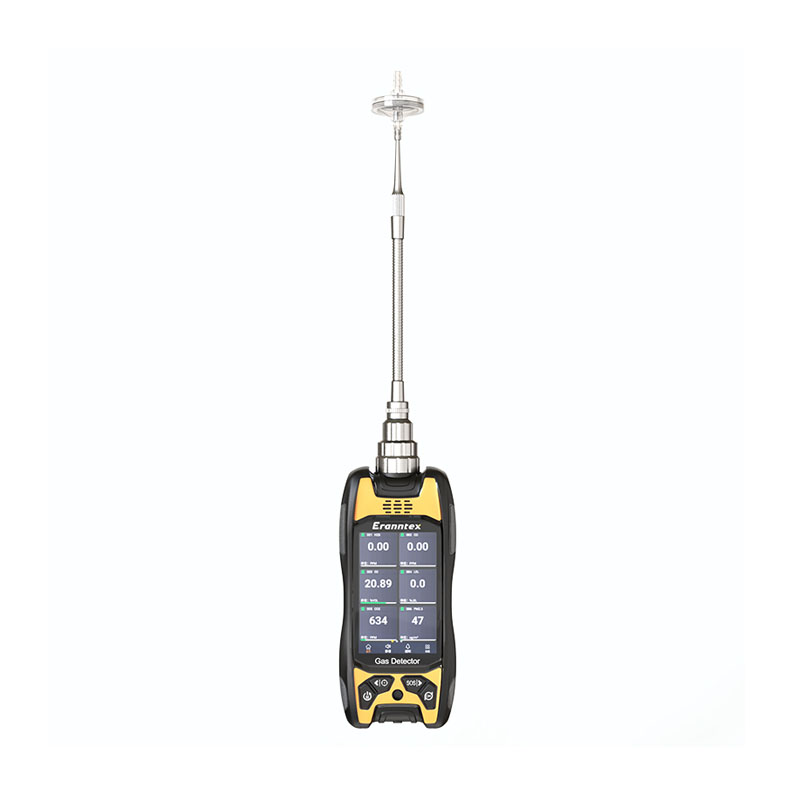
First, let’s look at the nature of the gases:
Natural gas is a highly flammable hydrocarbon, primarily composed of methane. Its main hazards lie in the risk of explosions and fires—when the concentration of methane in the air reaches 5% to 15%, a single spark can trigger an explosion. To make it easier to detect, utility companies add a sulfur-based odorizer to natural gas, giving it a distinct “rotten egg” smell.
In contrast, carbon dioxide is a non-flammable, odorless, and non-toxic inert gas. It does not burn or explode on its own; the primary risk at high concentrations is oxygen deprivation and suffocation, commonly found in confined spaces, fermentation facilities, dry ice storage areas, or poorly ventilated conference rooms.
Second, the detection technologies are entirely different.
The vast majority of commercial CO₂ detectors use non-dispersive infrared (NDIR) sensing technology. These sensors emit infrared light at a specific wavelength and calculate concentration by measuring the attenuation of light intensity after it is absorbed by CO₂ molecules.
In contrast, natural gas detection typically relies on two technologies:
Catalytic combustion sensors: These measure concentration by detecting changes in heat generated when methane oxidizes on a catalyst surface;
Dedicated infrared methane sensors: These use an infrared light source tuned to the absorption peak of methane.
Since CO₂ and CH₄ absorb infrared light at completely different wavelengths, an NDIR sensor designed for CO₂ will show almost no response to methane. This means that even if a severe natural gas leak is occurring in a basement, a CO₂ detector may still display a “normal” reading of “400–800 ppm” and fail to trigger an alarm. This “silent failure” is highly deceptive and may lead users to mistakenly believe the environment is safe, thereby delaying evacuation or repairs.
In reality, this misunderstanding has led to numerous safety incidents. For example, a homeowner who installed a CO₂ air quality monitor mistakenly believed it could warn of leaks from a gas stove or pipeline. As a result, the leak went unnoticed for hours until the homeowner detected an odor—by which time the indoor methane concentration may have approached the explosion threshold. A CO₂ detector is not a combustible gas detector and must never be used for this purpose.
So, how should natural gas be properly monitored?
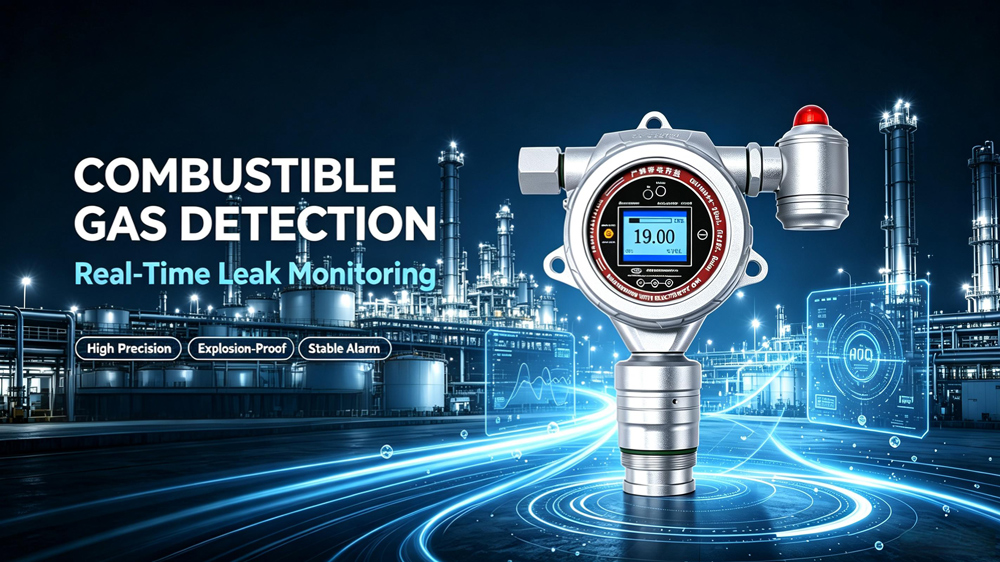
The answer is: You must use a dedicated “combustible gas detector” or “methane detector.” These devices typically comply with safety standards such as UL 1484 and EN 50194, and can trigger audible and visual alarms when methane concentrations reach 10% LEL—well before dangerous levels are reached. Many modern models also feature automatic valve shut-off and Wi-Fi notifications, making them suitable for both residential and commercial settings.
Finally, it is important to note that carbon monoxide detectors cannot detect natural gas. CO is a byproduct of incomplete fuel combustion and represents a separate risk from natural gas leaks. An ideal home gas safety setup should include three distinct devices:
Smoke alarms (fire protection)
Carbon monoxide detectors (poisoning prevention)
Natural gas/flammable gas detectors (explosion prevention)
These three devices complement each other and cannot be substituted for one another.
In summary, carbon dioxide detectors are specifically designed to assess indoor air quality and ventilation efficiency and are completely ineffective against natural gas. Attempting to use it to monitor gas leaks is not only ineffective but can also have fatal consequences. Users, especially those in environments where natural gas is used for heating, cooking, or power generation, must install certified, dedicated combustible gas detectors and perform regular functional tests. In the realm of safety, using the right tool for the right risk is the true path to protection.
Related information
-
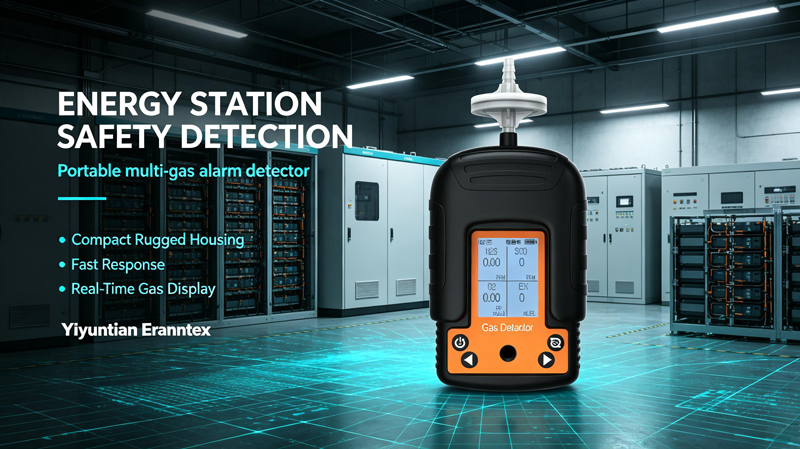
How to Calibrate a Portable four-in-one Gas Detectors?
Portable four-in-one gas detectors are core protective equipment in the industrial safety field. However, sensors can experience z...
2026-09-18 -
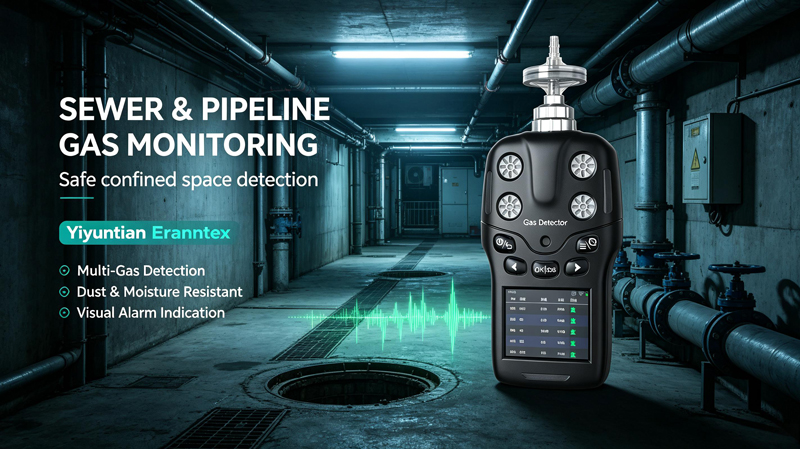
What are the application scenarios for portable four-in-one gas detectors?
Portable four-in-one gas detectors typically monitor oxygen (O₂), flammable gas (LEL), carbon monoxide (CO), and hydrogen sulfide...
2026-09-16 -
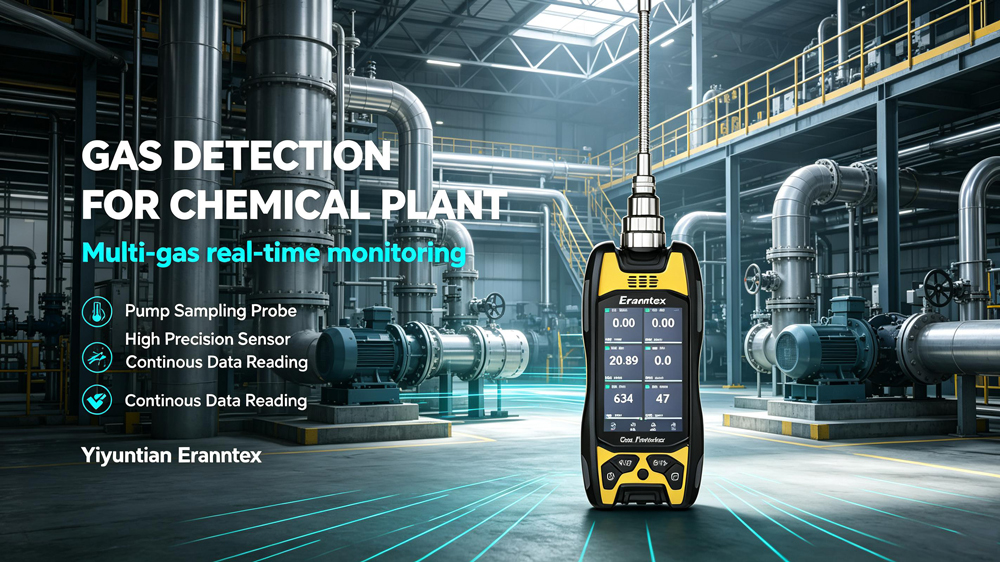
Portable four-in-one Gas Detectors User Manual
The portable four-in-one gas detectors is a core piece of personal protective equipment (PPE) for ensuring the safety of personnel...
2026-09-14 -

Calibration Specifications for Ammonia gas Detectors
Calibration of ammonia gas detectors is a core step in ensuring their measurement accuracy and alarm reliability. However, ammonia...
2026-09-11 -
What is the appropriate installation height for an ammonia gas detectors?
Ammonia (NH₃) has a relative density of only 0.59, much lighter than air. This means that in the event of a leak, the gas will qu...
2026-09-09
 info@eranntexgas.com sale1@eranntexgas.com


 15914124845