
What is the service life of a carbon monoxide detectors?
Publication Date:2026/05/06In industrial settings such as petrochemicals, steel smelting, and underground mines, carbon monoxide is a prime example of a toxic and hazardous gas; concentrations exceeding safe limits can lead to major accidents such as explosions and poisoning. As a core safety device, the service life of a carbon monoxide detectors directly impacts production safety and cost control. Below, the Yiyuntian Eranntex editorial team provides industrial users with a professional service life management plan based on three dimensions: technical characteristics, operational conditions, and maintenance strategies.
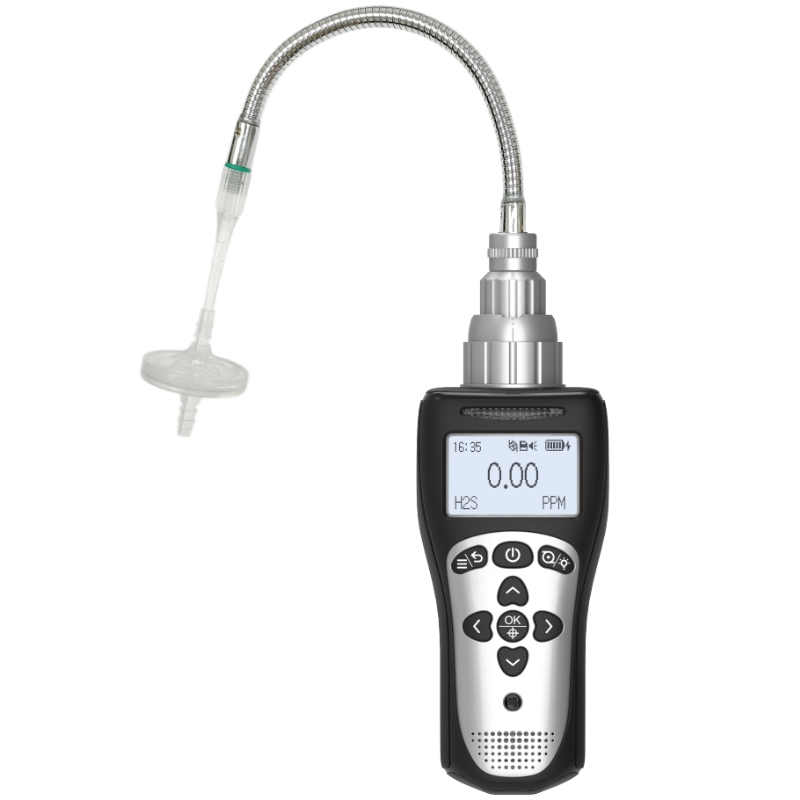
I. Core Sensor Technical Characteristics and Service Life Benchmarks
Industrial environments impose stringent reliability requirements on carbon monoxide detectors, and mainstream sensor technologies exhibit varying service life characteristics. Electrochemical sensors generate electrical signals through the reaction of CO with an electrolyte solution. Their typical service life is 2–3 years, but this may be reduced to 1.5 years under high-temperature conditions; they must comply with the UL 2034 industrial-grade certification standard. Infrared sensors utilize the absorption of specific wavelengths of infrared light by CO molecules, with a lifespan of 5–8 years; explosion-proof designs can extend this to 10 years. They are suitable for high-concentration monitoring scenarios such as chemical reactors and must pass ATEX explosion-proof certification. Catalytic combustion sensors detect concentration levels by measuring changes in heat generated from CO combustion. They have a lifespan of 3–5 years but are susceptible to sulfide contamination and require periodic regeneration. Suitable for environments with stringent explosion-proof requirements, such as coal mine tunnels, they must comply with the IECEx international explosion-proof standard.
II. The Accelerated Degradation Effect of Industrial Conditions on Equipment Lifespan
In actual industrial environments, multiple factors can significantly shorten the lifespan of carbon monoxide detectors. High-temperature corrosion is the primary challenge: temperatures in the converter area of steel mills can reach 1,200°C, and the electrolyte in electrochemical sensors begins to decompose at temperatures above 200°C; in chemical plants, when chlorine concentrations exceed limits, the corrosion rate of sensor metal components increases threefold. Mechanical vibration also has a significant impact: under the 50 Hz vibration frequency of mining crushers, the failure rate due to loosening of internal sensor components increases by 60%, necessitating the selection of explosion-proof equipment with vibration-damping mounts. Dust contamination requires targeted protection: when dust concentrations in cement plants exceed 100 mg/m³, the optical windows of infrared sensors must be cleaned monthly; in dusty environments, equipment with an IP67 protection rating and equipped with pre-filtration devices should be selected. A case study from a steel mill’s blast furnace workshop shows that electrochemical sensor equipment, due to prolonged exposure to a 150°C high-temperature environment, had an actual service life of only 9 months—a 62.5% reduction from the design life—resulting in a 230% increase in annual replacement costs.
III. Systematic Maintenance Strategies and Lifespan Extension Plans
A tiered maintenance system can significantly extend the service life of carbon monoxide detectors. During routine inspections, a portable calibrator must be used to perform zero-point calibration, triggering an alarm if the error exceeds 2%. Quarterly maintenance involves range calibration using 50 ppm standard gas (in accordance with ISO 6145). Annual overhauls require sending the equipment to a metrology institute for comprehensive performance testing and the issuance of a CMA-certified report. Environmental control technology is equally critical: installing semiconductor cooling modules in high-temperature areas can maintain the sensor’s operating temperature below 40°C; in environments with corrosive gases, using nitrogen purging protection devices can effectively extend the service life of carbon monoxide detectors.
IV. Industrial Certification Standards and Selection Decision Framework
When selecting a carbon monoxide detectors, a multi-dimensional certification evaluation system must be established. Regarding explosion-proof certification, ATEX certification applies to explosive gas environments in the EU, while IECEx certification covers over 90% of global explosion-proof standards. Performance certification must address the functional safety requirements of SIL 2 certification, as well as the Canadian Industrial Equipment Electromagnetic Compatibility standards outlined in CSA C22.2 No. 152. Environmental adaptability certification is equally important: IP66/IP67 protection ratings test dust and water resistance, while the U.S. military standard MIL-STD-810G verifies the reliability of carbon monoxide detectors under extreme conditions such as vibration, shock, and salt fog. A case study from a chemical company demonstrates that by establishing an evaluation model incorporating 12 parameters—including explosion-proof rating, measurement range accuracy, and response time—the failure rate of carbon monoxide detectors was successfully reduced by 40%.
V. End-of-Life Determination and Economic Decision-Making Models
Decisions regarding the replacement of carbon monoxide detectors require the establishment of a quantitative evaluation system. From a technical perspective, immediate replacement is necessary when calibration fails, response times are slow, baseline drift occurs, or physical damage is present. Economic analysis requires calculating the total life-cycle cost: After a chemical company adopted a tiered maintenance strategy, the average service life of carbon monoxide detectors increased from 2.3 years to 3.8 years, and the annual maintenance cost per unit decreased from $420 to $280, resulting in total cost savings of $140,000 over a five-year period. It is recommended that enterprises establish health records for carbon monoxide detectors, using digital methods to enable full-process traceability of calibration records, failure history, and maintenance work orders, thereby providing data support for replacement decisions.
The lifespan management of carbon monoxide detectors involves a delicate balance between technology, economics, and safety. By selecting sensor technologies suited to specific operating conditions, establishing a tiered maintenance system, and strictly adhering to international certification standards, companies can extend the service life of carbon monoxide detectors to 1.5–2 times their theoretical lifespan. In the field of industrial safety, the cost of preventive maintenance is always lower than the cost of accident response—this is not only a necessity for cost control but also a solemn commitment to employee safety and corporate social responsibility.
Related information
-
How to Calibrate a Portable four-in-one Gas Detectors?
Portable four-in-one gas detectors are core protective equipment in the industrial safety field. However, sensors can experience z...
2026-09-18 -
What are the application scenarios for portable four-in-one gas detectors?
Portable four-in-one gas detectors typically monitor oxygen (O₂), flammable gas (LEL), carbon monoxide (CO), and hydrogen sulfide...
2026-09-16 -
Portable four-in-one Gas Detectors User Manual
The portable four-in-one gas detectors is a core piece of personal protective equipment (PPE) for ensuring the safety of personnel...
2026-09-14 -

Calibration Specifications for Ammonia gas Detectors
Calibration of ammonia gas detectors is a core step in ensuring their measurement accuracy and alarm reliability. However, ammonia...
2026-09-11 -
What is the appropriate installation height for an ammonia gas detectors?
Ammonia (NH₃) has a relative density of only 0.59, much lighter than air. This means that in the event of a leak, the gas will qu...
2026-09-09
 info@eranntexgas.com sale1@eranntexgas.com


 15914124845