
How Do Oxygen Detectors Meet the Demands of Special Scenarios?
Publication Date:2026/04/07In industrial, scientific research, and emergency rescue sectors worldwide, oxygen detectors have become essential equipment for ensuring personnel safety and environmental monitoring. However, in extreme environments, specialized industries, or complex operating conditions, traditional oxygen detectors may face performance limitations. How can technological innovation meet these diverse needs? Below, the Yiyuntian Eranntex editorial team will analyze the breakthrough strategies for oxygen detectors in special scenarios from three dimensions: technical adaptation, scenario-based design, and compliance with international standards.

I. Technical Adaptation in Extreme Environments: From the Polar Regions to the Deep Sea
In environments with extreme temperatures, pressures, or corrosive
conditions, the stability and reliability of oxygen detectors directly determine
the success or failure of a mission. For example, Arctic research teams must
continuously monitor oxygen concentrations at temperatures as low as -50°C,
while deep-sea submersibles must withstand water pressures of hundreds of
atmospheres. To address such scenarios, modern detectors utilize
low-temperature-resistant sensors and titanium alloy housings to ensure precise
operation even under extreme conditions.
Take a Canadian mining company as an example: its underground mines experience severe temperature fluctuations (ranging from -20°C to 50°C) due to frequent geological activity. Through customized design, the detectors integrate a dual-temperature compensation algorithm that automatically corrects for the impact of ambient temperature on the sensors, keeping the error rate within ±0.5%. Furthermore, for deep-sea operations, some manufacturers have developed fully sealed designs that combine sapphire glass windows with anti-corrosion coatings, enabling the equipment to operate reliably for extended periods at depths of 3,000 meters.
II. Specialized Industry Requirements: Customized Solutions from Chemical Processing to Healthcare
Different industries place significantly different emphases on oxygen detection. The chemical industry must guard against explosion risks, requiring equipment with explosion-proof certification and rapid response capabilities; the medical industry, on the other hand, focuses on the precise monitoring of low-concentration oxygen, such as maintaining an oxygen concentration of 95% ± 1% in neonatal incubators. To address these needs, manufacturers achieve functional expansion through modular design.
In the petrochemical industry, a U.S. refinery employs wireless detection devices that use LoRa technology to upload data to the cloud in real time, combining AI algorithms to predict leakage risks. Additionally, for firefighting and rescue scenarios, some devices incorporate audible and visual alarms plus vibration feedback to ensure timely warnings even in noisy environments.
III. Rapid Deployment in Emergency Scenarios: From Disaster Relief to Confined Space Operations
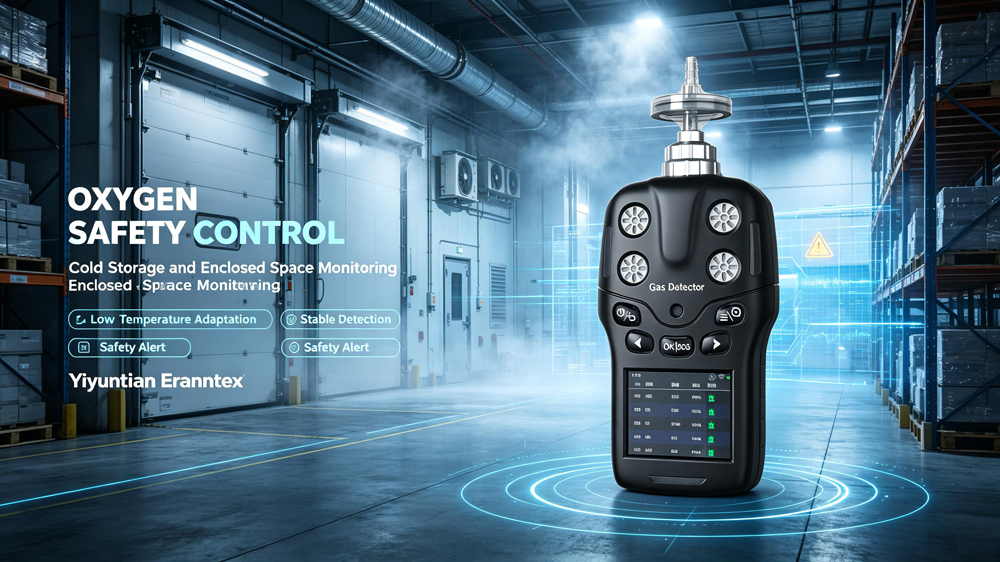
In emergencies such as earthquakes and fires, time is of the essence. Traditional detectors require complex calibration procedures, whereas modern devices utilize pre-calibration technology and one-touch startup functions to reduce deployment time from 10 minutes to 30 seconds.
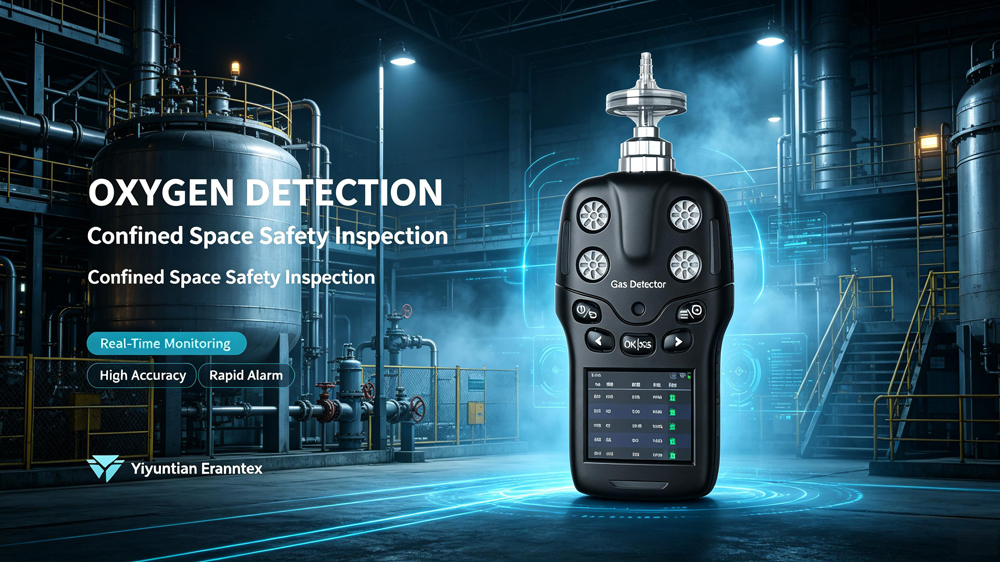
For confined space operations, oxygen detectors must offer long battery life and strong interference resistance. A mining company in Australia uses low-power laser sensors that can operate continuously for 72 hours on a single charge. Digital filtering technology eliminates interference from dust, water vapor, and other sources to ensure data accuracy. Additionally, some devices integrate fall detection and SOS emergency functions to further safeguard personnel safety.
IV. International Standards and Compliance: The Passport to Global Markets
Oxygen detectors exported to European and American markets must meet stringent standards such as ATEX (European Explosion-Proof Certification), UL (U.S. Safety Certification), and IECEx (International Electrotechnical Commission Certification). For example, the EU requires all industrial detection equipment to comply with the EN
50271 standard, while the U.S. NIOSH mandates ISO 80601-2-55 certification for medical-grade sensors.
To meet global compliance requirements, leading manufacturers typically establish multi-country certification laboratories and integrate compliance frameworks into the product design phase.
Conclusion: The Evolution from “General-Purpose” to “Specialized”
The future of oxygen detectors lies in breaking away from a one-size-fits-all product logic through scenario-based innovation. Whether for polar scientific research, medical monitoring, or emergency rescue, technology must be deeply integrated with specific needs to achieve true safety assurance. In the international market, compliance, localized services, and rapid response capabilities will become key differentiators for manufacturers.
Related information
-
How to Calibrate a Portable four-in-one Gas Detectors?
Portable four-in-one gas detectors are core protective equipment in the industrial safety field. However, sensors can experience z...
2026-09-18 -
What are the application scenarios for portable four-in-one gas detectors?
Portable four-in-one gas detectors typically monitor oxygen (O₂), flammable gas (LEL), carbon monoxide (CO), and hydrogen sulfide...
2026-09-16 -
Portable four-in-one Gas Detectors User Manual
The portable four-in-one gas detectors is a core piece of personal protective equipment (PPE) for ensuring the safety of personnel...
2026-09-14 -

Calibration Specifications for Ammonia gas Detectors
Calibration of ammonia gas detectors is a core step in ensuring their measurement accuracy and alarm reliability. However, ammonia...
2026-09-11 -
What is the appropriate installation height for an ammonia gas detectors?
Ammonia (NH₃) has a relative density of only 0.59, much lighter than air. This means that in the event of a leak, the gas will qu...
2026-09-09
 info@eranntexgas.com sale1@eranntexgas.com


 15914124845