
Accuracy Requirements for Carbon Dioxide Detectors
Publication Date:2026/05/12Amid the global industrial transformation driven by carbon neutrality goals, the accuracy of carbon dioxide detectors directly impacts industrial safety, environmental monitoring, and the reliability of scientific research data. From the EU’s Carbon Border Adjustment Mechanism to the U.S. EPA’s greenhouse gas emission standards, the international market has established a rigorous system of technical specifications for the accuracy of detection equipment. In the following sections, the Yiyuntian Eranntex editorial team will analyze the core accuracy requirements for CO₂ detectors from three perspectives: technical principles, application scenarios, and international standards.
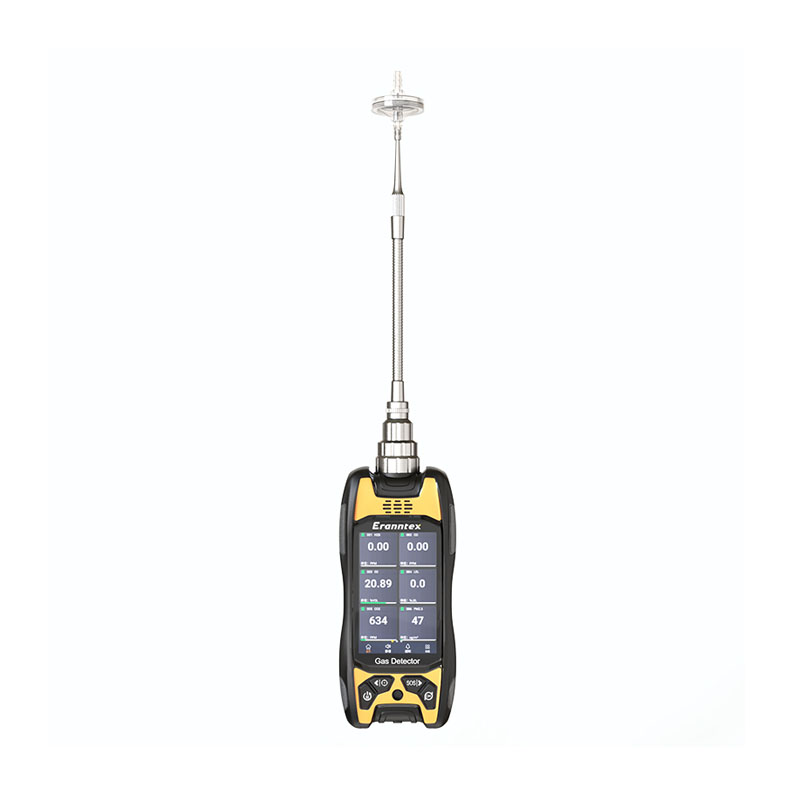
I. Technical Principles Determine the Upper Limit of Accuracy
Modern Carbon Dioxide Detectors primarily utilize non-dispersive infrared (NDIR) technology, which is based on the characteristic absorption of CO₂ molecules at a wavelength of 4.26 μm. Taking the German Testo 535 series as an example, its dual-beam design compensates for environmental interference via a reference beam, achieving a measurement accuracy of ±0.1 ppm and enabling stable detection of indoor air quality within a range of 0–5,000 ppm.
In terms of extreme environmental adaptability, the sensor integrates a heating element onto a single chip via micro-machining technology, ensuring stable accuracy within a temperature range of -40°C to +60°C. This technological breakthrough resolves the challenge of traditional infrared sensors being susceptible to condensation interference in low-temperature environments, making it standard equipment at Arctic research stations.
II. Application Scenarios Drive Accuracy Grading
The international market classifies Carbon Dioxide Detectors into three accuracy grades based on application scenarios:
Environmental Monitoring Grade: Accuracy requirement of ±100 ppm, suitable for building ventilation control, agricultural greenhouses, and similar scenarios.
Industrial Safety Grade: Accuracy requirement of ±5% FS, meeting leak detection and early warning needs in industries such as chemicals and power generation.
Research and Measurement Grade: Requires an accuracy of ±0.1% FS, serving fields such as carbon capture and climate research.
III. International Standards Establish an Accuracy Assurance System
Major global economies ensure the accuracy of detection equipment through certification systems:
EU: The EN 50271 standard requires that equipment have an error of no more than ±5% FS across the full measurement range and must also pass ATEX explosion-proof certification.
United States: NIST traceability requirements mandate that all commercial equipment undergo regular testing, while the FDA 21 CFR Part 11 regulation imposes additional data integrity requirements on medical-grade devices.
China: The GB 12358-2024 standard stipulates that equipment used for confined space operations must feature dual-alarm functionality with a response time of ≤30 seconds.
Regarding calibration standards, ISO 6145 requires three-point calibration using standard gases with a purity of ≥99.999%.
Today, as carbon neutrality has become a global consensus, the accuracy of carbon dioxide detectors has evolved from a technical parameter into a core element of industrial competitiveness. From quota accounting in the EU Emissions Trading System to energy management at Tesla’s Gigafactories, high-precision detection equipment is redefining the carbon footprint of industrial production. For equipment manufacturers, mastering the integrated technology of NDIR+QCL+AI and obtaining ISO/IEC 17025 laboratory certification will be the key to unlocking international markets.
Related information
-
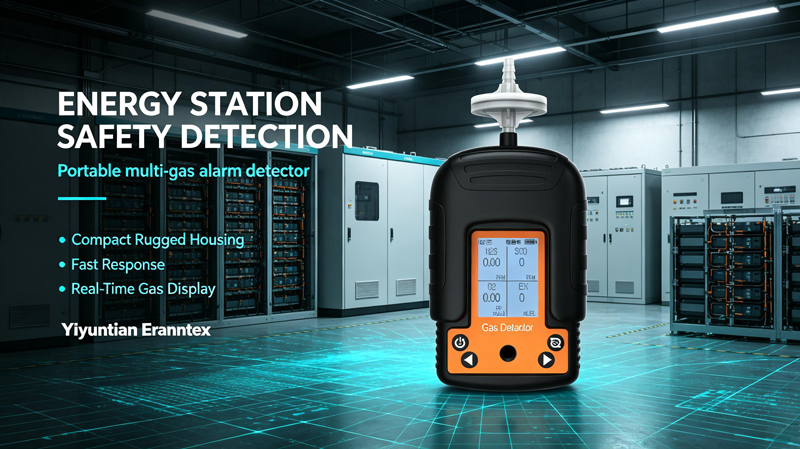
How to Calibrate a Portable four-in-one Gas Detectors?
Portable four-in-one gas detectors are core protective equipment in the industrial safety field. However, sensors can experience z...
2026-09-18 -
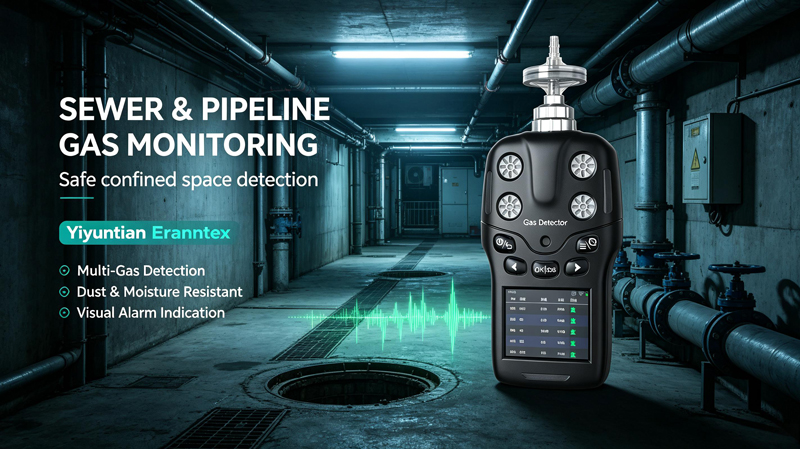
What are the application scenarios for portable four-in-one gas detectors?
Portable four-in-one gas detectors typically monitor oxygen (O₂), flammable gas (LEL), carbon monoxide (CO), and hydrogen sulfide...
2026-09-16 -
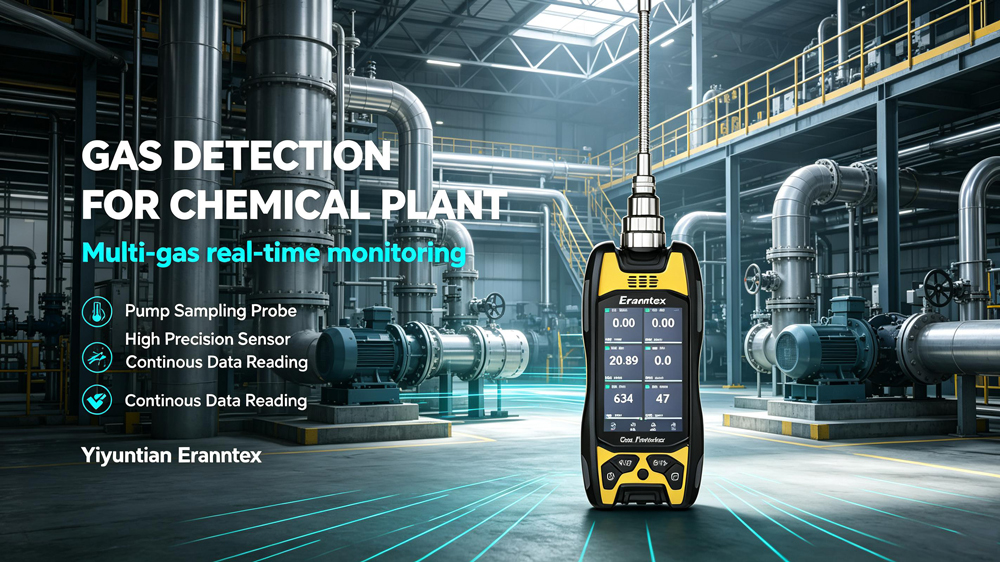
Portable four-in-one Gas Detectors User Manual
The portable four-in-one gas detectors is a core piece of personal protective equipment (PPE) for ensuring the safety of personnel...
2026-09-14 -

Calibration Specifications for Ammonia gas Detectors
Calibration of ammonia gas detectors is a core step in ensuring their measurement accuracy and alarm reliability. However, ammonia...
2026-09-11 -
What is the appropriate installation height for an ammonia gas detectors?
Ammonia (NH₃) has a relative density of only 0.59, much lighter than air. This means that in the event of a leak, the gas will qu...
2026-09-09
 info@eranntexgas.com sale1@eranntexgas.com


 15914124845