
Combustible Gas Detectors Sensors: How Often Do They Need Replacement?
Publication Date:2026/08/21Combustible gas detectors are indispensable equipment in the field of industrial safety. As the core component, the sensor directly determines the accuracy and reliability of detection. However, sensors are not permanent components; they age over time, and their performance gradually degrades. So, exactly how often should a sensor be replaced? There is no "one-size-fits-all" answer, but by understanding sensor types, operating environments, and maintenance practices, you can make a scientifically sound judgment.
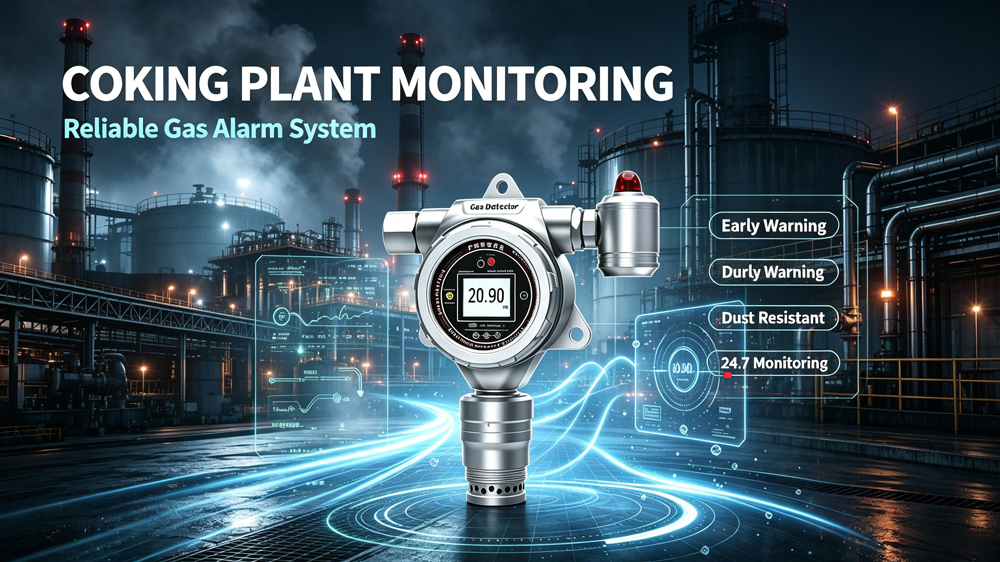
Typical Lifespans of Different Sensor Types
There are three main technologies used for sensors in combustible gas detectors, and their lifespans vary significantly.
Catalytic combustion sensors are currently the most widely used type, primarily for detecting combustible gases—such as methane and propane—within the Lower Explosive Limit (LEL) range. They operate on the principle of flameless combustion occurring on the catalyst surface, generating heat and causing a change in electrical resistance. Under normal operating conditions, these sensors typically last 2 to 3 years. However, if substances such as silicon compounds, sulfides, or lead vapors are present in the environment, the catalyst can quickly become "poisoned," potentially shortening the lifespan to around one year.
Infrared sensors detect gas based on its absorption characteristics at specific infrared wavelengths; they do not rely on chemical consumption and offer exceptional stability. With a lifespan typically ranging from 5 to 10 years, they represent the longest-lasting solution for combustible gas detection. However, if the infrared window becomes covered with dust or oil, detection performance is compromised, necessitating regular cleaning and maintenance.
Semiconductor sensors are lower in cost and commonly used in residential gas alarms; they generally have a lifespan of 3 to 5 years. However, their sensitivity is susceptible to fluctuations in temperature and humidity, and their long-term stability is inferior to that of the other two types.
What Factors Accelerate Sensor Aging?
A sensor's actual lifespan is often far shorter than its theoretical lifespan under laboratory conditions because real-world operating environments harbor various "silent killers."
Ambient temperature and humidity are the most critical factors. High temperatures accelerate electrolyte evaporation and the decay of catalyst activity, while high humidity can lead to the corrosion of internal components or the dilution of the electrolyte. Under extreme temperature and humidity conditions, the sensor's lifespan may be reduced by 30% to 50%.
Exposure to sudden spikes in gas concentration is another factor that cannot be ignored. Frequent exposure to high concentrations of the target gas accelerates the wear and tear of core components. Prolonged operation beyond the rated measurement range can even result in permanent damage.
Contaminants and cross-interference are also common causes of reduced lifespan. Dust can clog the sensor's gas intake, corrosive gases can erode electrodes, and silicon vapors or sulfides can cause catalytic combustion sensors to fail due to "poisoning."
How do you determine if a sensor needs replacement?
Rather than strictly adhering to a fixed replacement schedule, a more scientific approach is to implement a "condition-based" maintenance strategy. Immediate consideration should be given to replacing the sensor if any of the following signs appear:
Calibration failure: The sensor fails to achieve the expected accuracy during calibration with standard gas, or the deviation consistently exceeds permissible limits.
Significantly slower response: The rate at which the reading rises after introducing the test gas is markedly lower than the manufacturer's specifications.
Severe zero-point drift: The sensor reading consistently deviates from zero in clean air, and the issue recurs quickly even after zeroing.
Frequent false alarms: Alarms are triggered repeatedly in the absence of a gas leak, indicating a significant decline in sensor stability.
Practical tips for extending sensor lifespan
Regular calibration is the most effective way to extend sensor lifespan. Industry standards generally recommend calibration every 3 to 6 months, or monthly in harsh environments. During daily use, keeping the sensor surface clean, avoiding long-term storage in extreme environments, and protecting the device from physical impact and water ingress can effectively slow the aging process. Additionally, choosing smart detectors with self-diagnostic capabilities allows users to monitor sensor health in real-time and make replacement decisions during the early stages of performance degradation.
In summary, the replacement interval for combustible gas detectors sensors varies by type: approximately 2–3 years for catalytic combustion sensors, up to 5–10 years for infrared sensors, and about 3–5 years for semiconductor sensors. However, the true determinant of when to replace a sensor is not the calendar date, but rather its actual performance during routine testing. When it comes to safety, "replacing early" is always wiser than "extending service beyond the recommended lifespan."
Related information
-
How to Calibrate a Portable four-in-one Gas Detectors?
Portable four-in-one gas detectors are core protective equipment in the industrial safety field. However, sensors can experience z...
2026-09-18 -
What are the application scenarios for portable four-in-one gas detectors?
Portable four-in-one gas detectors typically monitor oxygen (O₂), flammable gas (LEL), carbon monoxide (CO), and hydrogen sulfide...
2026-09-16 -
Portable four-in-one Gas Detectors User Manual
The portable four-in-one gas detectors is a core piece of personal protective equipment (PPE) for ensuring the safety of personnel...
2026-09-14 -

Calibration Specifications for Ammonia gas Detectors
Calibration of ammonia gas detectors is a core step in ensuring their measurement accuracy and alarm reliability. However, ammonia...
2026-09-11 -
What is the appropriate installation height for an ammonia gas detectors?
Ammonia (NH₃) has a relative density of only 0.59, much lighter than air. This means that in the event of a leak, the gas will qu...
2026-09-09
 info@eranntexgas.com sale1@eranntexgas.com


 15914124845