
What is the normal range for a carbon monoxide detectors?
Publication Date:2026/07/29Carbon monoxide detectors serve as a critical line of defense against fatal poisoning accidents in global industrial safety, confined space operations, and commercial building management. For facility managers, safety engineers, and on-site personnel in the international market, accurately understanding the normal range and alarm thresholds for carbon monoxide concentration is essential for ensuring personnel safety. Because carbon monoxide is a highly toxic gas—colorless, odorless, and non-irritating—it is known as the "silent killer"; consequently, safety standards for it are extremely strict. Here, the team at Yiyuntian Eranntex outlines these standards.
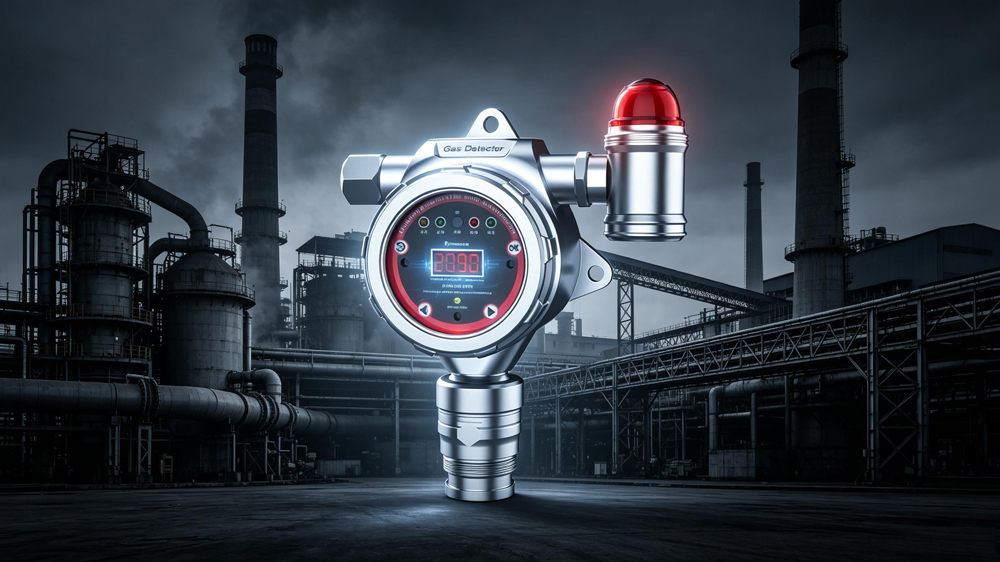
The Ideal Safety Baseline: Zero Concentration
In a well-ventilated environment free from combustion sources or industrial leaks, the ideal reading on a carbon monoxide detectors is 0 ppm. However, in real-world settings, trace amounts of background carbon monoxide may exist due to vehicle exhaust, industrial emissions, or urban pollution. Generally, a range of 0 to 9 ppm is considered a normal background level; while such low-level exposure typically poses no immediate health risk, the source of the gas still warrants attention.
International Occupational Exposure Limits
When ambient carbon monoxide levels rise, determining whether the concentration is "normal" depends on exposure limits established by international occupational health organizations. Most industrial safety standards define the 0 to 50 ppm range as safe for an 8-hour time-weighted average (TWA). This means that personnel can work normally provided concentrations remain within this range and ventilation is adequate. However, levels between 25 and 49 ppm—while below the threshold for acute poisoning—constitute moderate exposure; safety protocols typically require immediate activation of ventilation systems and an investigation into potential leak sources.
Danger Alarms and Emergency Evacuation Thresholds
The core value of a carbon monoxide detectors lies in its tiered alarm system. When concentrations exceed the safety baseline, the device triggers alarms at various levels to guide personnel actions. According to internationally recognized safety standards, detectors typically trigger a low-level alarm when the concentration reaches 25 ppm, alerting personnel to exercise caution. Concentrations of 50 ppm or higher are considered hazardous; at this level, a high-level alarm must be triggered immediately, requiring personnel to evacuate the area at once and summon professional emergency assistance. In extreme scenarios, if concentrations surge to 100 ppm or even exceed 200 ppm, they can cause unconsciousness or death within a very short time, representing a critical, life-threatening hazard.
Measurement Range and Alarm Settings for Industrial Equipment
In industrial applications, the measurement range for fixed carbon monoxide detectors is typically set from 0 to 1,000 ppm to accommodate potential major leaks. To ensure an adequate safety margin, alarm thresholds for industrial equipment are often set more strictly than those for residential devices. Furthermore, mandatory national standards stipulate that the low-level alarm setting for industrial carbon monoxide detectors should fall between 150 ppm and 300 ppm, ensuring sufficient warning time before gas accumulates to dangerous levels.
As outlined above, the normal reading of a carbon monoxide detectors should ideally remain at 0 ppm and must not exceed the occupational exposure limit of 50 ppm. Enterprises must scientifically establish critical alarm thresholds—such as 25 ppm or 50 ppm—based on specific operational environments and strictly adhere to regular calibration and maintenance schedules. This ensures that the detectors provide accurate, reliable life-safety warnings under any emergency condition.
Related information
-
Portable four-in-one Gas Detectors User Manual
The portable four-in-one gas detectors is a core piece of personal protective equipment (PPE) for ensuring the safety of personnel...
2026-09-14 -

Calibration Specifications for Ammonia gas Detectors
Calibration of ammonia gas detectors is a core step in ensuring their measurement accuracy and alarm reliability. However, ammonia...
2026-09-11 -
What is the appropriate installation height for an ammonia gas detectors?
Ammonia (NH₃) has a relative density of only 0.59, much lighter than air. This means that in the event of a leak, the gas will qu...
2026-09-09 -
Can a carbon dioxide detectors measure formaldehyde?
Standard carbon dioxide detectors cannot detect formaldehyde. They require different sensor technologies for accurate measuremen...
2026-09-04 -
How Long Does a Carbon Dioxide Detectors Last?
The lifespan of a carbon dioxide detectors is a core issue that every safety manager and procurement decision-maker must address. ...
2026-09-02
 info@eranntexgas.com sale1@eranntexgas.com


 18926518127