
Technological Trends in Carbon Monoxide Detectors
Publication Date:2026/08/03Driven by continuously upgrading global industrial safety standards and the widespread adoption of IoT technology, carbon monoxide detectors are undergoing a profound transformation—evolving from simple, passive alarm devices into intelligent, multi-dimensional sensing terminals. For technical decision-makers, safety engineers, and industry investors, keenly identifying the technological evolution in this field is crucial for future market positioning and the construction of modern safety management systems. Currently, global carbon monoxide detection technology is rapidly advancing along three core trajectories.
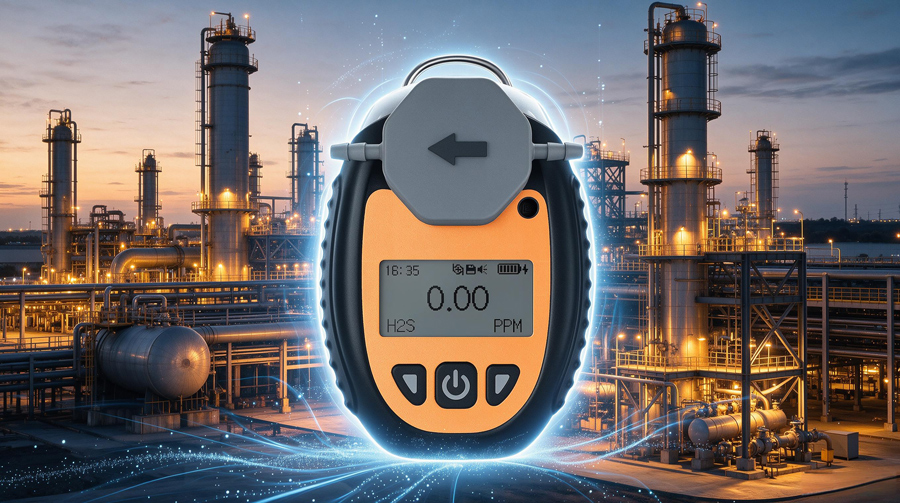
Miniaturization and Low-Power Evolution of Sensing Technology
Traditional carbon monoxide sensors faced limitations regarding size and power consumption; however, the introduction of Micro-Electro-Mechanical Systems (MEMS) and novel semiconductor materials is breaking through these bottlenecks. Modern micro-hotplate carbon monoxide sensors utilize extremely low thermal mass to drastically reduce heater power consumption, enabling seamless compatibility with integrated circuit manufacturing processes and achieving System-on-Chip (SoC) level integration. This miniaturized, low-power design not only facilitates easy integration into portable devices but also provides the foundational support necessary for IoT applications and battery-powered distributed wireless sensor networks.
Intelligent Algorithms and AI-Driven Interference Compensation
In complex industrial environments, fluctuations in temperature and humidity, background gas interference, and sensor baseline drift are common causes of false alarms. The future technological trend lies in the deep integration of artificial intelligence and edge computing. By embedding intelligent algorithms directly into the device, carbon monoxide detectors can perform adaptive baseline calibration and utilize dynamic compensation algorithms to effectively eliminate interference from environmental factors such as humidity. Furthermore, by incorporating advanced technologies like Fourier Transform Infrared (FTIR) spectroscopy, AI models can accurately perform non-linear retrieval of CO concentrations from complex flue gases—even under harsh operating conditions—thereby significantly enhancing detection reliability.
IoT Integration and the Convergence of Flight, Sensing, and Computing
Carbon monoxide detectors are rapidly integrating into digital safety ecosystems. On one hand, smart detectors are commonly equipped with wireless communication modules—such as Wi-Fi, Bluetooth, or LoRa—that upload real-time data to the cloud, enabling centralized, remote monitoring and predictive maintenance across multiple devices. On the other hand, within the burgeoning low-altitude economy, gas sensing technology is becoming deeply integrated with drone flight control systems. Coin-sized sensor modules embedded in drones create "fly-sense-compute" integrated terminals; these not only map low-altitude atmospheric pollution in 3D in real time but also provide ultra-early fire warnings by detecting trace amounts of CO—a signature gas released during the initial stages of lithium-battery thermal runaway.
In summary, the future of carbon monoxide detectors extends far beyond simple concentration measurement; they are evolving toward lower power consumption, enhanced computing power, deeper connectivity, and more diverse application scenarios, thereby providing unprecedented technological support for global safety systems.
Related information
-
How to Calibrate a Portable four-in-one Gas Detectors?
Portable four-in-one gas detectors are core protective equipment in the industrial safety field. However, sensors can experience z...
2026-09-18 -
What are the application scenarios for portable four-in-one gas detectors?
Portable four-in-one gas detectors typically monitor oxygen (O₂), flammable gas (LEL), carbon monoxide (CO), and hydrogen sulfide...
2026-09-16 -
Portable four-in-one Gas Detectors User Manual
The portable four-in-one gas detectors is a core piece of personal protective equipment (PPE) for ensuring the safety of personnel...
2026-09-14 -

Calibration Specifications for Ammonia gas Detectors
Calibration of ammonia gas detectors is a core step in ensuring their measurement accuracy and alarm reliability. However, ammonia...
2026-09-11 -
What is the appropriate installation height for an ammonia gas detectors?
Ammonia (NH₃) has a relative density of only 0.59, much lighter than air. This means that in the event of a leak, the gas will qu...
2026-09-09
 info@eranntexgas.com sale1@eranntexgas.com


 15914124845