
Operational Guidelines for Oxygen Detectors
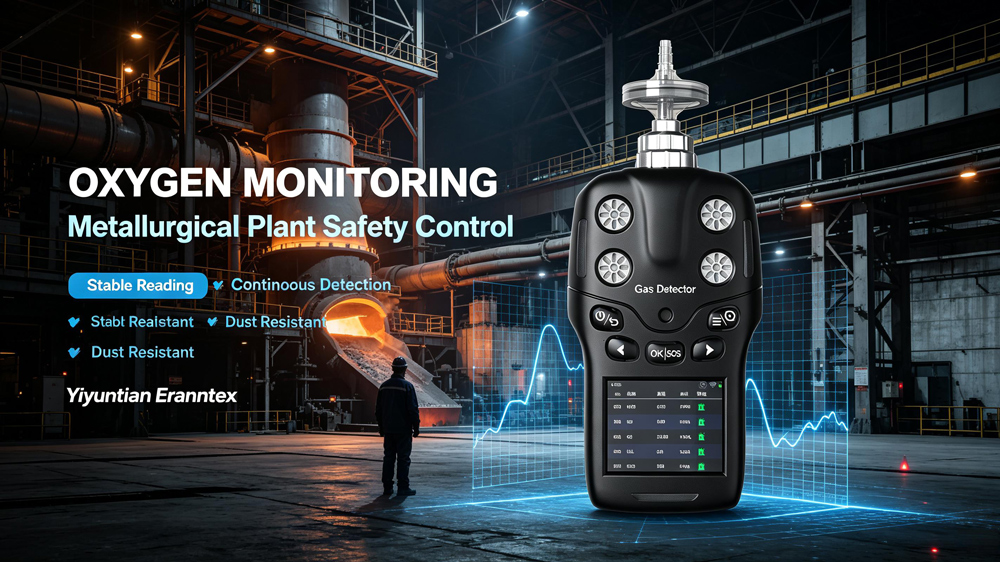
Publication Date:2026/08/26Oxygen is a fundamental element for sustaining life and supporting combustion. Whether it is the risk of fatal asphyxiation in oxygen-deficient environments or the potential for violent fires and explosions in oxygen-enriched atmospheres, oxygen-related hazards pose severe threats to the safety of frontline personnel. Consequently, an oxygen detectors serves not merely as a "pass" for entering confined spaces but as a vital "lifesaver" for workers on site. For purchasers, while the performance of the detector itself is crucial, establishing a scientific, rigorous set of operational guidelines—aligned with international safety standards—is the fundamental prerequisite for ensuring the equipment's effectiveness. Below, the team at Yiyuntian Eranntex outlines the core operational guidelines for oxygen detectors to assist enterprises in establishing standardized, safe operating procedures.
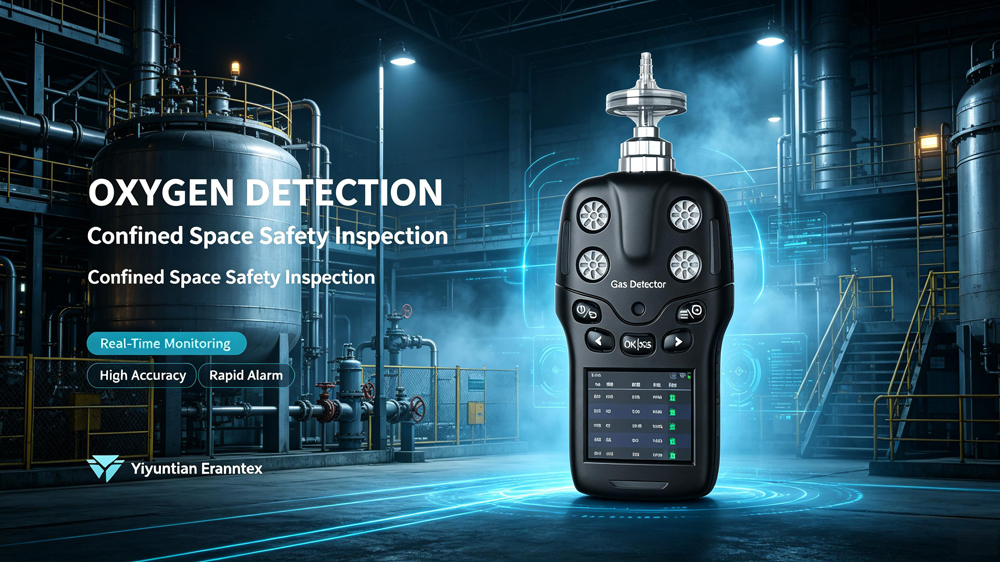
I. Pre-startup Preparation and Fresh Air Calibration
Proper operation begins before entering any potentially hazardous area. Operators must first inspect the device for physical integrity and battery status, and check the intake filter for blockages. After powering on the device, "fresh air calibration" must be performed in an outdoor environment known to have clean, well-circulated air. Since the oxygen concentration in standard atmosphere is approximately 20.9% vol, the device must allow the reading to stabilize before being calibrated—either automatically or manually—to this baseline value. This step is critical; it effectively eliminates baseline drift in the electrochemical sensor caused by environmental changes, ensuring the absolute accuracy of subsequent data.
II. The "Test Before Entry" Principle for Confined Spaces
Before entering confined spaces such as storage tanks, sewers, or utility galleries, the golden rule of "ventilate first, test second, and work last" must be strictly observed. When using a pumped oxygen detectors, the sampling probe must be inserted into the space, strictly following a three-point vertical sampling method (covering the upper, middle, and lower sections). Although the density of oxygen is similar to that of air, readings can be influenced by temperature and mixing with other gases; therefore, the probe should remain at each sampling point for 3 to 5 minutes, allowing the reading to fully stabilize before it is recorded. Personnel entry is permitted only when the oxygen concentration remains consistently within the safe range of 19.5% to 23.5% by volume.
III. Continuous Monitoring and Alarm Response During Operations
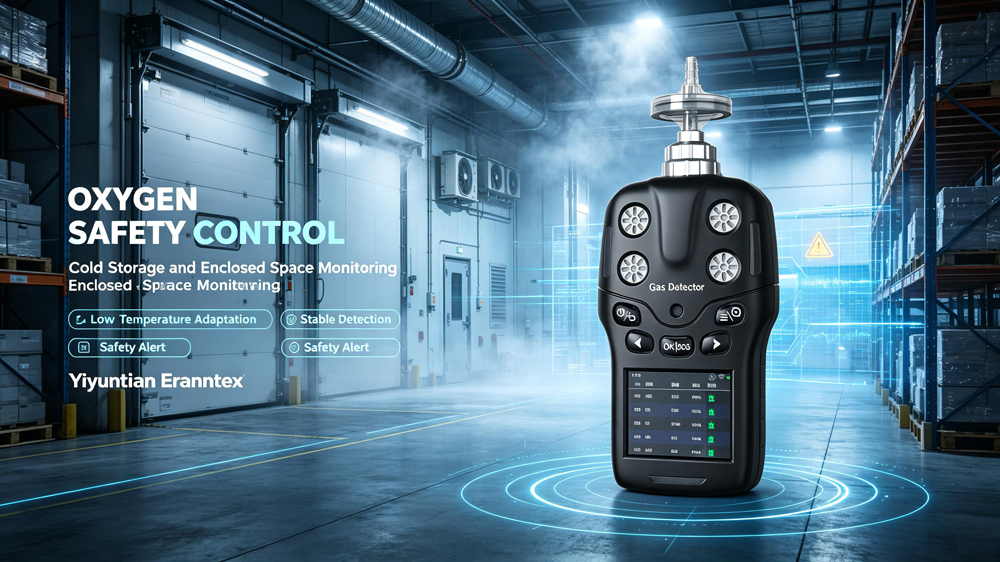
Upon entering the work area, the diffusion-type oxygen detectors must remain powered on and be worn within the operator's breathing zone to provide real-time readings of the actual oxygen content in the inhaled air. Operators should cultivate the habit of frequently checking the display data. If the device triggers an audible, visual, or vibrating alarm indicating low or high oxygen levels, work must cease immediately—regardless of whether the operator perceives any physical symptoms—and the operator must quickly evacuate to a safe area and report the incident. Attempting to reset or turn off the device, or ignoring the alarm while inside the hazardous area, is strictly prohibited.
IV. Routine Maintenance, Bump Testing, and Periodic Calibration
The long-term reliability of oxygen detectors depends on systematic preventive maintenance. It is strongly recommended that operators perform a "bump test" before each use—briefly exposing the sensor to a standard gas of known concentration—to quickly verify that the sensor response and alarm functions are operating correctly. Furthermore, the enterprise must establish a rigorous periodic calibration schedule; comprehensive calibration using standard gas should typically be performed by qualified personnel every 6 to 12 months. In harsh operating environments—such as those with high dust or humidity levels—the calibration interval should be shortened to 3 to 6 months.
V. Data Storage and Compliance Record Management
Modern oxygen detectors are typically equipped with robust data-logging capabilities. Enterprises should regularly export device detection logs, alarm event records, and calibration data. These records serve not only as critical evidence for demonstrating due diligence during safety regulation audits but also provide objective data to support subsequent hazard identification and accident root-cause analysis. Only through a combination of standardized operation and rigorous maintenance can oxygen detectors truly fulfill their role as a vital line of defense for life safety.
In summary, from baseline calibration in clean air and scientific sampling in confined spaces to the unconditional response to every alarm, every operational detail is a matter of life and death. It is hoped that enterprises will internalize the aforementioned standards into their daily safety management protocols and establish a closed-loop management system covering the entire equipment lifecycle through regular impact testing, professional calibration and maintenance, and comprehensive data logging. Only by deeply integrating standardized operation with rigorous maintenance can oxygen detectors truly serve as a robust line of defense safeguarding the lives and safety of every worker.
Related information
-
How to Calibrate a Portable four-in-one Gas Detectors?
Portable four-in-one gas detectors are core protective equipment in the industrial safety field. However, sensors can experience z...
2026-09-18 -
What are the application scenarios for portable four-in-one gas detectors?
Portable four-in-one gas detectors typically monitor oxygen (O₂), flammable gas (LEL), carbon monoxide (CO), and hydrogen sulfide...
2026-09-16 -
Portable four-in-one Gas Detectors User Manual
The portable four-in-one gas detectors is a core piece of personal protective equipment (PPE) for ensuring the safety of personnel...
2026-09-14 -

Calibration Specifications for Ammonia gas Detectors
Calibration of ammonia gas detectors is a core step in ensuring their measurement accuracy and alarm reliability. However, ammonia...
2026-09-11 -
What is the appropriate installation height for an ammonia gas detectors?
Ammonia (NH₃) has a relative density of only 0.59, much lighter than air. This means that in the event of a leak, the gas will qu...
2026-09-09
 info@eranntexgas.com sale1@eranntexgas.com


 15914124845