
How to Calibrate a Portable four-in-one Gas Detectors?
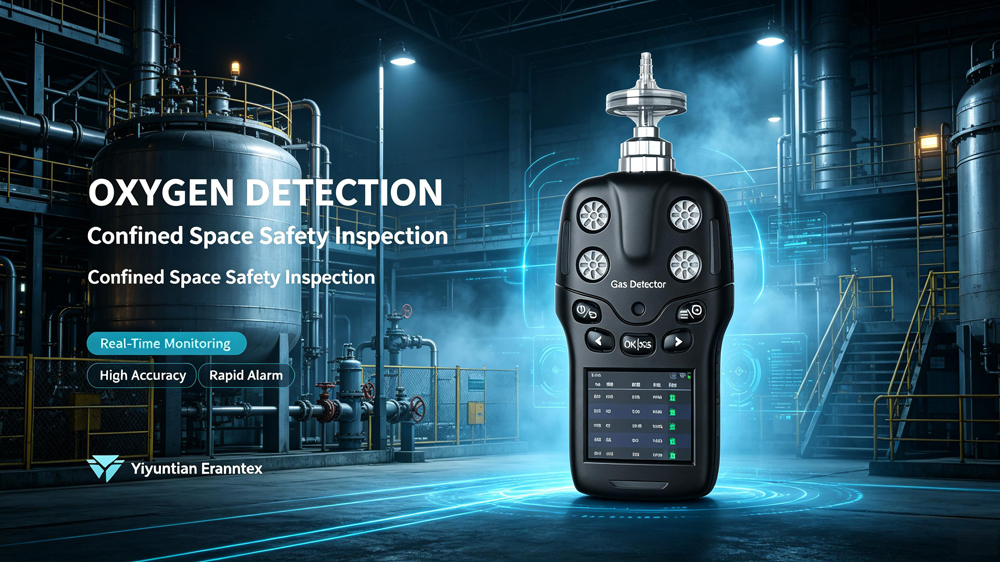
Publication Date:2026/09/18Portable four-in-one gas detectors are core protective equipment in the industrial safety field. However, sensors can experience zero-point drift and range drift due to factors such as environmental temperature and humidity, gas corrosion, and long-term use, leading to inaccurate detection data. Therefore, scientific calibration is crucial to ensuring the reliability of portable four-in-one gas detectors. For users, calibration typically includes three levels: daily impact testing, periodic zero-point and range calibration, and annual statutory metrological verification. Below is a detailed introduction from Yiyuntian Eranntex.
I. Impact Testing: A Must-Perform Verification Before Each Use
Impact testing is the lowest-cost and most direct daily verification method and is strongly recommended to be performed before each use. Its purpose is not to adjust instrument parameters, but to quickly verify whether the sensor can still "sensitize danger and trigger an alarm."
During operation, install the calibration cover on the detector's sensor inlet. Use a pressure reducing valve and flow meter to introduce a standard gas of known concentration at a stable flow rate into the detector. Observe whether the instrument can respond quickly within the specified time and accurately trigger the preset audible, visual, and vibration alarm. If the impact test fails, the portable four-in-one gas detector must be immediately taken out of service and professionally repaired. It is strictly forbidden to bring it into hazardous work areas.
II. Zero-point Calibration and Span Calibration: The Core Process of Periodic Calibration
When the impact test shows that the sensor response deviation exceeds the allowable range, or when the specified calibration cycle has been reached, a complete calibration procedure must be performed. A complete calibration consists of two steps: first, zero-point calibration, then span calibration.
Zero-point Calibration: Place the portable four-in-one gas detector in a clean air environment, turn it on and warm it up for 5 to 15 minutes until the readings stabilize, then enter calibration mode to perform zero-point calibration. At this time, the instrument will set the current environment as the reference value—the oxygen reading should be calibrated to 20.9% VOL, and the readings of the other three gases should be zeroed. This step effectively eliminates baseline drift caused by changes in the environment.
Span Calibration: After zero-point calibration is completed, disconnect the clean air source and connect a standard gas cylinder containing a target gas of known concentration. Common standard gas concentration configurations are: 50% LEL for combustible gas, 20.9% VOL for oxygen, 50 ppm for carbon monoxide, and 25 ppm for hydrogen sulfide. The standard gas is introduced through the calibration hood at a stable flow rate. After the readings of each channel stabilize, the portable four-in-one gas detector will automatically compare the detected values with the standard values and calculate the new calibration coefficients. After calibration, disconnect the gas supply and allow the instrument to zero in clean air. It is recommended to perform a verification test using the same bottle of standard gas to confirm that the reading error is within the allowable range.
Note that the operating interface and procedures of different brands and models of detectors vary. It is essential to strictly follow the user manual of the portable four-in-one gas detector. The calibration sequence is usually zero point first, then span; do not reverse this order.
III. Calibration Cycle and Statutory Verification Requirements
The calibration frequency needs to be determined comprehensively based on the usage scenario and regulatory requirements. International best practices are as follows:
In typical industrial environments: It is recommended to perform a complete zero point and span calibration every 6 months.
High-risk environments: Calibration is recommended monthly or every 3 months. Some industry standards require calibration before each use.
New purchase or after repair: Calibration must be completed before first use.
Legal metrological verification: According to relevant metrological verification procedures, the verification cycle for oxygen, combustible gas, carbon monoxide, and hydrogen sulfide detectors should not exceed one year. This means that portable four-in-one gas detectors must undergo a comprehensive verification by a qualified metrology institution at least annually. The verification interval can only be shortened, not extended; otherwise, the measurement results will be invalid.
IV. Calibration Tools and Record Management
The following tools are required for calibration: standard gas cylinders of known concentration, pressure reducing valve, flow meter, calibration hood, and connecting gas tubing. Calibration operations should be performed in a well-ventilated, safe environment free of hazardous gases, avoiding strong winds and extreme temperature and humidity.
All calibration activities must be accurately recorded, including the calibration date, equipment number, standard gas batch number and concentration, readings before and after calibration, and operator signature. These records are not only key evidence for enterprises to meet international safety regulations but also provide a data basis for tracking and analyzing sensor performance degradation trends. When a portable four-in-one gas detector repeatedly fails calibration or experiences a sharp drop in accuracy shortly after calibration, it usually indicates that the sensor is nearing the end of its lifespan and should be replaced promptly.
In general, the calibration of a portable four-in-one gas detector is a systematic process, encompassing three levels: routine impact testing, periodic zero-point and span calibration, and annual statutory verification. Only by establishing a scientific calibration system and strictly adhering to it can the portable four-in-one gas detector consistently provide accurate and reliable detection data throughout its entire lifespan, truly safeguarding the lives of operators.
Related information
-
How to Calibrate a Portable four-in-one Gas Detectors?
Portable four-in-one gas detectors are core protective equipment in the industrial safety field. However, sensors can experience z...
2026-09-18 -
What are the application scenarios for portable four-in-one gas detectors?
Portable four-in-one gas detectors typically monitor oxygen (O₂), flammable gas (LEL), carbon monoxide (CO), and hydrogen sulfide...
2026-09-16 -
Portable four-in-one Gas Detectors User Manual
The portable four-in-one gas detectors is a core piece of personal protective equipment (PPE) for ensuring the safety of personnel...
2026-09-14 -

Calibration Specifications for Ammonia gas Detectors
Calibration of ammonia gas detectors is a core step in ensuring their measurement accuracy and alarm reliability. However, ammonia...
2026-09-11 -
What is the appropriate installation height for an ammonia gas detectors?
Ammonia (NH₃) has a relative density of only 0.59, much lighter than air. This means that in the event of a leak, the gas will qu...
2026-09-09
 info@eranntexgas.com sale1@eranntexgas.com


 15914124845