
How Do Nitrogen Oxide Detectors Work?
Publication Date:2026/05/18Nitrogen oxide detectors play a crucial role in environmental protection, industrial safety, and air quality monitoring. To provide you with a clear and intuitive understanding of how they work, we will break down and analyze the two mainstream detection technologies currently used internationally: chemiluminescence and electrochemical methods. While each method has its own advantages, the core logic behind both involves converting the concentration of invisible gases into readable electrical signals through physical or chemical reactions. Below, the Yiyuntian Eranntex editorial team will introduce these methods to you.
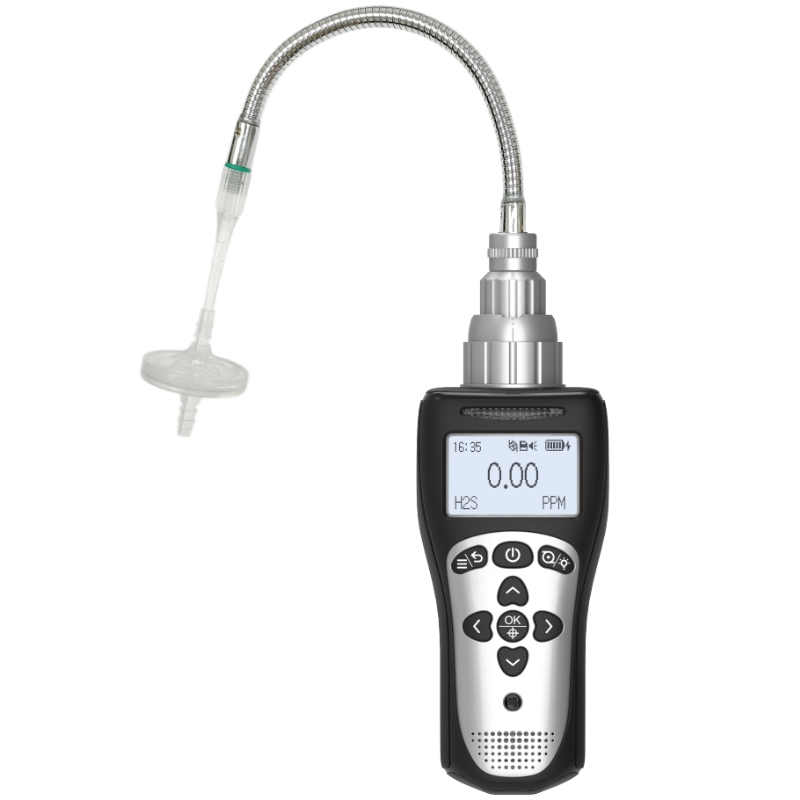
Core Principle 1: Chemiluminescence
Chemiluminescence is currently the gold standard worldwide for monitoring nitrogen oxides in ambient air and industrial exhaust gases. Its detection mechanism is ingenious, leveraging the property that NO releases light energy when it reacts with O₃.
The entire detection process is typically divided into three steps:
Catalytic Conversion: Since both NO and NO₂ are present in the environment, the analyzer first splits the sample gas into two streams. One stream directly measures the concentration of NO; the other passes through a highly efficient “molybdenum converter” or “photolytic converter,” where NO₂ is reduced to NO.
Chemical Reaction and Luminescence: The NO-containing gas is fed into a reaction chamber and mixed with ozone generated inside the instrument. The following chemical reaction occurs: NO + O₃ → NO₂ + O₂ + light. This reaction emits near-infrared light at a specific wavelength.
Photoelectric Conversion: The reaction chamber is connected to an extremely sensitive photomultiplier tube (PMT). The PMT captures the faint photons generated by the reaction and converts them into an electrical signal. The intensity of the light is directly proportional to the NO concentration. By comparing the signals from the two gas streams, the instrument can not only calculate the NO concentration but also determine the NO₂ concentration based on the difference between the two.
The advantage of this method lies in its extremely high selectivity and sensitivity; it is virtually unaffected by interference from other gases, making it highly suitable for high-precision air quality monitoring by environmental protection agencies.
Core Principle 2: Electrochemical Method
If you are looking at a handheld detector or a fixed industrial safety alarm, most of them utilize electrochemical sensor technology. This technology places greater emphasis on practicality and portability.
Its operating principle is similar to that of a miniature battery:
Gas Diffusion: Nitrogen oxides in the air diffuse through a specialized permeable membrane into the sensor. This membrane is critical, as it controls the rate of gas entry, preventing the sensor from becoming “poisoned” or overloaded.
Redox Reaction: The gas reaches the surface of the sensor’s working electrode, where an oxidation or reduction reaction occurs under the influence of a catalyst. For example, NO may be oxidized and release electrons.
Current Generation: The flow of these electrons generates a current in the external circuit. According to Faraday’s law, the magnitude of the generated current exhibits a strict linear relationship with the gas concentration. A microprocessor inside the instrument reads this current signal, applies temperature compensation and calibration algorithms, and ultimately displays the concentration value in ppm or ppb on the screen.
The advantages of electrochemical sensors include their compact size, low power consumption, and relatively controllable cost, making them ideal for personal protective equipment or rapid on-site leak detection.
Data Processing and Anti-Interference Design
Regardless of the detection principle, modern nitrogen oxide detectors rely on powerful signal processing systems. Overseas instrument designs place great emphasis on eliminating cross-interference. For example, carbon monoxide or sulfur dioxide present in the environment may interfere with detection results. Therefore, high-quality detectors are equipped with complex algorithmic models or feature specific chemical scrubbers at the air inlet to filter out interfering gases before they enter the reaction chamber.
Furthermore, to withstand harsh outdoor environments, the instruments continuously monitor changes in temperature and atmospheric pressure, dynamically compensating for sensor readings to ensure data remains accurate and reliable—whether in polar regions with temperatures below freezing or in high-temperature deserts.
Simply put, a nitrogen oxide detector functions like an extremely sensitive “electronic nose.” The chemiluminescence method quantifies gases by capturing the “faint glow” produced during chemical reactions, prioritizing ultimate precision; the electrochemical method quantifies gases by detecting the microcurrents generated during reactions, prioritizing efficiency and portability. Understanding these principles will help you select the most suitable detection equipment for your specific application.
Related information
-
How to Calibrate a Portable four-in-one Gas Detectors?
Portable four-in-one gas detectors are core protective equipment in the industrial safety field. However, sensors can experience z...
2026-09-18 -
What are the application scenarios for portable four-in-one gas detectors?
Portable four-in-one gas detectors typically monitor oxygen (O₂), flammable gas (LEL), carbon monoxide (CO), and hydrogen sulfide...
2026-09-16 -

Portable four-in-one Gas Detectors User Manual
The portable four-in-one gas detectors is a core piece of personal protective equipment (PPE) for ensuring the safety of personnel...
2026-09-14 -

Calibration Specifications for Ammonia gas Detectors
Calibration of ammonia gas detectors is a core step in ensuring their measurement accuracy and alarm reliability. However, ammonia...
2026-09-11 -
What is the appropriate installation height for an ammonia gas detectors?
Ammonia (NH₃) has a relative density of only 0.59, much lighter than air. This means that in the event of a leak, the gas will qu...
2026-09-09



 info@eranntexgas.com sale1@eranntexgas.com


 15914124845