
What is the calibration interval for nitrogen oxide detectors?
Publication Date:2026/06/18For international users, environmental compliance officers, and facility operations personnel, the calibration interval for nitrogen oxide detectors is not a fixed figure; rather, it depends on the equipment type, application scenario, and the environmental regulations of the specific country or region. Establishing a scientifically sound calibration schedule and strictly adhering to it is crucial for ensuring the accuracy and legal validity of monitoring data. Below is an analysis by the Yiyuntian Eranntex team, categorized based on generally accepted international standards and industrial practices:
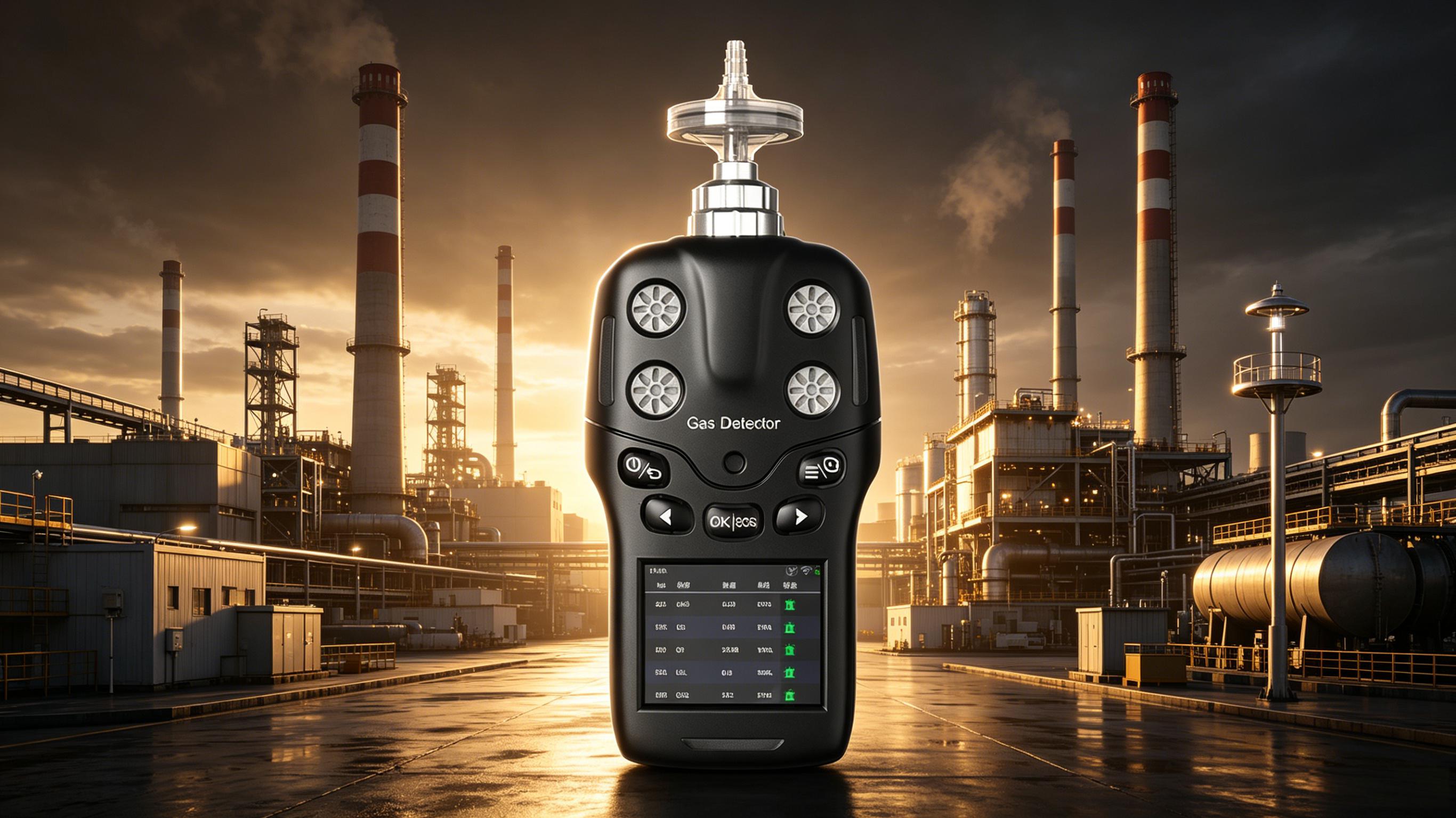
Strict Standards for Continuous Emissions Monitoring Systems (CEMS) at Stationary Sources
When monitoring stationary sources—such as industrial exhaust stacks—nitrogen oxide detectors often serve as core components of Continuous Emissions Monitoring Systems (CEMS) and are subject to the strictest calibration requirements. Under prevailing international environmental standards, systems equipped with automatic calibration capabilities must perform an automatic zero and span calibration at least once every 24 hours and record drift data. For extractive gaseous pollutant monitoring systems lacking automatic calibration, manual calibration is typically required at least once every seven days. Furthermore, to ensure the accuracy of the entire sampling line, a full-system calibration must be performed at least once every three months, supplemented by a quarterly comparative verification using actual flue gas.
Maintenance Benchmarks for Industrial Safety Alarms and Portable Devices
In explosion-proof zones where there is a risk of NOx leakage—such as pharmaceutical plants or chemical facilities—fixed safety alarms typically require calibration once a year. However, if the equipment operates in harsh environments characterized by severe corrosion or high dust levels, it is recommended to shorten the calibration interval to once every six months. For portable nitrogen oxide detectors, international industry practice recommends calibration every three months, as electrochemical sensors are susceptible to environmental temperature, humidity, and cross-sensitivity to other gases. If abnormal readings or sluggish responses are detected during routine inspections, the instrument should be calibrated or the sensor replaced immediately.
Compliance Requirements for Metrological Verification Procedures and Standard Gases
Regardless of the specific type of nitrogen oxide detectors, the calibration process must strictly adhere to established metrological verification procedures. The standard gases used for calibration must be certified reference materials recognized by national metrology authorities, with a relative expanded uncertainty typically required to be no greater than 2%. Verification of indication error generally involves a multi-point linearity check using zero gas and standard gases at concentrations of approximately 20%, 40%, and 60% of the full scale. Furthermore, records of all calibration activities, standard gas replacements, and maintenance must be properly archived and retained for potential inspection by environmental regulatory agencies or third-party auditors.
Dynamic Adjustment and Full Lifecycle Management
It is important to emphasize that calibration intervals are not fixed. In actual operation and maintenance, immediate recalibration is required if the nitrogen oxide detectors exhibits significant zero drift or span degradation, or if it has been subjected to extreme operating conditions. Additionally, NOx sensors typically have a service life of one to three years; once the service life expires or resistance to poisoning declines, measurement accuracy cannot be guaranteed—even immediately after calibration—necessitating the prompt replacement of the sensor module. Only by integrating periodic calibration with routine inspections and the replacement of consumables can a comprehensive and reliable gas safety protection system be established.
Related information
-
How to Calibrate a Portable four-in-one Gas Detectors?
Portable four-in-one gas detectors are core protective equipment in the industrial safety field. However, sensors can experience z...
2026-09-18 -
What are the application scenarios for portable four-in-one gas detectors?
Portable four-in-one gas detectors typically monitor oxygen (O₂), flammable gas (LEL), carbon monoxide (CO), and hydrogen sulfide...
2026-09-16 -
Portable four-in-one Gas Detectors User Manual
The portable four-in-one gas detectors is a core piece of personal protective equipment (PPE) for ensuring the safety of personnel...
2026-09-14 -

Calibration Specifications for Ammonia gas Detectors
Calibration of ammonia gas detectors is a core step in ensuring their measurement accuracy and alarm reliability. However, ammonia...
2026-09-11 -
What is the appropriate installation height for an ammonia gas detectors?
Ammonia (NH₃) has a relative density of only 0.59, much lighter than air. This means that in the event of a leak, the gas will qu...
2026-09-09
 info@eranntexgas.com sale1@eranntexgas.com


 15914124845