
What is the appropriate measurement range for a carbon dioxide detectors?
Publication Date:2026/07/24In the design and selection of gas detection systems, choosing the measurement range for a carbon dioxide detectors is not a simple matter of selecting parameters, but a core technical decision that directly affects measurement accuracy, equipment lifespan, and even on-site safety. For engineers and safety managers in the international market, it is crucial to abandon the misconception that "the larger the range, the better," and strictly adhere to the principles of "scenario matching" and "dedicated equipment for specific purposes." The following is the logic for range selection based on technical standards and engineering practice:
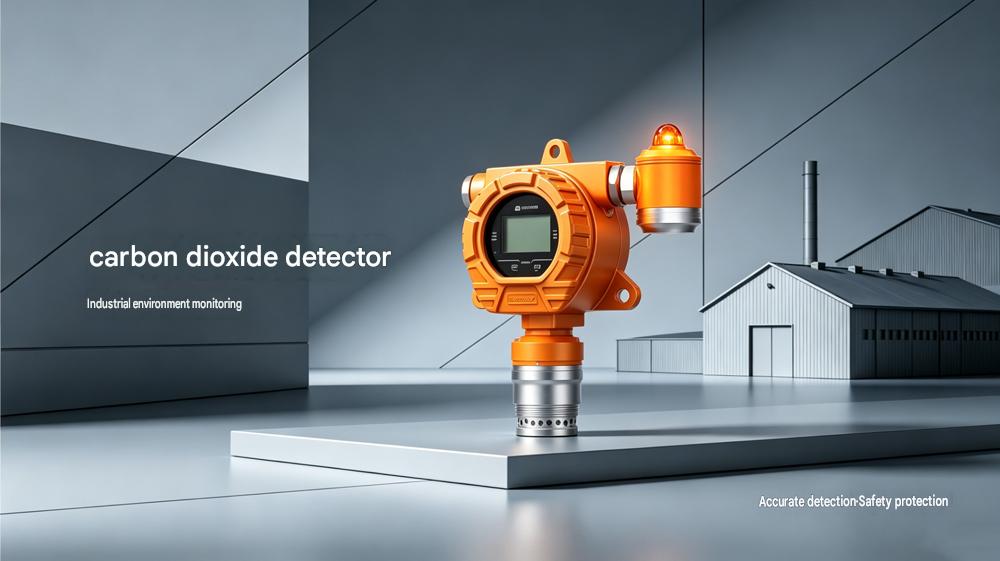
Indoor Air Quality Monitoring: High Resolution-Oriented
In commercial buildings, schools, conference rooms, and residences, the core purpose of CO₂ detection is to assess ventilation efficiency and occupant comfort. According to international indoor air quality standards, CO₂ concentrations in such environments are typically between 350 and 2000 ppm, with 1000 ppm often considered a warning line requiring increased fresh air intake.
For these low-concentration scenarios, the most suitable measurement range is 0-2000 ppm or 0-5000 ppm. The core advantage of choosing a smaller measurement range lies in its extremely high resolution, capable of accurately distinguishing minute changes around the 1000 ppm limit. If a high-range device is incorrectly selected, its resolution in the low-concentration range will drop significantly, causing the system to be unable to accurately determine whether ventilation meets standards, thus negating the practical significance of environmental monitoring.
Occupational Health and Confined Spaces: Compliance and Safety as the Basis
In industrial environments such as factory workshops, underground garages, mines, cold storage facilities, and food fermentation workshops, CO₂ concentrations fluctuate significantly. On the one hand, it is necessary to prevent the risk of personnel asphyxiation; on the other hand, it is necessary to monitor the accumulation of process gases. According to international occupational exposure limits standards, the time-weighted average permissible concentration of CO₂ in the workplace is typically 5000 ppm, and the short-term exposure permissible concentration is 10000 ppm.
For these scenarios, a measurement range of 0-5000 ppm or 0-10000 ppm is recommended. This meets occupational health and safety compliance requirements while covering daily process fluctuations. For agricultural greenhouse cultivation, to control CO₂ concentration within the optimal range for promoting photosynthesis, 0-5000 ppm or 0-10000 ppm are ideal choices that balance accuracy and processing range.
High-Concentration Processes and Special Industries: Explosion-Proof and Damage Prevention as Core Considerations
In special scenarios such as beer brewing, biopharmaceutical fermentation, dry ice production, industrial waste gas emissions, and CO₂ gas shielded welding, the CO₂ concentration in the environment is extremely high, even reaching 20% to 100% VOL. Under these conditions, conventional ppm-level sensors will saturate instantly or even suffer irreversible damage.
For such scenarios, high-range carbon dioxide detectors with ranges of 0-5% VOL, 0-20% VOL, 0-50% VOL, or even 0-100% VOL must be selected. It is particularly important to emphasize that high-range sensors have extremely poor resolution and accuracy in the low-concentration range and should absolutely not be used for routine personnel safety protection or indoor air quality monitoring.
Scientific Selection Recommendations: On-site Pre-testing and Dedicated Equipment
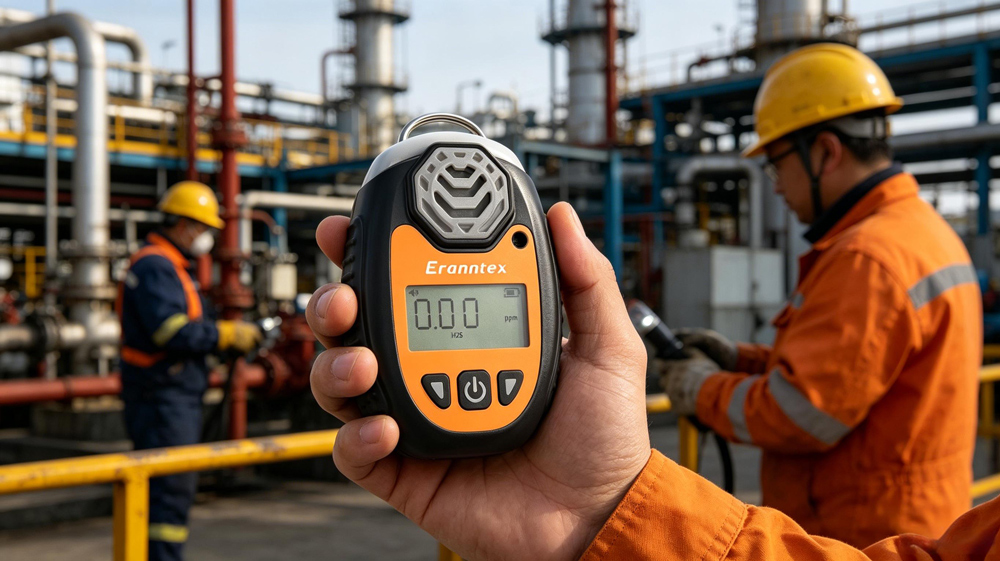
Before finalizing the measurement range, a scientific and economical approach is to conduct on-site pre-testing of the target area using a portable carbon dioxide detectors to understand the actual concentration distribution at each point. Based on this, the optimal measurement range for the fixed equipment can then be configured.
Furthermore, the principle of "dedicated equipment for dedicated use" must be followed: no single device can perfectly handle both ppm-level low-concentration monitoring and percentage-level high-concentration monitoring. Enterprises should deploy high-range equipment in high-concentration areas and low-range equipment in areas with high personnel activity (such as control rooms and offices) to build a comprehensive, accurate, and compliant carbon dioxide safety protection system.
Related information
-
What is the appropriate installation height for an ammonia gas detectors?
Ammonia (NH₃) has a relative density of only 0.59, much lighter than air. This means that in the event of a leak, the gas will qu...
2026-09-09 -
Can a carbon dioxide detectors measure formaldehyde?
Standard carbon dioxide detectors cannot detect formaldehyde. They require different sensor technologies for accurate measuremen...
2026-09-04 -
How Long Does a Carbon Dioxide Detectors Last?
The lifespan of a carbon dioxide detectors is a core issue that every safety manager and procurement decision-maker must address. ...
2026-09-02 -
Operational Procedures for Daily Inspection of Oxygen Detectors
In high-risk environments—such as industrial manufacturing, petrochemical processing, and confined space operations—oxygen detec...
2026-08-31 -
What is the calibration interval for oxygen detectors?
Oxygen detectors serve as a critical line of defense for personnel safety in fields such as industrial safety, confined space oper...
2026-08-28
 info@eranntexgas.com sale1@eranntexgas.com


 18926518127