
What is the battery life of a Four-in-One Detectors?
Publication Date:2026/07/01In the field of industrial safety, the battery life of a Four-in-One Detectors directly impacts both worker safety and operational efficiency. For users in the global market, battery life is not a fixed figure but a dynamic metric influenced by factors such as device type, sensor configuration, and the activation of additional features. Generally, mainstream Four-in-One Detectors offer a runtime of 10 to 24 hours, sufficient to cover a standard industrial shift.
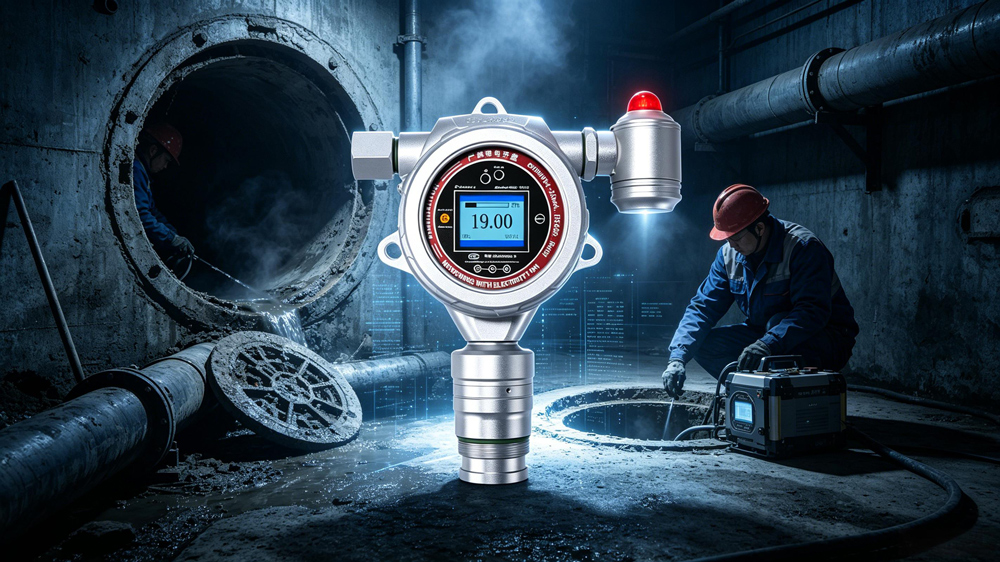
Differences in Runtime: Diffusion vs. Pump-Aspiration
The sampling method significantly affects battery consumption. In standard diffusion mode, power consumption is minimal, allowing many mainstream models to operate continuously for 18 to 24 hours. However, when working in confined spaces that require the use of a built-in sampling pump for active air intake, power consumption increases substantially. In this pump-aspiration mode, the runtime typically drops to around 12 to 16 hours. Therefore, it is crucial to distinguish between operating modes when evaluating battery life.
Energy Consumption: Sensor Configuration and Smart Features
Four-in-One Detectors typically support flexible gas sensor combinations. Power consumption varies among sensor types; for instance, catalytic combustion sensors (for combustible gases) and electrochemical sensors (for toxic gases) have different power requirements. Furthermore, modern detectors increasingly integrate smart features such as Bluetooth, Wi-Fi or 4G wireless data transmission, GPS positioning, and high-capacity data storage. While these features enhance data traceability, they also accelerate battery drain. Under normal operating conditions with wireless transmission disabled, typical runtime ranges from 10 to 20 hours; however, if real-time cloud data synchronization is enabled continuously, the runtime will be reduced accordingly.
Battery Types and Fast-Charging Technology
High-quality Four-in-One Detectors on the market typically utilize high-capacity rechargeable lithium-ion batteries; some high-end models even feature batteries with capacities as high as 5000mAh, ensuring over 12 hours of continuous operation under extreme conditions. To address concerns regarding battery life, modern devices increasingly incorporate fast-charging technologies such as USB Type-C. Typically, a device can reach a full charge within 2 to 4 hours, allowing workers to quickly replenish power during shift changes or breaks and thereby meet the demands of round-the-clock operations.
Lifecycle Management and Compliance Recommendations
When evaluating battery endurance, one must consider battery aging in addition to runtime on a full charge. The actual capacity of lithium-ion batteries gradually degrades after undergoing hundreds of charge-discharge cycles. Consequently, international safety standards recommend that enterprises implement rigorous battery health management protocols. This includes regularly testing actual battery performance and promptly replacing battery modules if the runtime falls significantly below the rated specifications. Only by combining high-performance battery capabilities with scientific maintenance and management can these Four-in-One Detectors serve as a reliable "lifesaving shield" for workers in any emergency situation.
Related information
-
How to Calibrate a Portable four-in-one Gas Detectors?
Portable four-in-one gas detectors are core protective equipment in the industrial safety field. However, sensors can experience z...
2026-09-18 -
What are the application scenarios for portable four-in-one gas detectors?
Portable four-in-one gas detectors typically monitor oxygen (O₂), flammable gas (LEL), carbon monoxide (CO), and hydrogen sulfide...
2026-09-16 -
Portable four-in-one Gas Detectors User Manual
The portable four-in-one gas detectors is a core piece of personal protective equipment (PPE) for ensuring the safety of personnel...
2026-09-14 -

Calibration Specifications for Ammonia gas Detectors
Calibration of ammonia gas detectors is a core step in ensuring their measurement accuracy and alarm reliability. However, ammonia...
2026-09-11 -
What is the appropriate installation height for an ammonia gas detectors?
Ammonia (NH₃) has a relative density of only 0.59, much lighter than air. This means that in the event of a leak, the gas will qu...
2026-09-09
 info@eranntexgas.com sale1@eranntexgas.com


 15914124845