
How to Troubleshoot Common Hardware Faults in four-in-one detectors?
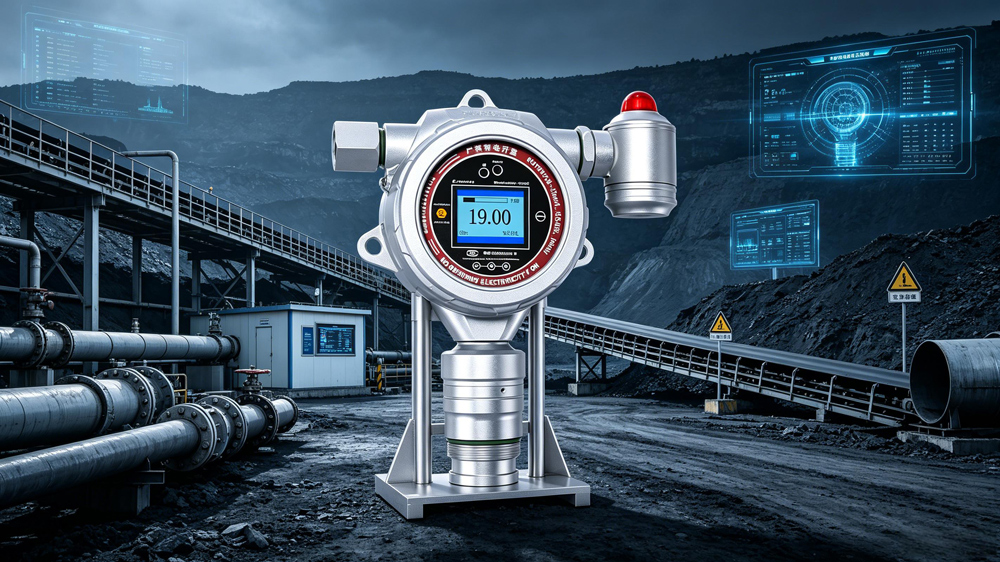
Publication Date:2026/07/03In the field of industrial safety, the four-in-one detectors serves as the final line of defense for worker safety. For facility managers, safety supervisors, and on-site maintenance personnel, the guiding principle when facing hardware faults is "safety first, systematic troubleshooting." When encountering unexpected equipment anomalies, one must avoid haphazard disassembly; unauthorized dismantling—especially of explosion-proof equipment—can compromise its explosion-proof structure and create serious safety hazards. The correct approach is to follow a logical troubleshooting process, gradually isolating the issue from the power supply to the core sensor modules. Below, the team at Yiyuntian Eranntex outlines the specific steps.
Preliminary Checks: Power Supply and Startup Systems
Failure to power on or abnormal screen displays are among the most common hardware faults in four-in-one detectors. These issues usually stem from the power supply system. First, check if the battery is depleted; try charging the device with the original adapter for at least half an hour before attempting to turn it on. If the device has been idle for a long period, the battery may have entered a deep sleep state, requiring a longer activation charge. Next, inspect the external power supply chain: check for damaged power cords, ensure the power outlet is live, and verify that the charger's output voltage meets specifications. If the power supply is confirmed to be normal but the device still won't start—or if the screen shows artifacts or remains black—the cause could be aging internal circuitry, a blown fuse, or poor battery contact. In such cases, try long-pressing the power button to restart or performing a factory reset; if these fail, the internal motherboard should be inspected by a professional.
Addressing Sensor Failure and Abnormal Readings
The sensor is the "heart" of the four-in-one detectors; sensor faults directly lead to reading drift, erratic value fluctuations, or a lack of response to gas exposure. When readings appear abnormally high or low, first check whether the intake filter is clogged with dust or moisture, as obstructed airflow can cause sampling errors. Additionally, rule out the presence of strong electromagnetic interference or cross-gas interference at the site. If the gas flow path is unobstructed and environmental conditions are normal, yet the reading fails to return to zero or the response is sluggish, this usually indicates that the sensor has aged, been "poisoned" by corrosive gases, or reached the end of its service life. Users cannot repair such issues themselves; professional zero-point and span calibration using standard gas is required. If accuracy cannot be restored after calibration, the sensor module must be replaced with a new one.
Handling Alarm Function and Button Malfunctions
If the on-site gas concentration exceeds safety limits but the device fails to trigger an audible or visual alarm, this indicates a critical hardware or logic failure. First, check the system menu to confirm whether alarm thresholds were accidentally modified or if the audible alert function was inadvertently disabled. If parameter settings are correct but the speaker or indicator light remains unresponsive, the alarm hardware module is likely damaged. Additionally, prolonged use in environments with oil or dust can cause buttons to stick or malfunction. For such issues, use specialized cleaning tools to gently wipe the gaps around the buttons and remove any internal debris. If the buttons on the four-in-one detectors fail completely, the unit must be returned to the manufacturer to replace the button panel.
Professional Repair and Full Lifecycle Management
For severe hardware failures—such as internal circuit board damage, total sensor failure, or damage to the explosion-proof housing—enterprises must send the device to the original manufacturer or a qualified professional repair center. Repairs attempted by non-professionals not only fail to guarantee detection accuracy but may also void the device's explosion-proof certification. In daily operations, enterprises should maintain comprehensive equipment records and strictly adhere to schedules for periodic calibration and preventive maintenance to avoid using equipment beyond its service life. Standardized operation and scientific maintenance minimize hardware failures, ensuring the four-in-one detectors remains in optimal operational condition.
In summary, hardware maintenance for four-in-one detectors is not merely a technical task but an integral part of an enterprise's safety management system. When facing equipment failures, establishing a standardized "troubleshoot, calibrate, then repair" workflow helps minimize downtime and reduce maintenance costs. At the same time, enterprises must always bear in mind that the four-in-one detectors is a piece of precision safety equipment; any unauthorized disassembly or modification could lead to irreversible consequences. Only by effectively combining standardized daily operation with regular professional maintenance can one ensure that every device responds accurately at critical moments, thereby establishing the most robust and reliable line of defense for every frontline worker.
Related information
-
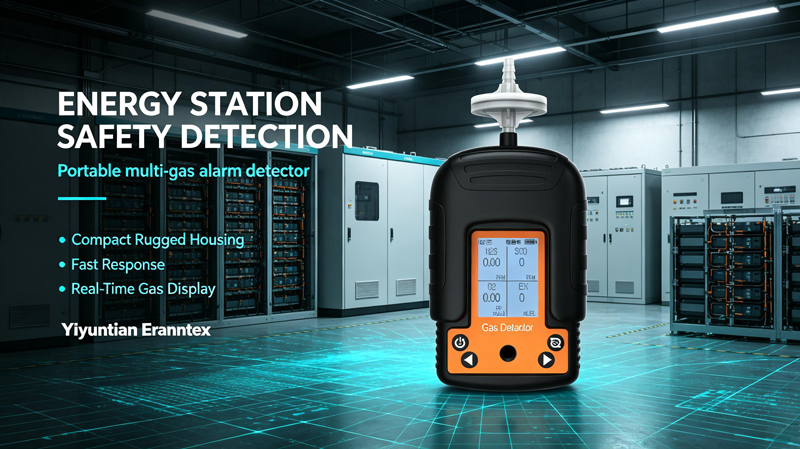
How to Calibrate a Portable four-in-one Gas Detectors?
Portable four-in-one gas detectors are core protective equipment in the industrial safety field. However, sensors can experience z...
2026-09-18 -
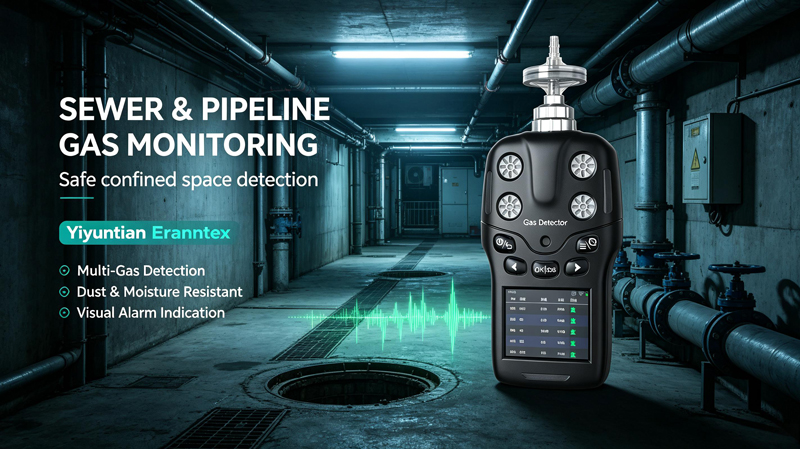
What are the application scenarios for portable four-in-one gas detectors?
Portable four-in-one gas detectors typically monitor oxygen (O₂), flammable gas (LEL), carbon monoxide (CO), and hydrogen sulfide...
2026-09-16 -
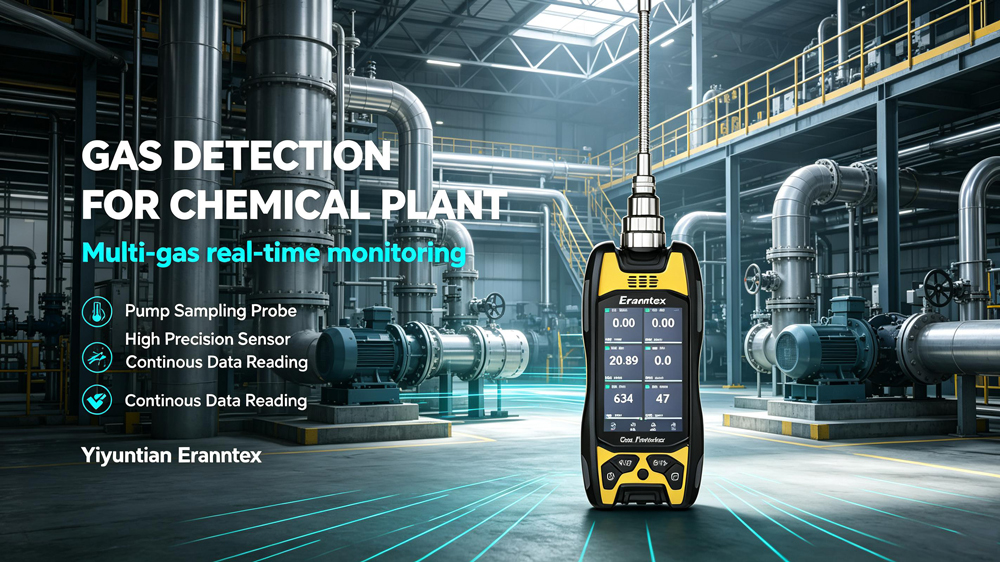
Portable four-in-one Gas Detectors User Manual
The portable four-in-one gas detectors is a core piece of personal protective equipment (PPE) for ensuring the safety of personnel...
2026-09-14 -

Calibration Specifications for Ammonia gas Detectors
Calibration of ammonia gas detectors is a core step in ensuring their measurement accuracy and alarm reliability. However, ammonia...
2026-09-11 -
What is the appropriate installation height for an ammonia gas detectors?
Ammonia (NH₃) has a relative density of only 0.59, much lighter than air. This means that in the event of a leak, the gas will qu...
2026-09-09



 info@eranntexgas.com sale1@eranntexgas.com


 15914124845