
Daily Maintenance Guide for Carbon Monoxide Detectors
Publication Date:2026/06/03Carbon monoxide (CO) is a colorless, odorless, and highly lethal gas; consequently, carbon monoxide detectors are regarded as an invisible shield safeguarding human life. However, many users often neglect the daily maintenance of these detectors, leading to device failure at critical moments. To ensure that carbon monoxide detectors operate reliably over the long term and maintain peak sensitivity, establishing a scientific and standardized daily maintenance protocol is essential. Below, the editorial team at Yiyuntian Eranntex outlines the key steps involved.
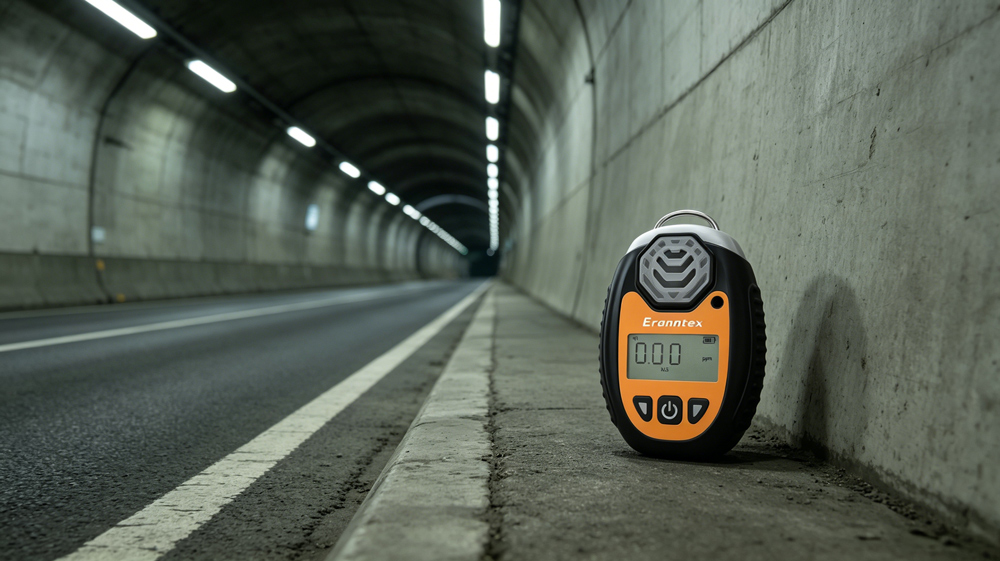
Keeping the sensor clean is the primary objective of daily maintenance. Over time, airborne dust, oil residue, or moisture can gradually accumulate on the detector's air intake ports and sensor surface. This not only impedes the proper diffusion of gas but can also lead to reading drift or even false alarms. During daily operations, it is recommended to regularly use a dry, soft cloth to gently wipe down the instrument's casing, and to use a vacuum cleaner or compressed air to remove loose dust from the sensor surface. Particular caution must be exercised: strictly avoid spraying or wiping the sensor head directly with any chemical cleaning agents or solvents, as this may corrode the precision components. Additionally, the instrument should not be exposed to direct strong winds, environments with excessive oil fumes, or high-humidity conditions, to prevent sensor damage.
Regular functional testing and battery management serve as the fundamental safeguards ensuring that the carbon monoxide detectors remains in a state of constant readiness. It is recommended to establish a routine of performing a functional self-test at least once a month: press the "Test" button on the instrument, observe whether the red alarm indicator light flashes correctly, and verify that the buzzer emits a loud audible alarm. If the test fails, it typically indicates that the batteries need replacement or that the unit itself has malfunctioned. For battery-powered devices, even if the battery level indicator appears normal, it is strongly recommended to proactively replace the batteries once a year to prevent sudden power loss during an emergency caused by natural battery aging. For industrial-grade fixed carbon monoxide detectors, it is also necessary to regularly inspect the power connection terminals to ensure they are secure and free from damaged insulation or signs of oxidation (blackening).
Establishing a scientific calibration schedule and regularly assessing sensor lifespan are the core elements for maintaining data accuracy. Since core sensors—such as electrochemical sensors—naturally experience zero-point drift and sensitivity degradation over time, routine cleaning alone cannot resolve these fundamental issues. In accordance with relevant safety regulations, standard carbon monoxide detectors should undergo calibration using standard gases by a qualified professional agency once a year. However, industrial-grade carbon monoxide detectors operating in high-risk environments—such as coal mines or chemical workshops—require more frequent, comprehensive calibration every three to six months. Furthermore, different types of sensors possess inherent service lifespans; once this lifespan is exceeded, detection performance will decline significantly—even if the device appears physically intact. At this juncture, it is imperative to promptly replace either the sensor module or the entire unit.
Finally, proper assessment of installation locations and appropriate storage practices are equally critical and must not be overlooked. Changes in room layout or the rearrangement of furniture may result in previously effective monitoring points becoming obstructed. It is advisable to re-evaluate the placement of carbon monoxide detectors annually to ensure they remain installed within the "breathing zone"—typically between 1.2 and 1.8 meters above the floor—while avoiding areas obstructed by curtains, zones subject to direct airflow from fans, and corners characterized by high humidity or elevated temperatures. When a carbon monoxide detectors is to remain unused for an extended period, it is essential to store it in a dry, cool environment free from corrosive gases; additionally, the internal batteries should be removed to prevent leakage that could corrode the circuitry. Periodically powering up and testing the device can also effectively prevent electronic components from deteriorating due to moisture or aging. By implementing these meticulous daily maintenance measures, you can truly ensure that your carbon monoxide detectors serves as a reliable and trustworthy guardian of your safety.
Related information
-
How to Calibrate a Portable four-in-one Gas Detectors?
Portable four-in-one gas detectors are core protective equipment in the industrial safety field. However, sensors can experience z...
2026-09-18 -
What are the application scenarios for portable four-in-one gas detectors?
Portable four-in-one gas detectors typically monitor oxygen (O₂), flammable gas (LEL), carbon monoxide (CO), and hydrogen sulfide...
2026-09-16 -

Portable four-in-one Gas Detectors User Manual
The portable four-in-one gas detectors is a core piece of personal protective equipment (PPE) for ensuring the safety of personnel...
2026-09-14 -

Calibration Specifications for Ammonia gas Detectors
Calibration of ammonia gas detectors is a core step in ensuring their measurement accuracy and alarm reliability. However, ammonia...
2026-09-11 -
What is the appropriate installation height for an ammonia gas detectors?
Ammonia (NH₃) has a relative density of only 0.59, much lighter than air. This means that in the event of a leak, the gas will qu...
2026-09-09


 info@eranntexgas.com sale1@eranntexgas.com


 15914124845