
What are the international certification standards for combustible gas detectors?
Publication Date:2026/07/06In the realm of global industrial safety, combustible gas detectors serve not only as early warning tools to prevent fires and explosions but also as the final line of defense for the lives of on-site personnel. With the deep integration of global supply chains, gas detection equipment must obtain safety certifications from authoritative bodies to successfully enter international markets. For purchasers, facility managers, and engineers in the international market, understanding and selecting standards that comply with target market regulations is the primary prerequisite for ensuring both compliance and safety. Below, the team at Yiyuntian Eranntex provides an overview of the mainstream global certification standard systems for combustible gas detectors.
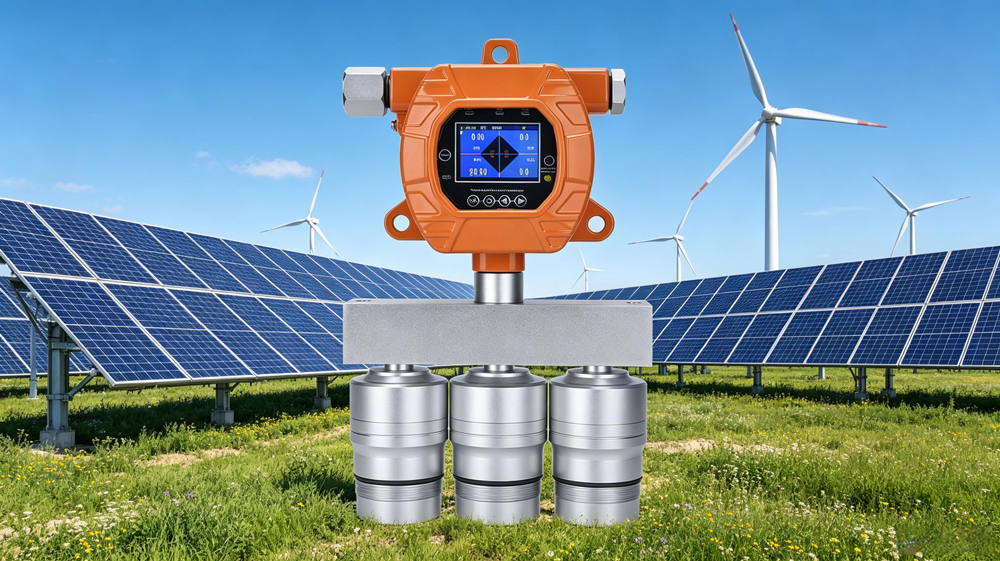
EU ATEX and IECEx: Two Key Passports for the Global Explosion-Proof Market
ATEX and IECEx are the two most significant certification systems for hazardous areas in Europe and across the globe. ATEX (based on EU Directive 2014/34/EU) is a mandatory regulation; any explosion-proof equipment sold within the EU or used in explosive atmospheres must hold ATEX certification and bear the CE mark—a statutory requirement for entering the European market. In contrast, IECEx is a voluntary international certification system established under the auspices of the International Electrotechnical Commission (IEC) and based on the IEC 60079 series of standards. Unlike ATEX, which focuses solely on the product, IECEx certification is more comprehensive, covering product type testing, factory Quality Assessment Reports (QAR), and personnel competency certification; it is currently widely recognized in over 50 countries and regions worldwide.
North American UL and CSA: Cornerstones of Building and Industrial Safety
In the North American market, UL and CSA standards serve as the core benchmarks for evaluating the safety performance of combustible gas detectors. For non-hazardous areas, the UL 2075 (USA) and ULC 588 (Canada) standards are crucial. These standards are not only directly referenced by major building codes such as the International Building Code (IBC) and the International Mechanical Code (IMC) but also ensure that equipment meets the highest safety standards for use in ordinary environments. For hazardous (explosive) areas, equipment must comply with the IEC 60079-29-1 standard—jointly established by UL, CSA, and the IEC. This standard serves as the benchmark for combustible gas detectors in North America, ensuring explosion-proof safety under extreme operating conditions.
IEC Benchmarks and Functional Safety Standards
As a global authority on electrical standards, the IEC has issued a series of general benchmarks for gas detection. Among them, IEC/EN/CSA/UL 60079-29-1 is the specific standard for combustible gas detectors in hazardous (explosive) environments; it works in conjunction with IEC 60079-0—which outlines general safety requirements for equipment—to form the technical foundation for global explosion-proof equipment. Additionally, for gas detectors integrated into Safety Instrumented Systems (SIS), the EN 50402-1 standard focuses on functional safety assessment, ensuring that detectors can reliably perform safety-related control functions and effectively prevent hazardous incidents caused by system failures.
Specialized Technical Specifications for Emerging Applications
As the world transitions to more environmentally friendly refrigerants, gas detection standards are continuously evolving. For instance, the technical specification IEC TS 63542:2024 was developed to address low-GWP (Global Warming Potential) flammable refrigerants used in HVAC and commercial refrigeration systems. This standard specifically applies to refrigerant detection systems within appliances designed under the IEC 60335 series, ensuring that modern appliances maintain high levels of operational safety as the industry shifts toward flammable alternatives.
In summary, the international certification framework for combustible gas detectors is extensive and intricate. When selecting products or assessing export compliance, enterprises should carefully consider the specific regulations of the target market, the application environment (hazardous vs. non-hazardous areas), and the type of gas involved. Engaging in-depth with professional certification partners to select the most appropriate international standards is crucial for ensuring that equipment operates legally, safely, and efficiently in the global market.
Related information
-
How to Calibrate a Portable four-in-one Gas Detectors?
Portable four-in-one gas detectors are core protective equipment in the industrial safety field. However, sensors can experience z...
2026-09-18 -
What are the application scenarios for portable four-in-one gas detectors?
Portable four-in-one gas detectors typically monitor oxygen (O₂), flammable gas (LEL), carbon monoxide (CO), and hydrogen sulfide...
2026-09-16 -
Portable four-in-one Gas Detectors User Manual
The portable four-in-one gas detectors is a core piece of personal protective equipment (PPE) for ensuring the safety of personnel...
2026-09-14 -

Calibration Specifications for Ammonia gas Detectors
Calibration of ammonia gas detectors is a core step in ensuring their measurement accuracy and alarm reliability. However, ammonia...
2026-09-11 -
What is the appropriate installation height for an ammonia gas detectors?
Ammonia (NH₃) has a relative density of only 0.59, much lighter than air. This means that in the event of a leak, the gas will qu...
2026-09-09
 info@eranntexgas.com sale1@eranntexgas.com


 15914124845