
How to Determine if an Oxygen Detectors Calibration is Passed?
Publication Date:2026/07/20In global industrial safety management systems, oxygen detectors are the last line of defense for protecting the lives of workers. For facility managers, safety supervisors, and metrology engineers in the international market, regular calibration is a mandatory requirement to ensure equipment accuracy. However, the calibration action itself does not equate to successful calibration. Knowing how to scientifically and rigorously determine whether an oxygen detectors calibration is truly successful is crucial to avoiding false alarms, omissions, and compliance risks. Below, Yiyuntian Eranntex will introduce this method.
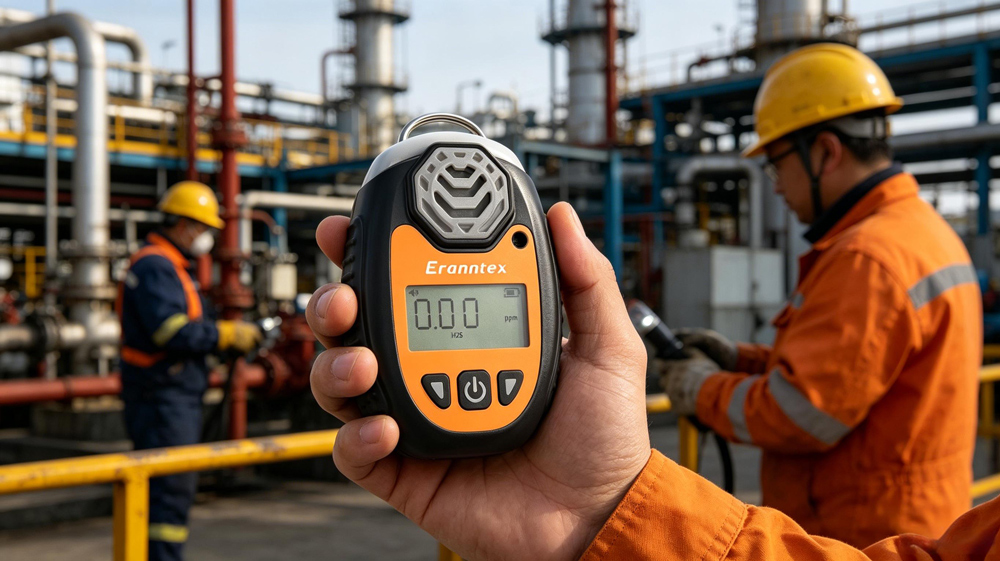
Core Benchmark: Indication Error and Permissible Deviation
The primary indicator for determining whether calibration is successful is the "indication error." When a standard gas of known precise concentration is introduced into the detector, there will be a difference between the instrument's reading and the actual concentration of the standard gas. According to international metrology standards, this error must be controlled within a strictly permissible range. Generally, the indication error of an oxygen detectors should not exceed ±3% of full scale or ±10% of the indicated value (whichever is greater). If the calibrated reading deviation exceeds the legally or manufacturer-specified tolerance range, the calibration is deemed unqualified, and the range coefficient must be readjusted or the sensor fault investigated.
Key Verification: Repeatability and Response Time
Besides the accuracy of a single reading, the success of calibration also depends on the instrument's dynamic performance. First is "repeatability," meaning that under the same test conditions, the maximum deviation displayed by the instrument after multiple consecutive introductions of the same standard gas is typically required to be ≤3%. Fluctuating readings indicate potential sensor aging or gas path contamination. Second is "response time," the time required from the introduction of the standard gas until the instrument reading reaches 90% of its stable value. For oxygen detectors, this time is typically required to be within 30 to 60 seconds. A severely delayed response, even if the final reading is accurate, will fail to provide timely warnings in sudden hypoxia or hyperoxygenation environments, and will also be deemed a calibration failure.
System Functions: Alarm Thresholds and Zero Drift
Calibration involves more than just verifying concentration readings; it also includes testing safety logic. When standard gas is introduced to trigger the alarm, it is essential to verify that the oxygen detectors audible, visual, and vibration alarm functions are activated correctly, and that the triggered concentration point perfectly matches the preset alarm threshold. Furthermore, after completing range calibration, zero-point gas must be reintroduced to verify "zero-point drift." If the zero-point reading deviates significantly within a short period after zero-point calibration, it indicates that the oxygen detectors baseline is extremely unstable and unsuitable for high-safety operating environments.
Authoritative Endorsement: Metrological Traceability and Compliance Reports
In a B2B industrial environment, the ultimate basis for determining calibration qualification is a legally valid compliance report. Routine internal calibration only proves that the equipment is currently usable; true "qualification" requires verification by a third-party metrology institution with CMA or CNAS accreditation. Upon successful verification, the institution will issue a Calibration Certificate, clearly indicating that all technical indicators comply with national standards, and affix a calibration-qualified label. Only with such a certificate traceable to national or international benchmarks can the oxygen detectors calibration be deemed legal, valid, and qualified during government regulatory reviews or accident liability investigations.
In conclusion, determining whether an oxygen detectors is properly calibrated requires comprehensive consideration of multiple technical indicators, including indication error, response time, repeatability, and alarm functions, and must ultimately be confirmed by an authoritative metrology certificate. Only by establishing such rigorous acceptance standards can we ensure that the detector truly functions as a "life shield" in critical moments.
Related information
-
Can a carbon dioxide detectors measure formaldehyde?
Standard carbon dioxide detectors cannot detect formaldehyde. They require different sensor technologies for accurate measuremen...
2026-09-04 -
How Long Does a Carbon Dioxide Detectors Last?
The lifespan of a carbon dioxide detectors is a core issue that every safety manager and procurement decision-maker must address. ...
2026-09-02 -
Operational Procedures for Daily Inspection of Oxygen Detectors
In high-risk environments—such as industrial manufacturing, petrochemical processing, and confined space operations—oxygen detec...
2026-08-31 -
What is the calibration interval for oxygen detectors?
Oxygen detectors serve as a critical line of defense for personnel safety in fields such as industrial safety, confined space oper...
2026-08-28 -
Operational Guidelines for Oxygen Detectors
Oxygen is a fundamental element for sustaining life and supporting combustion. Whether it is the risk of fatal asphyxiation in oxy...
2026-08-26
 info@eranntexgas.com sale1@eranntexgas.com


 18926518127