
How Should Combustible Gas Detectors Alarm Setpoints Be Configured?
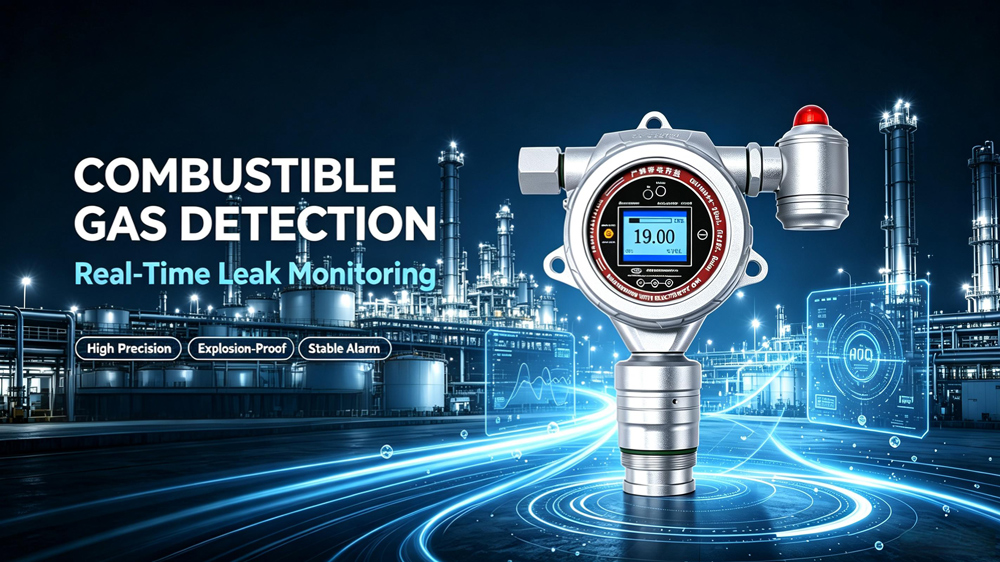
Publication Date:2026/07/08For facility managers, safety engineers, and operations and maintenance personnel, scientifically setting alarm thresholds for combustible gas detectors is crucial for balancing on-site safety with operational efficiency. The alarm logic for combustible gas detection systems is not arbitrary; rather, it establishes a multi-level warning mechanism based on the gas's "Lower Explosive Limit" (LEL)—the minimum concentration of gas in the air capable of causing an explosion. Appropriate threshold settings ensure the system provides sufficient response time before a hazard escalates, while simultaneously minimizing frequent false alarms caused by environmental interference.
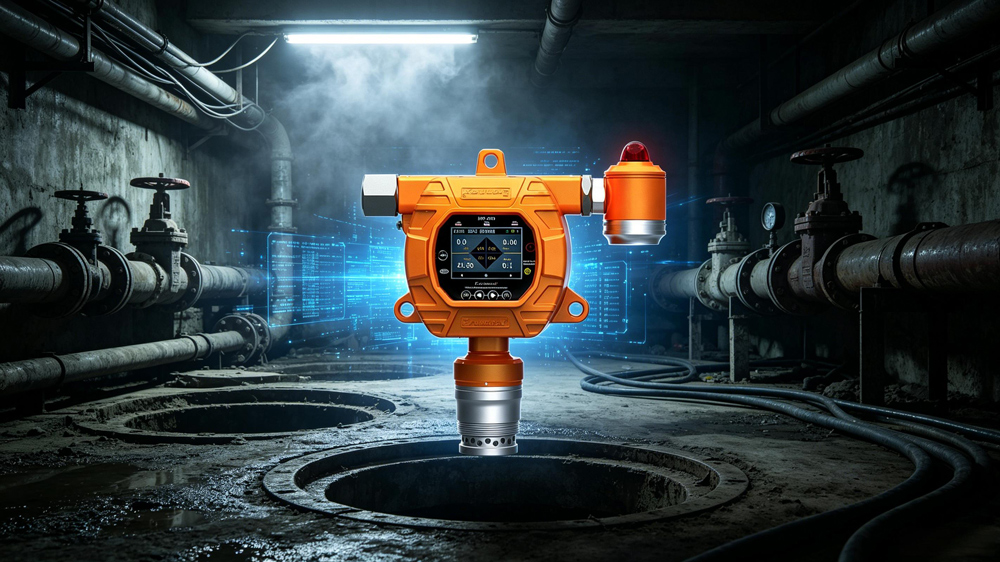
Internationally Recognized Two-Level Alarm Thresholds
In global industrial practice, combustible gas detectors typically employ a two-level alarm mechanism to provide progressive safety warnings. The first-level alarm (low alarm) serves as an early warning; international standards generally recommend setting it between 10% and 25% LEL. Triggering this level alerts operators to investigate the leak source, check ventilation systems, or take initial corrective actions, thereby resolving the issue before it worsens. The second-level alarm (high alarm) signifies an emergency hazard and is typically set between 40% and 50% LEL. Once this threshold is reached, the system automatically initiates emergency response procedures—such as activating explosion-proof exhaust systems, shutting off material valves, or executing personnel evacuations—to prevent catastrophic accidents.
Compliance with Regional Regulations and Industry Standards
Alarm setpoints must strictly adhere to the national regulations and industry standards of the target market. For instance, the Chinese national standard GB 15322.1-2019 explicitly stipulates that the minimum alarm setting for detectors must not exceed 25% LEL to ensure warnings are issued before hazardous concentrations are reached. In high-risk sectors such as petrochemicals, the standard GB/T 50493-2019 typically recommends setting the first-level alarm at 25% LEL and the second-level alarm at 50% LEL. For North American and European markets, combustible gas detectors must comply with directives such as NFPA or ATEX, ensuring alarms trigger at concentrations well below hazardous levels. When operating across borders, companies must ensure alarm settings meet the specific requirements of local bodies—such as the Health and Safety Executive (HSE)—or relevant regulatory agencies.
Dynamic Adjustment Based on Process Environments and Risk Profiles
While general standards exist, alarm thresholds across different industries must be dynamically adjusted to suit specific process conditions and environmental risks. In chemical and petrochemical facilities, the presence of highly volatile substances and complex chemical reactions often necessitates stricter alarm thresholds to mitigate the risk of rapid hazard escalation. Conversely, in manufacturing workshops or utility facilities, threshold settings often strike a balance between maintaining safety margins and minimizing operational disruptions. Additionally, confined spaces with poor ventilation—where gas accumulation is a risk—require lower alarm setpoints to provide sufficient early warning.
Flexible Configuration and Maintenance of Modern Detection Systems
Modern industrial combustible gas detectors offer highly configurable programming capabilities, allowing companies to customize multiple alarm setpoints based on specific operational needs. However, establishing appropriate thresholds is merely the first step in a comprehensive safety loop. To ensure long-term system reliability, companies must implement rigorous calibration and maintenance schedules. Since sensors can experience drift due to fluctuations in temperature and humidity or chemical poisoning, periodic calibration using standard gases is essential for maintaining alarm accuracy. Only by combining scientifically determined thresholds with meticulous routine maintenance can organizations provide effective, compliant safety protection within complex industrial environments.
Related information
-
How to Calibrate a Portable four-in-one Gas Detectors?
Portable four-in-one gas detectors are core protective equipment in the industrial safety field. However, sensors can experience z...
2026-09-18 -
What are the application scenarios for portable four-in-one gas detectors?
Portable four-in-one gas detectors typically monitor oxygen (O₂), flammable gas (LEL), carbon monoxide (CO), and hydrogen sulfide...
2026-09-16 -
Portable four-in-one Gas Detectors User Manual
The portable four-in-one gas detectors is a core piece of personal protective equipment (PPE) for ensuring the safety of personnel...
2026-09-14 -

Calibration Specifications for Ammonia gas Detectors
Calibration of ammonia gas detectors is a core step in ensuring their measurement accuracy and alarm reliability. However, ammonia...
2026-09-11 -
What is the appropriate installation height for an ammonia gas detectors?
Ammonia (NH₃) has a relative density of only 0.59, much lighter than air. This means that in the event of a leak, the gas will qu...
2026-09-09
 info@eranntexgas.com sale1@eranntexgas.com


 15914124845