
Detection Principles of nitrogen oxide detectors
Publication Date:2026/06/22For environmental engineers and safety supervisors, a thorough understanding of the operating principles of nitrogen oxide detectors analyzers is fundamental to making informed equipment selections and conducting compliance assessments. Nitrogen oxides primarily consist of nitric oxide (NO) and nitrogen dioxide (NO₂); since they often coexist as a mixture in the atmosphere and industrial exhaust, NOx analyzers typically employ various cutting-edge technologies to achieve precise measurements. The following are four core detection principles currently dominant in the global market:
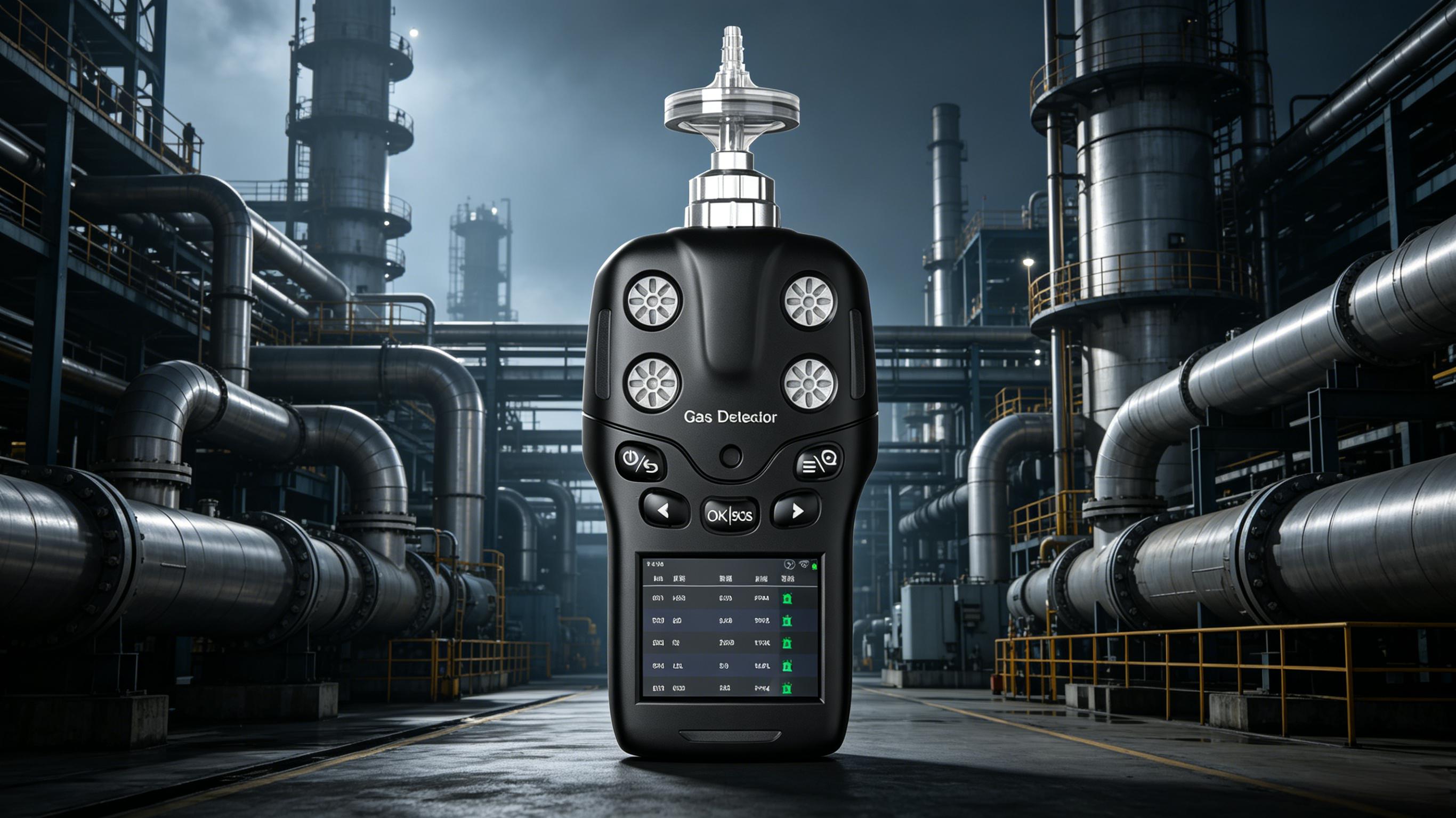
Chemiluminescence: The Gold Standard for High-Precision Monitoring
Chemiluminescence is currently the most widely adopted technology in global ambient air quality monitoring stations and high-end industrial continuous emission monitoring systems. Its core principle relies on the light energy released during the gas-phase reaction between nitric oxide and ozone. When NO and O₃ combine in the reaction chamber, they produce excited-state nitrogen dioxide (NO₂); as these molecules return to their ground state, they emit photons at specific wavelengths. By measuring light intensity with a highly sensitive photomultiplier tube, the NO concentration can be accurately calculated. To measure NO₂ or total NOx, the analyzer first passes the sample gas through a molybdenum converter or a photolytic converter to reduce NO₂ to NO before detection. This technology offers exceptional sensitivity and a wide linear range, making it the preferred choice for regulatory compliance monitoring.
Non-Dispersive Infrared (NDIR) Absorption: A Powerful Tool for Industrial Combustion Control
NDIR absorption utilizes the characteristic absorption of infrared light at specific wavelengths by gas molecules. Nitric oxide exhibits a unique absorption peak in the mid-infrared range. An internal light source emits broad-spectrum infrared light that passes through the sample gas; NO molecules absorb light at specific wavelengths, and the remaining light reaches the detector, allowing the system to calculate the NO concentration based on the Beer-Lambert Law. The primary advantages of NDIR technology are its robust construction, lack of need for consumable gases, and rapid response time; consequently, it is widely used in automotive exhaust analysis, as well as in combustion efficiency optimization and emission monitoring for industrial boilers and gas turbines. Electrochemical Sensor Technology: A Mainstay for Portable Detection and Safety Protection
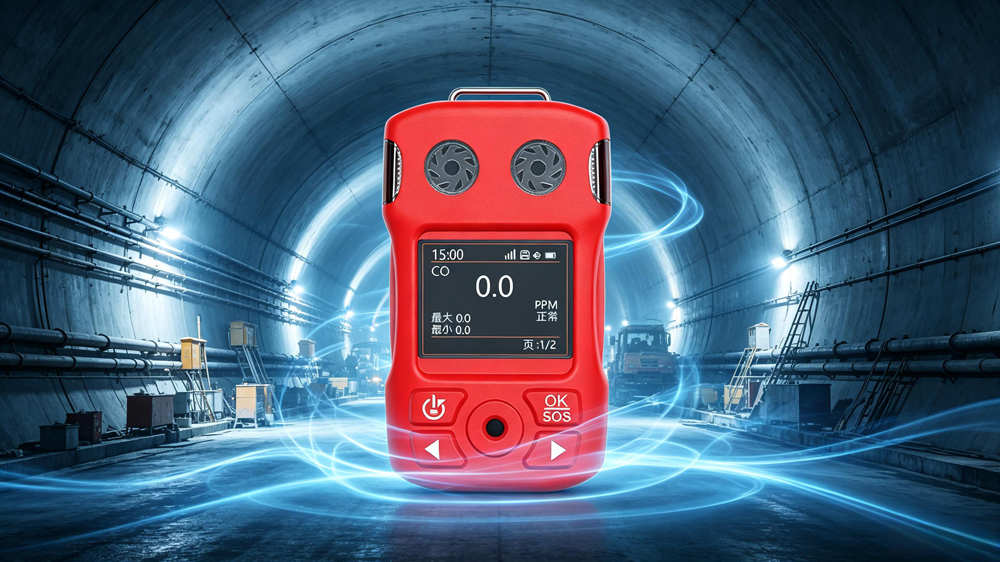
Electrochemical sensors play a dominant role in both portable detectors and fixed industrial safety alarms. They operate by allowing the target nitrogen oxide gas to diffuse through a selective membrane into the sensor, where an oxidation or reduction reaction occurs at the working electrode, generating a minute current proportional to the gas concentration. Characterized by compact size, low power consumption, and moderate cost, this technology is ideally suited for operations in confined spaces, tunnel ventilation control, and personal occupational safety. Although cross-interference can occur at extremely high concentrations or under extreme temperature and humidity conditions, modern multi-electrode designs have significantly enhanced selectivity and stability.
Optical Differential and Laser Spectroscopy Technologies: Cutting-Edge Anti-Interference Solutions
Advanced optical technologies are increasingly being adopted to meet the challenges of complex matrices and ultra-low concentration detection. Ultraviolet Differential Optical Absorption Spectroscopy (UV-DOAS) leverages the characteristic absorption of NO₂ in the ultraviolet range; by measuring the differential intensity between incident and transmitted light to calculate concentration, it offers exceptional resistance to interference, making it highly suitable for the online monitoring of high-temperature, high-humidity flue gas in stacks. Additionally, Tunable Diode Laser Absorption Spectroscopy (TDLAS) employs lasers at specific wavelengths to scan the narrow absorption lines of NO or NO₂. Offering extremely high selectivity and rapid response times, it effectively eliminates interference from background gases, making it an ideal choice for research-grade monitoring.
In summary, the underlying detection principle determines the accuracy, lifespan, and application suitability of nitrogen oxide detectors. From laboratory-grade chemiluminescence and industrial NDIR systems to electrochemical sensors for portable safety protection, users should select the technology that best aligns with specific compliance requirements, budget constraints, and operating environments.
Related information
-
How to Calibrate a Portable four-in-one Gas Detectors?
Portable four-in-one gas detectors are core protective equipment in the industrial safety field. However, sensors can experience z...
2026-09-18 -
What are the application scenarios for portable four-in-one gas detectors?
Portable four-in-one gas detectors typically monitor oxygen (O₂), flammable gas (LEL), carbon monoxide (CO), and hydrogen sulfide...
2026-09-16 -

Portable four-in-one Gas Detectors User Manual
The portable four-in-one gas detectors is a core piece of personal protective equipment (PPE) for ensuring the safety of personnel...
2026-09-14 -

Calibration Specifications for Ammonia gas Detectors
Calibration of ammonia gas detectors is a core step in ensuring their measurement accuracy and alarm reliability. However, ammonia...
2026-09-11 -
What is the appropriate installation height for an ammonia gas detectors?
Ammonia (NH₃) has a relative density of only 0.59, much lighter than air. This means that in the event of a leak, the gas will qu...
2026-09-09


 info@eranntexgas.com sale1@eranntexgas.com


 15914124845