
Key Points for the Installation and Maintenance of Carbon Dioxide Detectors
Publication Date:2026/06/17Carbon dioxide detectors serve as a critical line of defense for ensuring industrial safety, optimizing process control, and maintaining indoor air quality. For facility managers, safety engineers, and operations and maintenance personnel, adhering to international standards for installation and maintenance is essential to guarantee long-term, stable equipment operation and reliable data accuracy. Below is a guide outlining the core installation and maintenance principles—aligned with international engineering practices—compiled by the team at Yiyuntian Eranntex.
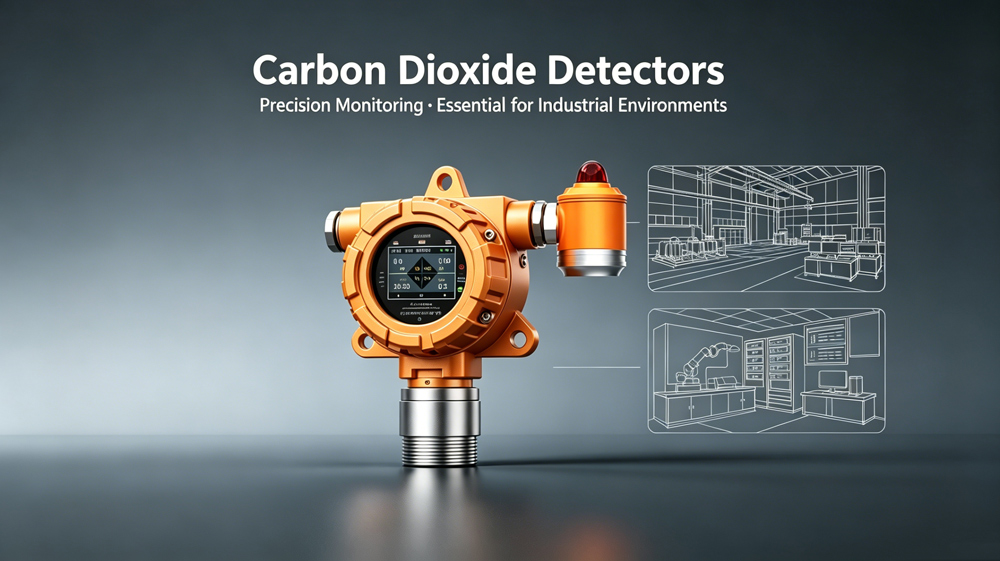
Strategic Site Selection and Precise Installation Height
The installation location directly determines whether the carbon dioxide detectors accurately reflects environmental conditions. Since carbon dioxide has a higher molecular weight than air and tends to settle at lower levels, sensors in industrial areas with leakage risks should be installed 30 to 60 centimeters above the floor with the probe facing downward; this ensures the immediate detection of accumulating gas. Conversely, if the monitoring objective is to assess occupant health and indoor air quality, the device must be installed at the breathing zone level—typically 1.2 to 1.5 meters above the floor. Furthermore, installation sites must avoid areas with turbulent airflow, such as air conditioning vents, exhaust fans, doors, or windows, to prevent reading distortions caused by the dilution of the sample with outside air.
Mitigating Environmental Interference and Ensuring Physical Protection
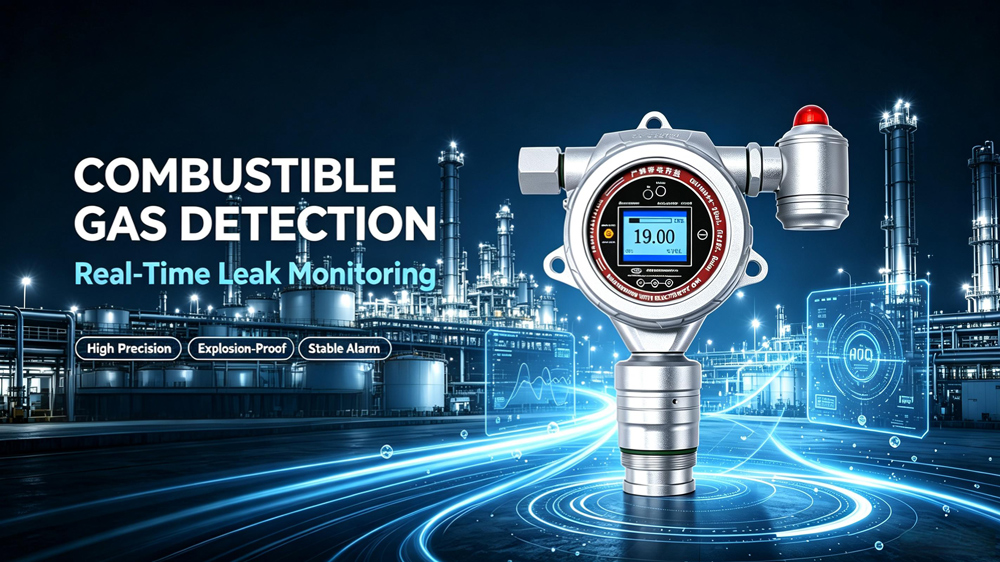
Industrial environments are complex, so site selection for carbon dioxide detectors must account for environmental compatibility. First, devices should be kept away from sources of strong electromagnetic interference to prevent signal fluctuations. Second, areas with high concentrations of smoke, aerosol insecticides, or corrosive solvents must be avoided to prevent sensor "poisoning" or false alarms. Regarding physical protection, fixed carbon dioxide detectors should be securely mounted using explosion-proof brackets to prevent damage to internal precision components caused by prolonged vibration. For outdoor or high-humidity environments, equipment with an IP65 or IP67 (or higher) protection rating is mandatory; additionally, rain shields should be installed to prevent moisture condensation from clogging gas pathways or corroding internal circuitry.
Standardized Calibration and Sensor Lifespan Management
The sensor is the core component of a Carbon Dioxide Detectors; since its accuracy naturally drifts over time, regular professional calibration is essential. It is recommended that professionals calibrate the device every six to twelve months using high-purity nitrogen and standard CO₂ gas of a known concentration. For applications requiring high precision, the calibration interval should be shortened to once per quarter. Concurrently, strict management of the sensor's service life is mandatory. Most electrochemical or NDIR sensors have a lifespan ranging from two to five years. Once the manufacturer's specified service life expires, the sensor module must be replaced—even if the device still powers on—to prevent critical safety blind spots caused by sensitivity degradation.
Routine Cleaning and Power System Maintenance
In addition to professional annual calibration, routine preventive maintenance is equally indispensable. Operations and maintenance personnel should inspect the detector's air intake ports and dust filters monthly, using a soft brush or air blower to gently remove accumulated dust and ensure unobstructed airflow. In environments with heavy oil contamination, the casing may be wiped with a lint-free cloth dampened with anhydrous ethanol; however, spraying chemical solvents directly onto the probe is strictly prohibited. Regarding power management, the battery health of portable devices requires regular checks, and batteries should be removed during prolonged periods of inactivity to prevent leakage. For fixed units, power lines and terminals must be inspected monthly for looseness or oxidation, and backup batteries should be verified to ensure seamless takeover during sudden power outages, thereby guaranteeing uninterrupted monitoring.
By strictly adhering to the aforementioned installation and maintenance standards, enterprises can significantly extend the service life of their Carbon Dioxide Detectors and ensure the devices provide reliable, accurate data critical to life safety when it matters most.
Related information
-
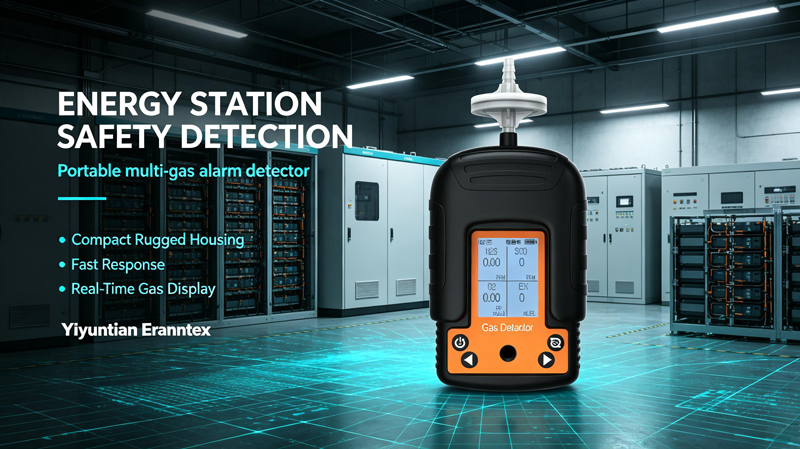
How to Calibrate a Portable four-in-one Gas Detectors?
Portable four-in-one gas detectors are core protective equipment in the industrial safety field. However, sensors can experience z...
2026-09-18 -
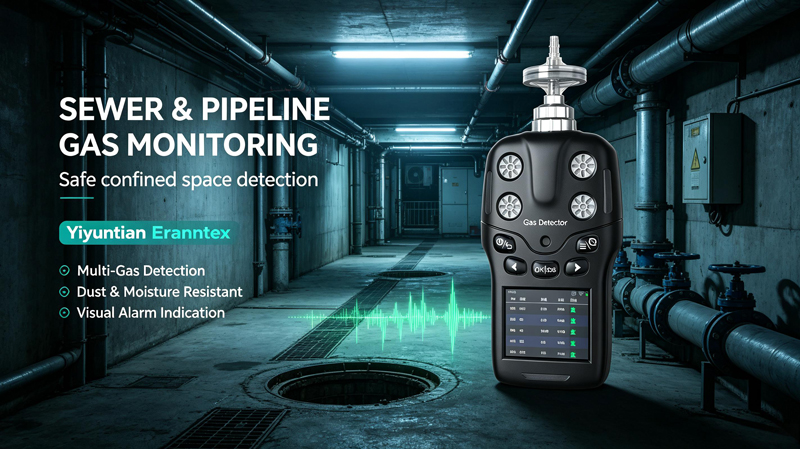
What are the application scenarios for portable four-in-one gas detectors?
Portable four-in-one gas detectors typically monitor oxygen (O₂), flammable gas (LEL), carbon monoxide (CO), and hydrogen sulfide...
2026-09-16 -
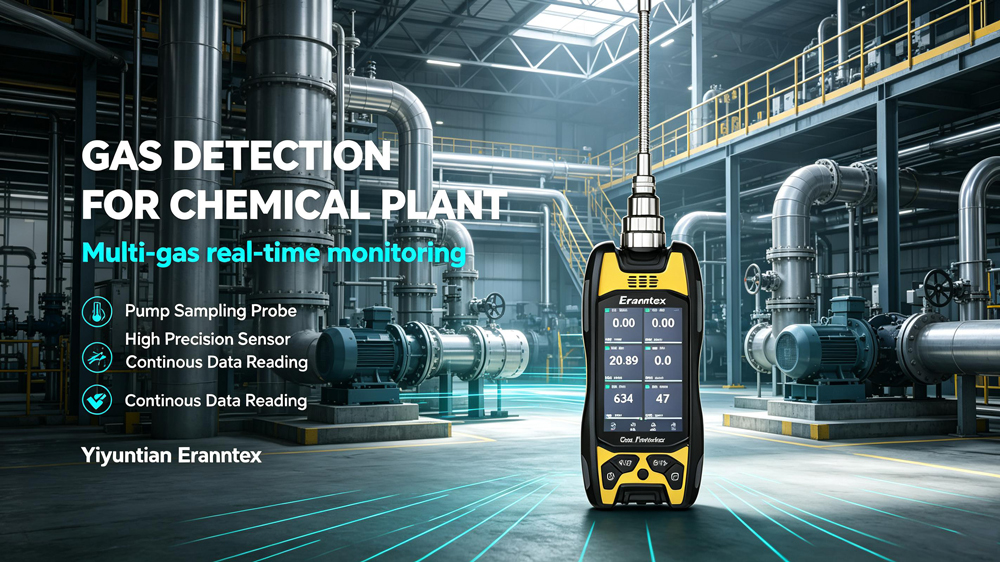
Portable four-in-one Gas Detectors User Manual
The portable four-in-one gas detectors is a core piece of personal protective equipment (PPE) for ensuring the safety of personnel...
2026-09-14 -

Calibration Specifications for Ammonia gas Detectors
Calibration of ammonia gas detectors is a core step in ensuring their measurement accuracy and alarm reliability. However, ammonia...
2026-09-11 -
What is the appropriate installation height for an ammonia gas detectors?
Ammonia (NH₃) has a relative density of only 0.59, much lighter than air. This means that in the event of a leak, the gas will qu...
2026-09-09
 info@eranntexgas.com sale1@eranntexgas.com


 15914124845