
How to Calibrate a Carbon Monoxide Detectors?
Publication Date:2026/06/05As a critical line of defense for safeguarding industrial safety and operations within confined spaces, the data accuracy of a carbon monoxide detectors directly impacts the safety of human life. For professional users, proper calibration is not merely a technical means to ensure the detector's precision; it is also a mandatory requirement for compliance with international occupational safety and health standards. The following is a standardized calibration guide for carbon monoxide detectors—compiled by the editors at Yiyuntian Eranntex—that aligns with international engineering best practices.
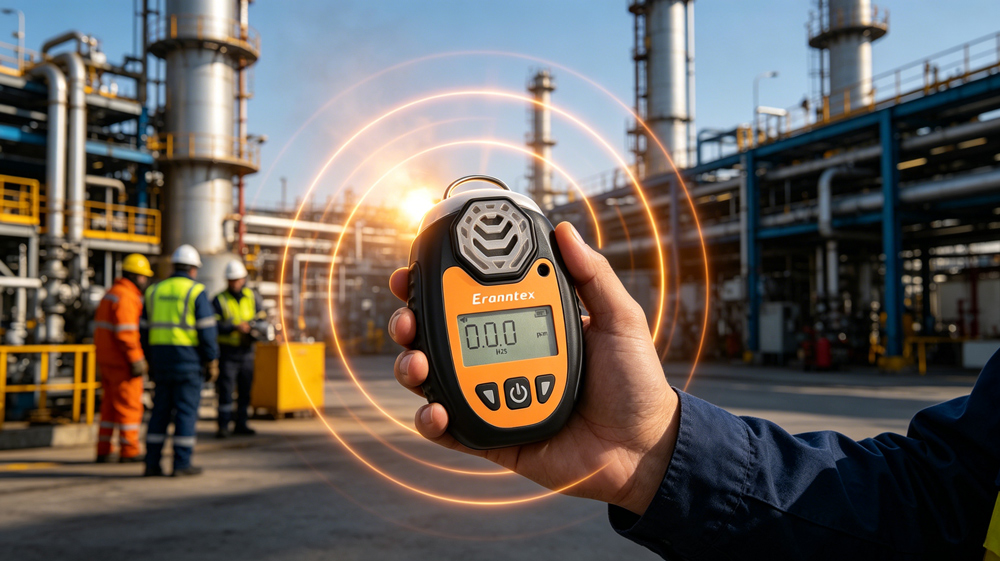
I. Environmental Preparation and Safety Verification Prior to Calibration
The calibration of any precision gas detection equipment must begin with rigorous preparatory work. First, the operator must ensure that the calibration environment is safe and compliant: the ambient temperature should be maintained between 0°C and 40°C, relative humidity should remain below 85% RH, and the site must be well-ventilated. Calibration is strictly prohibited in areas where combustible gases have accumulated or where strong electromagnetic interference is present. Second, gather the necessary calibration equipment, including standard gas samples of known concentration, certified flow meters, pressure regulators, and specialized calibration hoods. Furthermore, ensure that the carbon monoxide detectors has sufficient battery power and allow it to power on and warm up for at least 10 to 30 minutes in advance; this eliminates "thermal drift"—sensor fluctuations caused by temperature changes—and allows the readings to stabilize.
II. Zero-Point Calibration: Establishing the Baseline
Zero-point calibration is the most fundamental and critical step in the calibration process; its objective is to instruct the instrument that "the background concentration in the current environment is an absolute zero value." During this procedure, the detector should be placed in a clean, fresh-air environment. Once the instrument's readings have stabilized, access the detector's function menu and select the "Zero-Point Calibration" option. At this point, the device will automatically read the current electrical signal and lock it in as 0.00 ppm. It is important to note that if trace amounts of carbon monoxide or other cross-interfering gases are present in the environment, the detector will typically trigger a "Data Anomaly" protection mechanism and refuse to save the zero-point setting. This safeguard prevents users from performing erroneous calibrations in contaminated environments—an error that could lead to critically low (negative) deviations in all subsequent measurement data.
III. Span/Accuracy Calibration: Verifying Sensitivity
Upon completion of the zero-point calibration, a span calibration must be performed to ensure the instrument's response linearity at specific concentrations. Connect a standard gas cylinder to the detector's inlet port using a pressure reducer and a flow meter, and adjust the gas flow rate to the range specified in the device's instruction manual. Continuously introduce the standard gas—of a known concentration—into the sensor; wait approximately 60 to 90 seconds until the AD value displayed on the screen rises to its peak and stabilizes. Subsequently, within the Carbon Monoxide Detectors calibration settings menu, manually adjust the displayed real-time concentration value to exactly match the concentration value labeled on the standard gas cylinder, and then select "Confirm" to save the setting. This process essentially corrects the sensor's gain coefficient, ensuring that it provides accurate quantitative analysis when encountering actual hazardous gases.
IV. Alarm Point Testing and Final Verification
Once the adjustment of hardware parameters is complete, a functional verification of the Carbon Monoxide Detectors audible and visual alarm system is required. In accordance with internationally accepted safety standards, the low-limit alarm threshold for carbon monoxide is typically set at 24 ppm or 30 ppm, while the high-limit alarm is set at a higher level. Operators should use the device menu to verify that the current alarm setpoints comply with local regulatory requirements. Additionally, a standard gas with a concentration slightly exceeding the alarm threshold can be introduced again to observe whether the instrument promptly triggers the high-decibel buzzer, the flashing indicator lights, and the body vibration function. Finally, upon completing all commissioning steps, it is mandatory to fill out a detailed calibration record sheet, noting the concentration of the standard gas used, the calibration date, and the operator's signature. Only those Carbon Monoxide Detectors that have undergone a complete commissioning process—and have been powered on and monitored on the surface for 24 hours to confirm normal operation—may be approved for deployment in actual underground operations or within confined spaces.
Related information
-
How to Calibrate a Portable four-in-one Gas Detectors?
Portable four-in-one gas detectors are core protective equipment in the industrial safety field. However, sensors can experience z...
2026-09-18 -
What are the application scenarios for portable four-in-one gas detectors?
Portable four-in-one gas detectors typically monitor oxygen (O₂), flammable gas (LEL), carbon monoxide (CO), and hydrogen sulfide...
2026-09-16 -
Portable four-in-one Gas Detectors User Manual
The portable four-in-one gas detectors is a core piece of personal protective equipment (PPE) for ensuring the safety of personnel...
2026-09-14 -

Calibration Specifications for Ammonia gas Detectors
Calibration of ammonia gas detectors is a core step in ensuring their measurement accuracy and alarm reliability. However, ammonia...
2026-09-11 -
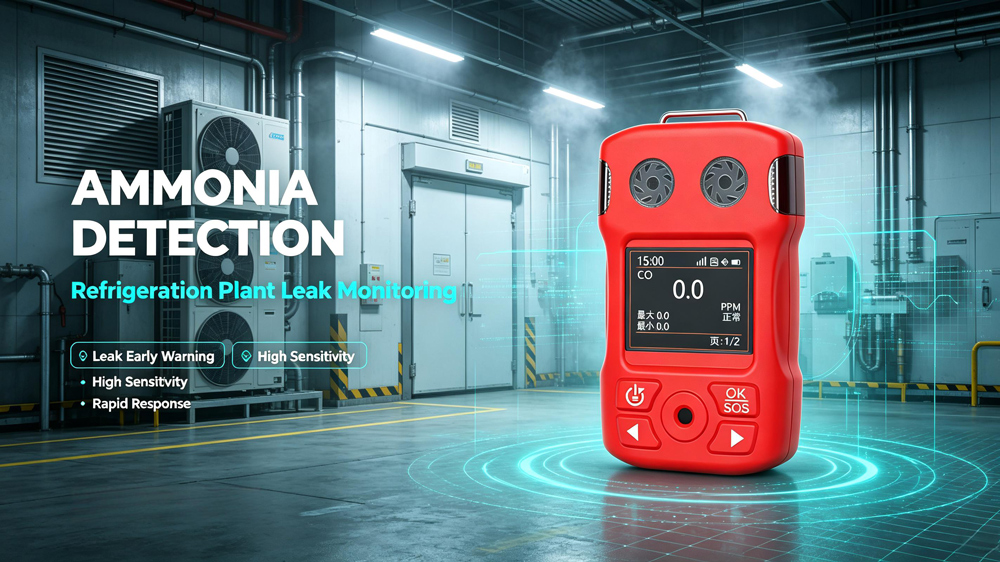
What is the appropriate installation height for an ammonia gas detectors?
Ammonia (NH₃) has a relative density of only 0.59, much lighter than air. This means that in the event of a leak, the gas will qu...
2026-09-09
 info@eranntexgas.com sale1@eranntexgas.com


 15914124845