
What is the reference height for combustible gas alarm installation?
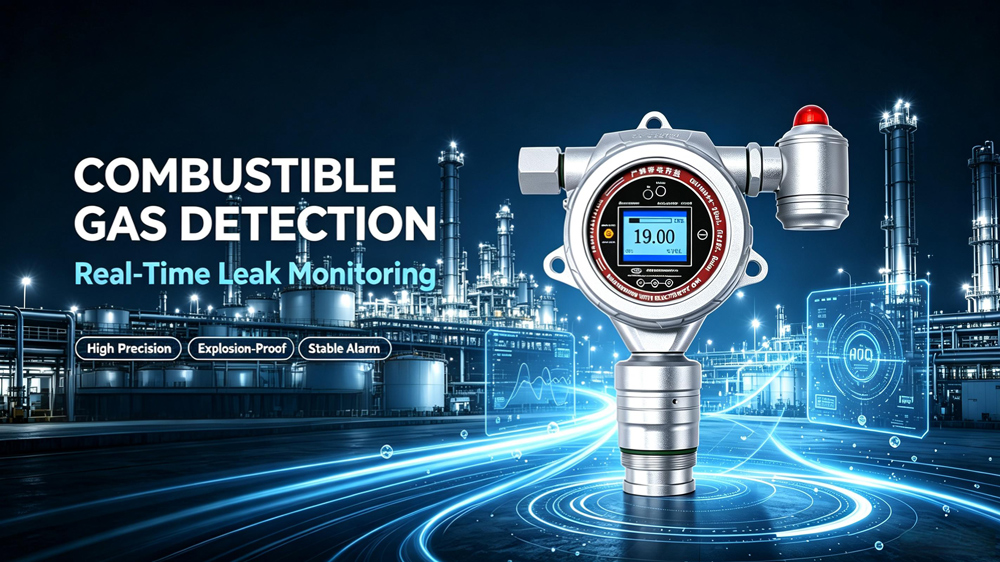
Publication Date:2023/07/05 Combustible gas alarm is a gas detection instrument that responds to single or multiple combustible gas concentrations. It can be used to detect hydrocarbons (methane, ethane, propane, benzene, acetylene, butane, n-butane, isobutane, pentane, hexane, gasoline, toluene, etc.), halogenated hydrocarbons (chloromethane, methylene chloride, trichloroethane, vinyl chloride), alcohols (methanol, ethanol, propanol), ethers (methyl ether), ketones (butanone, acetone), methyl acetate and other compounds (hydrogen, sulfur dioxide, ammonia, hydrogen sulfide, industrial solvents, dry cleaning fluid, etc.). In order to better ensure the smooth progress of the detection work, there are relevant standard requirements for the installation height of the combustible gas alarm. Do you know what the reference height for combustible gas alarm is? The following is a brief introduction by yi yun Tian:

Combustible Gas Alarm Installation Height:
1. when detecting combustible gas or toxic gas heavier than air (molecular weight ratio greater than or equal to 1 or 2), the installation height of combustible gas alarm detector should be 0,3 m ~ 0,6 m away from the floor (or floor).
2. when detecting combustible gas or toxic gas lighter than air (molecular weight ratio less than or equal to 0,8), the installation height of combustible gas alarm detector should be within 2m above the release source.
3. when detecting combustible gas or toxic gas slightly heavier than air (molecular weight ratio greater than or equal to 1, 0, less than 1, 2), the installation height of combustible gas alarm detector should be 0,5 m ~ 1m below the release source.
4. when detecting combustible gas or toxic gas slightly lighter than air (molecular weight ratio 0,8-1,0), the installation height of combustible gas alarm detector should be 0,5 m ~ 1m higher than the release source.
to sum up, it is the reference height for the installation of combustible gas alarm. of course, in the actual process, the installation height of combustible gas alarm should be installed according to the proportion of combustible gas. If the release source is located in the equipment area of open or open plant layout, the horizontal distance between the cocoa gas alarm and any release source within its coverage area should not be greater than 10m.The release source is located in the closed plant or semi-open plant with poor local ventilation, and the horizontal distance between the combustible gas alarm and any release source within its coverage should not be greater than 5m.
Related information
-
How to Calibrate a Portable four-in-one Gas Detectors?
Portable four-in-one gas detectors are core protective equipment in the industrial safety field. However, sensors can experience z...
2026-09-18 -
What are the application scenarios for portable four-in-one gas detectors?
Portable four-in-one gas detectors typically monitor oxygen (O₂), flammable gas (LEL), carbon monoxide (CO), and hydrogen sulfide...
2026-09-16 -
Portable four-in-one Gas Detectors User Manual
The portable four-in-one gas detectors is a core piece of personal protective equipment (PPE) for ensuring the safety of personnel...
2026-09-14 -

Calibration Specifications for Ammonia gas Detectors
Calibration of ammonia gas detectors is a core step in ensuring their measurement accuracy and alarm reliability. However, ammonia...
2026-09-11 -
What is the appropriate installation height for an ammonia gas detectors?
Ammonia (NH₃) has a relative density of only 0.59, much lighter than air. This means that in the event of a leak, the gas will qu...
2026-09-09
 info@eranntexgas.com sale1@eranntexgas.com


 15914124845