
How to Maintain Your Combustible Gas Detectors?
Publication Date:2025/09/01In regions with stringent industrial and civil safety standards such as North America and Europe, combustible gas detectors have become indispensable safety sentinels in chemical plants, petroleum refineries, domestic kitchens, and underground car parks. However, without systematic maintenance, these precision instruments may experience detection accuracy degradation exceeding 30%, potentially precipitating catastrophic incidents. This article presents a practical maintenance programme grounded in OSHA standards, NFPA 70E electrical safety regulations, and the EU ATEX explosion-proof directive, supplemented by technical manuals from global leading manufacturers.
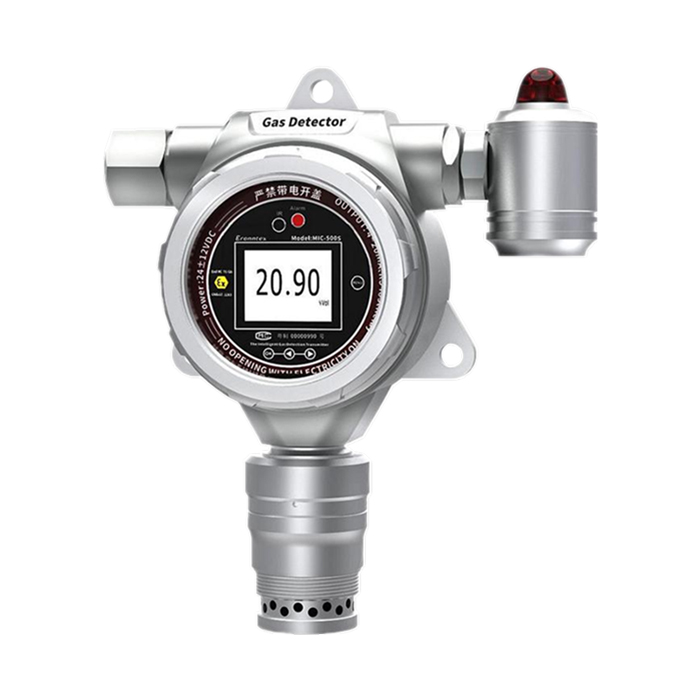
I. Environmental Adaptability Management: Establishing the Detector's ‘Comfort Zone’
Temperature Control: Catalytic combustion sensors (e.g., Honeywell Searchline Excel series) must operate within -40°C to +70°C. Deviations beyond this range cause platinum catalyst deactivation. A Canadian natural gas processing plant experienced collective detector failure during extreme winter cold, resulting in an unalerted gas leak incident.
Humidity Defence: Infrared sensors (e.g., MSA Ultima X5000) experience optical lens fogging at humidity levels exceeding 85% RH. Equipment with IP66 protection rating and integrated dehumidification modules is recommended. BASF Chemical Group in Germany reduced false alarm rates by 67% by installing silica gel desiccant at detector air inlets.
Dust Prevention Strategy: In environments with dust concentrations exceeding 10mg/m³, sensor filters require quarterly cleaning using compressed air (pressure ≤0.2MPa). BHP mines in Australia employ self-cleaning detectors (e.g., Dräger Polytron 8100), which utilise an internal vibration motor to automatically dislodge accumulated dust, extending maintenance intervals to 18 months.
II. Electrical Safety Protection: Interference Source Isolation
Earthing System: Per IEC 60079-14 standards, detector earth resistance must be <1Ω. A Saudi refinery experienced electromagnetic interference due to poor earthing, causing frequent false alarms during thunderstorms. The issue was resolved by reinstalling a copper earthing grid.
Explosion-Proof Certification: In ATEX Zone 1/21 hazardous areas, Ex d IIC T6 rated equipment must be used. BP's North Sea platforms mandate all detectors to hold EN 60079-11 intrinsically safe certification and incorporate isolation barriers to prevent electrical sparks.
Power Management: Utilise an Uninterruptible Power Supply (UPS) to ensure ≥30 minutes of continuous operation following power failure. The US NFPA 72 standard explicitly mandates that detector power cables must be independent of lighting circuits, with a minimum cable cross-section of ≥1.5mm².
III. Sensor Lifecycle Management: Precise Calibration and Replacement
Calibration Intervals:
Catalytic Combustion Type: Calibrate every 6 months using 50% LEL methane calibration gas (e.g., IST America Calibration Kits)
Infrared Type: Annual calibration with isobutane calibration gas (e.g., Sensirid SGP40 series)
Semiconductor Type: Quarterly calibration with hydrogen calibration gas (e.g., Figaro TGS2611)
End-of-Life Determination: Immediate replacement required when sensor response time exceeds 30 seconds or zero drift exceeds ±5% FS. A Japanese automotive manufacturer established a sensor health database, enabling replacement alerts three months in advance to prevent production line downtime losses.
Replacement Specifications: Only use manufacturer-certified replacement sensors (e.g., 3M Gas & Flame Detection replacement modules) and conduct functional retesting. German TÜV certification requires 24-hour continuous monitoring post-replacement to confirm no false alarms.
IV. Digital Maintenance Tools: 300% Efficiency Enhancement
Remote Diagnostics: Utilise IoT platforms (e.g., Siemens MindSphere) for real-time detector status monitoring. Shell reduced maintenance response times for 120,000 global detectors from 72 hours to 4 hours by deploying smart gateways.
Predictive Maintenance: Employ machine learning to analyse historical data and forecast sensor failure probabilities. DuPont's AI model successfully reduced unplanned downtime by 82%.
AR-Assisted Maintenance: Field engineers access 3D repair guidance via devices like Microsoft HoloLens. Boeing reduced detector repair time from 2 hours to 25 minutes after implementing this technology.
V. Compliance Management: Bridging Global Standards Gaps
Regional Variations:
North America: Must comply with NFPA 54 Gas System Installation Standard
EU: EN 50194-1 certification with CE marking
Middle East: Compliance with Saudi Standard GSO 1383/2013
Documentation Management: Establish maintenance archives (including calibration certificates, replacement records, fault logs) with retention periods ≥ equipment lifespan + 2 years. An international energy company faced a $2.3 million fine during an accident investigation for failing to provide complete maintenance records.
Training Framework: Operators must complete ISO 17024-certified training. The ‘Gas Detection Competency’ course offered by the British Standards Institution (BSI) covers sensor principles, calibration techniques, and emergency response procedures.
Conclusion: The Ultimate Manifestation of Safety Culture
Maintaining combustible gas detectors transcends technical compliance; it embodies an organisation's safety culture. From DuPont's ‘Safety Pyramid’ to Statoil's ‘Vision Zero’, global industry leaders demonstrate through practice that every dollar invested in detector maintenance prevents at least ten dollars in potential losses. The next time you pass those silently standing detectors, remember: they are not merely cold instruments, but loyal guardians safeguarding lives.
Related information
-
Can a carbon dioxide detectors detect low oxygen levels?
In modern society, carbon dioxide detectors are becoming increasingly common—whether in the ventilation systems of commercial bui...
2026-04-17 -
The Role of Carbon Monoxide Detectors
In industrial settings worldwide, carbon monoxide is a common yet extremely dangerous toxic gas. It is colorless, odorless, and no...
2026-04-15 -
What is the alarm concentration for nitrogen oxide detectors?
In the fields of industrial safety, environmental monitoring, and occupational health, nitrogen oxides (NOₓ)—especially nitric o...
2026-04-14 -
The Principle of Nitrogen Oxide Detectors
Globally, with the acceleration of industrialization and the advancement of urbanization, air quality has become a central issue f...
2026-04-13 -
Five-Point Inspection Method for Nitrogen Oxide Detectors
For users, the reliability of Nitrogen Oxide Detectors is directly linked to environmental compliance, industrial safety, and publ...
2026-04-10


 info@eranntexgas.com


 13480931872