
How Do Nitrogen Oxide Detectors Work?
Publication Date:2026/01/09 Against a backdrop of growing global concern over air quality and emissions
compliance, the precise monitoring of nitrogen oxides (NOₓ, primarily comprising
nitrogen monoxide NO and nitrogen dioxide NO₂) has become critically important.
From industrial smokestacks to urban roadside monitoring stations, from
laboratory research to on-board diagnostic systems, nitrogen oxide detectors are
widely deployed across diverse scenarios. However, instruments based on
different principles exhibit significant variations in their core detection
mechanisms. Below, Yiyuntian Erannte provides a clear and systematic overview of
the working principles behind mainstream nitrogen oxide detection technologies.
This guide aims to assist users in selecting appropriate equipment based on
practical needs and interpreting measurement results accurately.
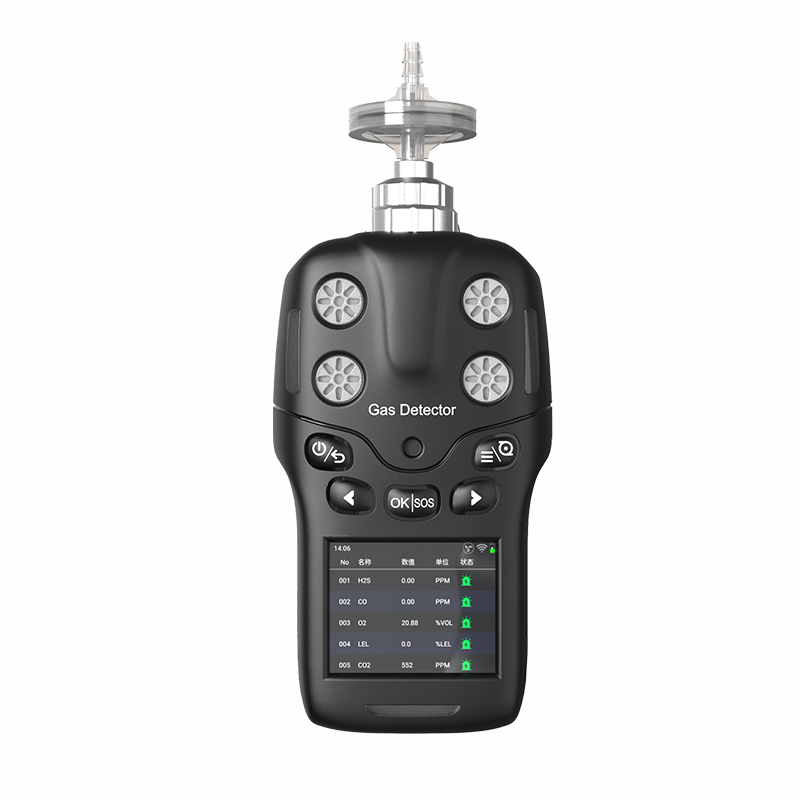
I. Chemiluminescence Detection (CLD): The High-Precision Standard Method
Chemiluminescence is widely recognized as one of the most accurate and reliable techniques for measuring NOₓ. It serves as the reference method for compliance monitoring under both U.S. EPA and EU EN standards. Its fundamental principle involves the chemical reaction between nitrogen monoxide (NO) and ozone (O₃), producing excited-state nitrogen dioxide (NO₂*). When this NO₂* returns to its ground state, it emits light at specific wavelengths (approximately 600–3000 nm). A photomultiplier tube detects this light intensity, which is directly proportional to NO concentration.
To measure total NO₂ (i.e., NO + NO₂), instruments typically incorporate a “molybdenum or photolysis converter.” This component first reduces NO₂ at high temperatures (or via ultraviolet photolysis) back to NO before the latter enters the reaction chamber for measurement. The difference between the two readings represents the NO₂ concentration. CLD analyzers offer high precision, rapid response, and excellent linearity, making them common in continuous emission monitoring systems (CEMS) for stationary sources and ambient air quality monitoring stations. However, they are bulky, costly, and require ozone generators and standard gases.
II. Electrochemical Sensors: Portable and Cost-Effective
Electrochemical sensors are widely adopted in portable detectors and personal exposure monitoring devices due to their compact design, low power consumption, and affordability. Their operation relies on the oxidation or reduction of NO or NO₂ at a working electrode, generating a weak current proportional to gas concentration. For instance, NO oxidizes to NO⁺ at the electrode, releasing electrons to form an electrical signal.
These sensors typically exhibit selectivity for a single gas (achieved through optimized electrolyte and membrane materials) but are susceptible to temperature, humidity, and interference from other gases (e.g., CO, H₂S). Additionally, sensor lifespan is limited (generally 1–2 years), requiring periodic calibration. While less accurate than CLD, electrochemical methods remain highly practical for rapid field screening, leak detection, or occupational health assessments.
III. Ultraviolet/Visible Absorption Spectroscopy (DOAS or NDIR)
Technologies based on spectral absorption principles have advanced rapidly in recent years. Differential optical absorption spectroscopy (DOAS) exploits the characteristic absorption peak of NO₂ in the ultraviolet-visible (UV-Vis) range (e.g., 400–500 nm). Instruments emit a broad-spectrum light source through the gas sample, with the receiver calculating NO₂ concentration via spectral analysis. This method requires no sampling and enables open-path monitoring (e.g., roadside or facility perimeter), making it suitable for regional pollution assessment.
Another approach is non-dispersive infrared (NDIR) technology. However, due to the weak infrared absorption of NO and NO₂, NDIR is rarely used for direct NO₂ detection and is more commonly applied to gases like CO and CO₂. In contrast, ultraviolet fluorescence methods can also detect NO₂, but their application is less widespread than CLD.
IV. Semiconductor and Emerging Technologies
Metal oxide semiconductor (MOS) sensors are extremely low-cost and commonly used in consumer-grade air quality devices. Their principle involves NO₂ adsorption onto a heated semiconductor surface, altering its resistance value. However, these sensors exhibit poor selectivity and susceptibility to drift, making them suitable only for trend assessment rather than quantitative compliance monitoring.
In recent years, new technologies like laser absorption spectroscopy (e.g., TDLAS) and photoacoustic spectroscopy (PAS) have gradually entered the market. These offer high sensitivity, rapid response, and calibration-free potential, though they remain primarily confined to research or high-end industrial applications.
Conclusion
The “detection method” of nitrogen oxide monitors directly determines their applicable scenarios, accuracy levels, and maintenance costs. For regulatory applications requiring legally valid data, chemiluminescence remains the gold standard. For field inspections or personal protection, electrochemical or spectroscopic portable devices offer greater flexibility. Users should comprehensively consider measurement targets (NO, NO₂, or total NOₓ), concentration ranges, environmental conditions, regulatory requirements, and budget when selecting equipment.
Related information
-
How to Calibrate a Portable four-in-one Gas Detectors?
Portable four-in-one gas detectors are core protective equipment in the industrial safety field. However, sensors can experience z...
2026-09-18 -
What are the application scenarios for portable four-in-one gas detectors?
Portable four-in-one gas detectors typically monitor oxygen (O₂), flammable gas (LEL), carbon monoxide (CO), and hydrogen sulfide...
2026-09-16 -
Portable four-in-one Gas Detectors User Manual
The portable four-in-one gas detectors is a core piece of personal protective equipment (PPE) for ensuring the safety of personnel...
2026-09-14 -

Calibration Specifications for Ammonia gas Detectors
Calibration of ammonia gas detectors is a core step in ensuring their measurement accuracy and alarm reliability. However, ammonia...
2026-09-11 -
What is the appropriate installation height for an ammonia gas detectors?
Ammonia (NH₃) has a relative density of only 0.59, much lighter than air. This means that in the event of a leak, the gas will qu...
2026-09-09


 info@eranntexgas.com sale1@eranntexgas.com


 15914124845