
Operating Instructions for Nitrogen Oxide Detectors
Publication Date:2026/01/07Nitrogen oxides (NOₓ, primarily comprising nitrogen monoxide NO and nitrogen dioxide NO₂) are significant atmospheric pollutants widely present in industrial emissions, vehicle exhaust, and combustion processes. To effectively monitor their concentrations, ensure compliance with environmental regulations, and safeguard public health, nitrogen oxide detectors have become essential tools globally in environmental monitoring, industrial safety, and scientific research. Yiyuntian Eranntex aims to provide users with a clear, practical, and intuitive guide for operating nitrogen oxide detectors, enabling safe, efficient, and accurate data collection.
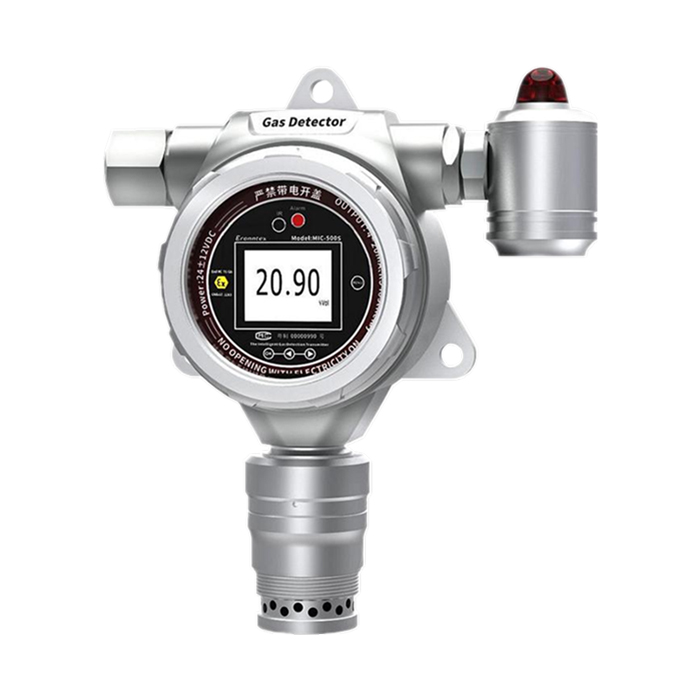
I. Pre-Use Preparation and Inspection
Before starting the instrument, ensure the following preparations are completed:
First, confirm the device is fully charged or connected to a stable power source. Portable detectors typically rely on rechargeable batteries; check battery levels before each use. Next, inspect sensor status—if equipped with electrochemical or optical sensors, verify they are not expired and remain within their valid lifespan (typically 1–2 years). Then, install or connect sampling probes, filters, and gas tubing, ensuring all interfaces are sealed properly with no leaks. Special Note: Sampling tubing must be made of inert materials (e.g., PTFE) to prevent adsorption or reaction losses of NOₓ. Finally, prepare certified standard gases (for calibration) and zero gas (e.g., high-purity nitrogen or clean air), verifying expiration dates and concentration labels.
II. Power-Up and Calibration
After powering on the instrument, perform the required warm-up period (typically 3–15 minutes) per the manual to allow the sensor to reach a stable operating state. Calibration is a core step to ensure measurement accuracy and must not be skipped. Standard operation includes two steps:
Zero Calibration: Introduce zero gas into the instrument. Once the reading stabilizes, execute the “Zero Calibration” function to set the instrument to zero.
Span Calibration: Switch to a standard NO or NO₂ gas of known concentration (e.g., 100 ppm NO). After the response stabilizes, execute “Span Calibration” to match the reading to the standard value.
For high-precision applications (e.g., CEMS or compliance monitoring), multi-point calibration (e.g., at 20%, 50%, 80% of span) is recommended to verify linearity. After calibration, save the calibration record and confirm the instrument displays “Calibration Successful” or a similar message.
III. Field Measurement Operation
When initiating measurement, position the sampling probe within the target gas environment. For flue or duct gas detection, use a high-temperature-resistant probe and ensure the sampling location is representative (avoid vortex zones or dead spots). For ambient air monitoring, conduct measurements in well-ventilated areas distant from local pollution sources.
Activate the sampling pump (if equipped) to maintain a constant flow rate of gas through the sensor. Most modern instruments display real-time NO, NO₂, and total NOₓ concentrations (typically in ppm or mg/m³). Monitor reading stability—values fluctuating less than ±2% for over 30 seconds indicate stable results. Advanced models support automatic data logging, GPS positioning, and Bluetooth/4G transmission for streamlined analysis and reporting.
IV. Post-Use Maintenance and Storage
After measurement, purge the sensor with clean air or nitrogen for 5–10 minutes to remove residual contaminants and extend sensor lifespan. Power off the instrument and clean the probe and housing (avoid organic solvents). Store the device in a dry, cool environment free from corrosive gases, with temperatures maintained between 0–40°C. For long-term storage, power on and recalibrate the device monthly. Additionally, maintain a usage log documenting each operation's time, location, calibration details, measurement results, and anomalies. This is critical for quality management and compliance audits.
V. Safety and Precautions
NO₂ is toxic and high concentrations can cause respiratory damage. Always wear appropriate personal protective equipment (PPE) during operation, including gloves, goggles, and a gas mask when necessary. Never use non-explosion-proof instruments in hazardous environments. Additionally, be aware that water vapor and particulate matter may interfere with measurements—it is recommended to install a dehumidifier and dust filter at the front end of the sampling tube. Finally, strictly adhere to the manufacturer's operating manual, as operational details may vary for instruments based on different principles (e.g., electrochemical, UV fluorescence, chemiluminescence).
Proper use of nitrogen oxide detectors is not merely a technical operation but a reflection of environmental responsibility and data integrity. Through standardized preparation, calibration, measurement, and maintenance procedures, international users can ensure every reading is reliable, traceable, and comparable. Against the backdrop of intensified global air quality regulation, mastering these best practices will empower businesses, institutions, and individuals to participate more effectively in pollution prevention and sustainable development initiatives.
Related information
-
How to Calibrate a Portable four-in-one Gas Detectors?
Portable four-in-one gas detectors are core protective equipment in the industrial safety field. However, sensors can experience z...
2026-09-18 -
What are the application scenarios for portable four-in-one gas detectors?
Portable four-in-one gas detectors typically monitor oxygen (O₂), flammable gas (LEL), carbon monoxide (CO), and hydrogen sulfide...
2026-09-16 -

Portable four-in-one Gas Detectors User Manual
The portable four-in-one gas detectors is a core piece of personal protective equipment (PPE) for ensuring the safety of personnel...
2026-09-14 -

Calibration Specifications for Ammonia gas Detectors
Calibration of ammonia gas detectors is a core step in ensuring their measurement accuracy and alarm reliability. However, ammonia...
2026-09-11 -
What is the appropriate installation height for an ammonia gas detectors?
Ammonia (NH₃) has a relative density of only 0.59, much lighter than air. This means that in the event of a leak, the gas will qu...
2026-09-09


 info@eranntexgas.com sale1@eranntexgas.com


 15914124845