
Where should carbon monoxide detectors be deployed?
Publication Date:2025/12/29Carbon monoxide (CO) is known as the “silent killer.” This colorless, odorless, and tasteless gas is not only deadly but also prevalent in industrial manufacturing, energy production, and commercial buildings. For safety managers, facility engineers, and workers at overseas enterprises, owning a high-performance carbon monoxide detectors is only the first step; deploying it in the correct location is crucial to ensuring timely warnings and saving lives. Incorrect placement can create “detection blind spots,” leaving you vulnerable to danger. Below, Yiyuntian Eranntex details optimal deployment strategies for carbon monoxide detectors based on gas properties and international safety practices.
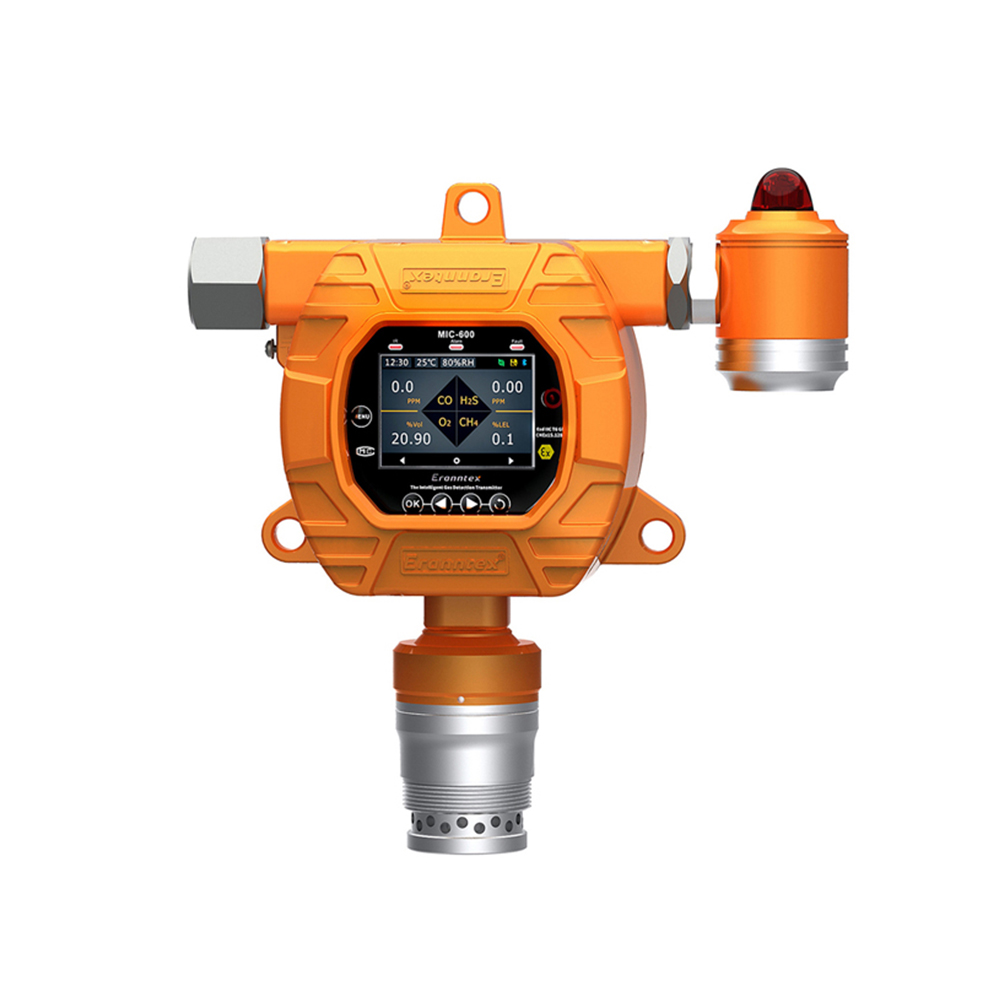
I. Understanding Gas Properties: Closer to Air, Ascending Due to Heat Sources
To determine deployment locations, one must first understand the physical properties of carbon monoxide. Its molecular weight is slightly less than air (air: 29, CO: 28), meaning pure CO gas theoretically rises slightly under identical temperature and pressure conditions.
However, real-world industrial or residential scenarios are more complex. CO is typically produced during combustion, often released alongside heat. Warm air rises, causing CO-laden hot air currents to rapidly disperse toward ceilings. Based on this behavior, international best practice dictates installing detectors above breathing zone height, near ceilings or high on walls.
For typical industrial settings or commercial buildings, detectors should be mounted 1.5 to 1.8 meters (5 to 6 feet) above floor level, or 30 to 50 centimeters (12 to 20 inches) below the ceiling. This position captures rising CO while remaining above typical breathing zones, providing the earliest possible warning.
II. Positioning Based on Potential Leak Sources: Distance and Protection
Detector effectiveness is closely tied to its distance from potential leak sources. Deployment should follow the principle of “close but not adjacent.”
Near the Source: Identify all equipment that may produce carbon monoxide, such as gas boilers, generators, furnaces, compressor workstations, or welding areas. Detectors should be placed near vents or directly above these devices (if they are elevated).
Avoid Direct Impact: While proximity is important, detectors should not be positioned directly in front of exhaust outlets. High-velocity hot air currents and excessive pollutants may damage sensors or cause false alarms. It is recommended to install detectors within a 1 to 4 meter (3 to 13 foot) radius of the leak source, depending on airflow velocity.
Dead Spaces and Corners: Carbon monoxide readily accumulates in poorly ventilated corners, ceiling recesses, or the leeward areas of rooms. Deploying additional detectors in these zones can capture gas buildup potentially missed by the primary ventilation system.
III. Protection for High-Occupancy Areas: Breathing Zone Height
While carbon monoxide tends to rise, deployment strategies require adjustment if your primary goal is protecting occupants within a specific area rather than monitoring equipment operation.
In environments without significant heat sources (e.g., parking garages, cold storage facilities, or areas using electric heating equipment), carbon monoxide mixes uniformly with the air. In such cases, the “breathing zone” becomes the critical deployment reference. This zone corresponds to the height of an adult's mouth and nose when standing or seated, typically ranging from 1.2 to 1.5 meters (4 to 5 feet) above the floor. Detectors should be mounted directly at this height to accurately measure the gas concentration actually inhaled by occupants.
IV. Considerations for Environmental Factors and Airflow Impact
Deployment locations should not be determined solely based on gas physical properties; airflow patterns within the environment must also be considered. This is particularly crucial for large overseas factories with complex ventilation systems.
Downwind vs. Upwind: Detectors should be positioned downwind (relative to the ventilation flow direction) of the leak source, allowing air currents to carry the gas toward the sensor. Avoid installing detectors directly beneath large ceiling air intakes, as powerful fresh air inflow may dilute the gas, preventing accurate alarms.
Avoid Obstacles: Ensure no beams, columns, shelving, or large machinery obstruct airflow around the detector. Sensors require unobstructed airflow for accurate detection.
Extreme Temperatures and Humidity: While modern sensors have broad operating temperature ranges, avoid installation near extreme heat sources (e.g., direct sunlight, radiators) or highly humid areas unless specifically designed for such environments. Significant changes in ambient pressure may also affect sensor readings.
Conclusion: Strategic Deployment Builds Safety Defenses
Deploying a carbon monoxide detector is far more complex than simply “hanging it on the wall.” It requires comprehensive consideration of gas physical properties, heat source locations, airflow patterns, and areas of human activity. For overseas users, adhering to the guiding principles of OSHA, NFPA, or relevant EU industrial standards, combined with scientific planning based on specific site layout diagrams, is the only way to ensure the effectiveness of the monitoring system.
Remember: A detector installed in the wrong location, no matter how precise, cannot guarantee safety. By implementing the systematic deployment strategies outlined above, you can transform your carbon monoxide detector into a true “life sentinel,” buying you and your team precious reaction time the moment danger strikes.
Related information
-
How to Calibrate a Portable four-in-one Gas Detectors?
Portable four-in-one gas detectors are core protective equipment in the industrial safety field. However, sensors can experience z...
2026-09-18 -
What are the application scenarios for portable four-in-one gas detectors?
Portable four-in-one gas detectors typically monitor oxygen (O₂), flammable gas (LEL), carbon monoxide (CO), and hydrogen sulfide...
2026-09-16 -
Portable four-in-one Gas Detectors User Manual
The portable four-in-one gas detectors is a core piece of personal protective equipment (PPE) for ensuring the safety of personnel...
2026-09-14 -

Calibration Specifications for Ammonia gas Detectors
Calibration of ammonia gas detectors is a core step in ensuring their measurement accuracy and alarm reliability. However, ammonia...
2026-09-11 -
What is the appropriate installation height for an ammonia gas detectors?
Ammonia (NH₃) has a relative density of only 0.59, much lighter than air. This means that in the event of a leak, the gas will qu...
2026-09-09
 info@eranntexgas.com sale1@eranntexgas.com


 15914124845