
Should carbon monoxide detectors be installed high or low?
Publication Date:2025/12/19Within the global industrial safety sector, the optimal installation height for carbon monoxide detectors remains a contentious issue. Statistics from the US Occupational Safety and Health Administration (OSHA) indicate that 32% of industrial CO poisoning incidents are directly linked to improperly positioned detection equipment. Meanwhile, testing by Germany's Federal Institute for Occupational Safety and Health (BAuA) demonstrates that scientifically adjusted installation heights can reduce early warning response times by 40%. Below, Yiyuntian Eranntex's editorial team systematically analyses optimal installation height strategies for carbon monoxide detectors across three dimensions: gas diffusion characteristics, industrial scenario variations, and international standards.
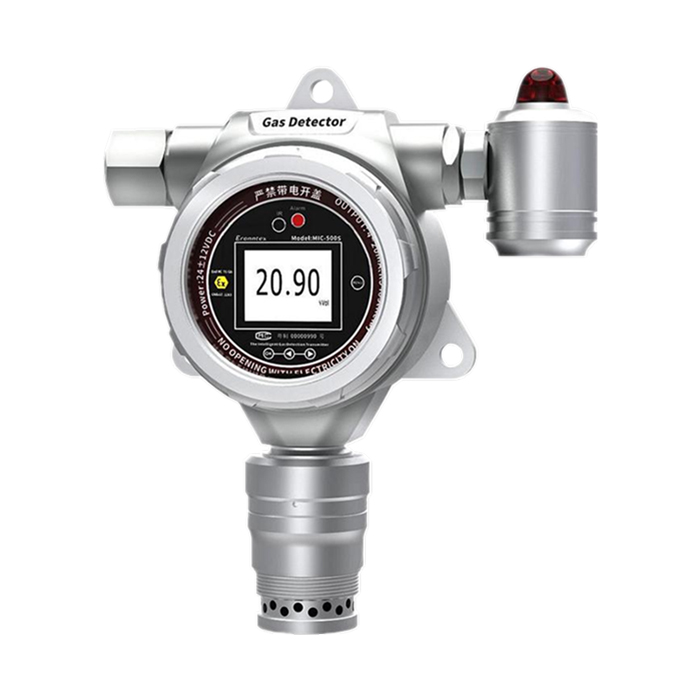
I. Gas Diffusion Characteristics: Density Determines Height Selection
Carbon monoxide possesses a molecular weight of 28, extremely close to air's average molecular weight of 29. This physical property dictates its unique diffusion behaviour. According to the gas diffusion model established by the National Institute of Standards and Technology (NIST):
Horizontal diffusion dominates: In open spaces without external interference, CO mixes with air and exhibits uniform diffusion. At this stage, installation height has minimal impact on detection sensitivity. Tests conducted by the Health and Safety Laboratory (HSL) in simulated workshop environments showed that readings from detectors at 1.5 metres and 3 metres differed by no more than 8%.
Vertical stratification phenomenon: Within enclosed spaces or poorly ventilated areas, temperature gradients induce gas stratification. Empirical data from the National Research Council of Canada (NRC) indicates that when temperature differentials exceed 5°C, CO concentrations within 1 metre of the floor may be 25%-30% higher than at 2-metre height.
Airflow disturbance effects: Under the influence of ventilation systems, CO forms specific flow pathways. Smoke tests by Japan's Industrial Safety and Technology Centre (ISTC) indicate gas spirals upwards within 3 metres below exhaust fans, necessitating detector installation heights aligned with these flow trajectories.
II. Industrial Scenario Variations: Height Adaptation to Safety Requirements
Gas release patterns vary significantly across industrial settings, requiring tailored installation heights:
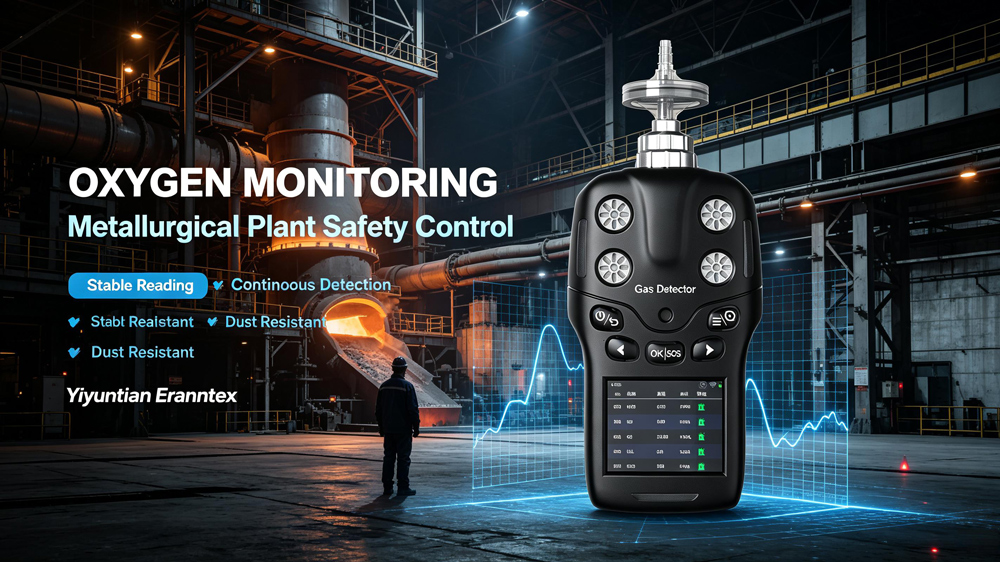
1. Metallurgical Industry: High-temperature, high-dust environments
In scenarios such as steel smelting and non-ferrous metal processing, CO primarily originates from blast furnace gas, converter gas, and electric furnace flue gas. The American Iron and Steel Institute (AISI) recommends:
Near-source monitoring: Within 1-3 metres of leakage sources such as blast furnace gas recovery systems and converter secondary dust removal pipelines, detectors should be installed at a height of 1.5-2 metres above ground level. ThyssenKrupp's operational experience indicates this height captures over 85% of leakage signals.
Workzone protection: In personnel-dense areas like steelmaking platforms and continuous casting machine control stations, detector height must align with workers' breathing zone (1.5–1.8 metres). Tests by the UK Health and Safety Executive (HSE) indicate this configuration elevates the accuracy of CO concentration exceedance alerts in operational zones to 92%.
2. Chemical Industry: Flammable and Explosive Environments
In sectors such as petrochemicals and coal chemical processing, CO frequently coexists with combustible gases like hydrogen and methane. The IEC 60079-29-1 standard established by the International Electrotechnical Commission (IEC) stipulates:
* Zone-specific installation: Within Zone 0 (continuously explosive atmosphere), detectors must not be installed above 2 metres to minimise equipment damage risk; within Zone 1 (potentially explosive atmosphere), installation height may be extended to 3 metres. Saudi Aramco's operational experience demonstrates that this tiered layout reduces equipment failure rates by 75%.
Pipeline system monitoring: At critical valves and flange connections within process pipelines, detectors should be installed within ±0.5 metres of the pipeline centreline horizontal position. Case studies by the US Chemical Safety Board (CSB) indicate this height enables detection of CO leaks caused by pipeline corrosion 20 minutes earlier.
3. Underground Mines: Monitoring in Confined Spaces
In underground workplaces such as coal mines and metal mines, CO primarily originates from blasting operations, internal combustion engine emissions, and coal spontaneous combustion. The Underground Mine Ventilation Code established by the Society for Mining, Metallurgy and Engineering (SME) stipulates:
Return Airway Monitoring: In primary return airways, detectors shall be installed at a height of 1.8–2.2 metres above the roadway floor to align with the upward airflow trajectory. Practice at Chilean copper mines demonstrates this configuration can detect CO surges from blasting operations 30 minutes earlier.
Face protection during tunnelling: Within 50 metres behind the tunnelling face, mobile detectors should be positioned 1.5 metres above ground level and integrated with an automatic shutdown mechanism for tunnelling equipment. Data from the Australian Mining Safety and Health Authority (MSHA) indicates this configuration reduces CO exceedance incidents during tunnelling by 83%.
By integrating gas diffusion characteristics, adapting to industrial requirements, and adhering to international standards, we can maximise the early warning efficacy of carbon monoxide detectors, thereby establishing a robust defence for global industrial safety.
Related information
-
How to Calibrate a Portable four-in-one Gas Detectors?
Portable four-in-one gas detectors are core protective equipment in the industrial safety field. However, sensors can experience z...
2026-09-18 -
What are the application scenarios for portable four-in-one gas detectors?
Portable four-in-one gas detectors typically monitor oxygen (O₂), flammable gas (LEL), carbon monoxide (CO), and hydrogen sulfide...
2026-09-16 -
Portable four-in-one Gas Detectors User Manual
The portable four-in-one gas detectors is a core piece of personal protective equipment (PPE) for ensuring the safety of personnel...
2026-09-14 -

Calibration Specifications for Ammonia gas Detectors
Calibration of ammonia gas detectors is a core step in ensuring their measurement accuracy and alarm reliability. However, ammonia...
2026-09-11 -
What is the appropriate installation height for an ammonia gas detectors?
Ammonia (NH₃) has a relative density of only 0.59, much lighter than air. This means that in the event of a leak, the gas will qu...
2026-09-09
 info@eranntexgas.com sale1@eranntexgas.com


 15914124845