
What is the measurement range of an oxygen detectors?
Publication Date:2026/01/13Oxygen detectors are indispensable equipment in industrial safety, environmental monitoring, and confined space operations. Accurate understanding of their “measurement range” not only affects measurement precision but also directly impacts personnel safety and compliance. For users, different application scenarios present significant variations in oxygen detection requirements, leading to distinct range designs for instruments. This article systematically outlines typical oxygen detectors measurement ranges, selection criteria, and underlying scientific rationale to assist global users in making rational and safe equipment choices.
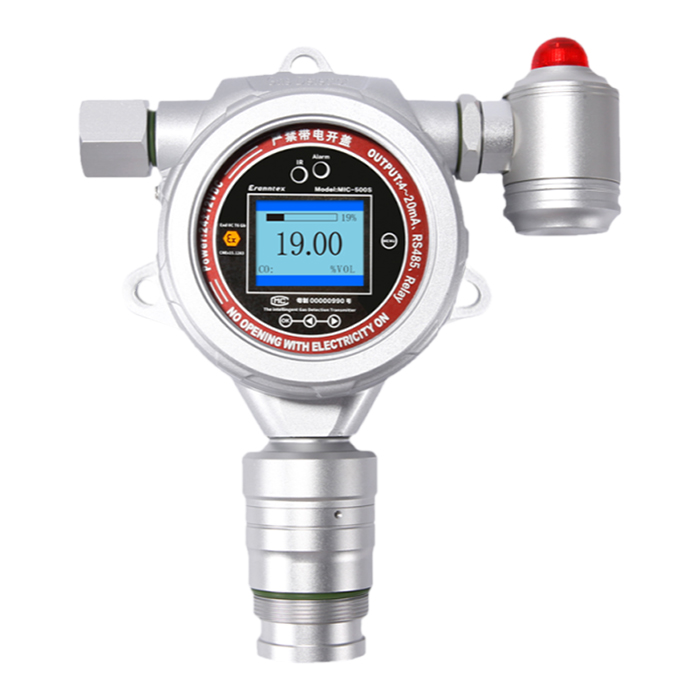
I. The Most Common Standard Range: 0–25% vol
For the vast majority of portable or multi-gas detectors used in occupational health and safety, the standard oxygen sensor range is 0% to 25% volume concentration (% vol). This range is not arbitrarily set but is based on two critical safety thresholds:
19.5%: Defined as the lower limit for “oxygen deficiency” by standards such as U.S. OSHA and EU EN 60079-29-2;
23.5%: Considered the upper limit for “oxygen-enriched” conditions, beyond which the risk of combustion for combustible materials significantly increases.
Thus, the 0–25% range comprehensively covers all hazardous scenarios from severe hypoxia (e.g., pure nitrogen environments) to high-risk hyperoxia (e.g., oxygen leaks), while maintaining sufficient margin to ensure measurement linearity and alarm reliability. Within this range, instruments typically deliver accuracy of ±0.1% to ±0.5% vol, which adequately meets industrial safety requirements.
II. Extended or Narrow Ranges for Special Applications
While 0–25% vol is the most universal configuration, specialized fields employ different ranges:
Medical and Life Support Systems: Anesthesia machines, ventilators, or oxygen generators require precise monitoring of high-concentration oxygen (e.g., 21%–100%). Specialized electrochemical or paramagnetic oxygen sensors with ranges of 0–100% vol are employed, achieving accuracies of ±1% vol or higher.
Inert Atmosphere Control (e.g., food packaging, electronics manufacturing): In nitrogen-flushed preservation or semiconductor processes, the objective is to reduce oxygen to extremely low levels (<100 ppm). Such scenarios employ high-sensitivity sensors with ranges of 0–1000 ppm (equivalent to 0–0.1% vol) or 0–5% vol. These sensors often utilize fluorescence quenching or laser absorption principles rather than conventional electrochemical technology.
Aerospace and diving: In high-pressure or mixed-gas environments, simultaneous monitoring of atmospheric percentage and partial pressure (PO₂) may be required. Range design is more complex and typically integrated into specialized life support systems.
III. Why Can't “One Range Fit All”?
Different ranges require distinct sensor technologies and calibration strategies. For example:
• Conventional electrochemical O₂ sensors exhibit good linearity within 0–25%, but measuring 100% oxygen rapidly depletes electrolyte, drastically shortening lifespan;
• Paramagnetic or zirconia sensors designed for high concentrations can measure 0–100%, but their high cost and bulkiness make them unsuitable for everyday portable use;
Detection at low ppm levels requires entirely different optical principles, which standard safety detectors cannot achieve.
Therefore, selecting the appropriate measurement range fundamentally hinges on matching the application scenario. Attempting to monitor residual oxygen in food packaging (typically <0.01%) with a 0–25% industrial detector inevitably yields a meaningless “reading of zero.” Conversely, deploying a high-concentration medical device in confined spaces may delay hazard warnings due to slow response times or mismatched alarm thresholds.
While the measurement range of an oxygen detectors may appear as a simple technical parameter, it carries multiple implications: defining safety boundaries, ensuring technological suitability, and meeting regulatory compliance. For users, understanding that “0–25% vol is the industrial safety standard, while other ranges serve specific professional needs” is the first step toward proper device usage. Selecting the appropriate measurement range is not merely a technical decision—it is a matter of accountability for human life.
Related information
-
How to Calibrate a Portable four-in-one Gas Detectors?
Portable four-in-one gas detectors are core protective equipment in the industrial safety field. However, sensors can experience z...
2026-09-18 -
What are the application scenarios for portable four-in-one gas detectors?
Portable four-in-one gas detectors typically monitor oxygen (O₂), flammable gas (LEL), carbon monoxide (CO), and hydrogen sulfide...
2026-09-16 -
Portable four-in-one Gas Detectors User Manual
The portable four-in-one gas detectors is a core piece of personal protective equipment (PPE) for ensuring the safety of personnel...
2026-09-14 -

Calibration Specifications for Ammonia gas Detectors
Calibration of ammonia gas detectors is a core step in ensuring their measurement accuracy and alarm reliability. However, ammonia...
2026-09-11 -
What is the appropriate installation height for an ammonia gas detectors?
Ammonia (NH₃) has a relative density of only 0.59, much lighter than air. This means that in the event of a leak, the gas will qu...
2026-09-09
 info@eranntexgas.com sale1@eranntexgas.com


 15914124845