
Installation Locations for Oxygen Detectors: How to Position Them Scientifically for Effective Monitoring
Publication Date:2026/01/16 In industrial safety, confined space management, and environmental
monitoring, oxygen (O₂) detectors serve as the first line of defense against
hypoxia or hyperoxia risks. However, even with high-precision instruments,
improper installation locations may fail to detect hazardous gases in time,
potentially triggering severe accidents. For users, understanding the principles
of proper oxygen detectors placement is crucial not only for maximizing device
performance but also for fulfilling occupational health and safety
responsibilities. This article systematically outlines optimal installation
strategies for oxygen detectors across various scenarios, helping users
worldwide achieve efficient and reliable gas monitoring.
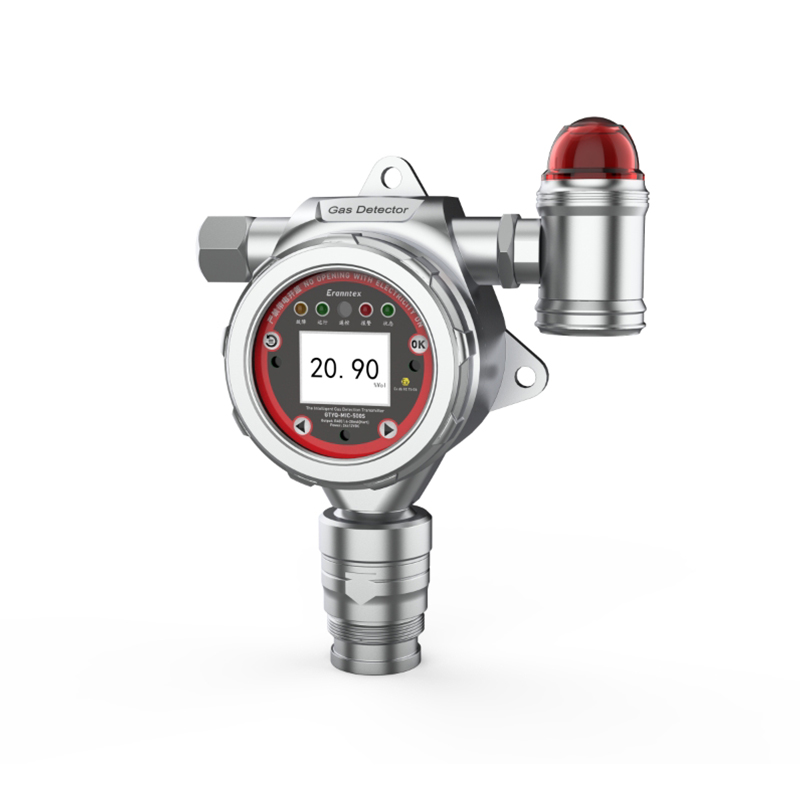
I. Fundamental Principles: Oxygen's Physical Properties Determine Installation Logic
Oxygen's density (1.43 g/L) is slightly greater than air (approximately 1.29 g/L). However, under standard temperature and pressure conditions, it exhibits extremely high diffusivity and typically mixes rapidly and uniformly with air. Consequently, oxygen concentration distributes relatively uniformly in open or well-ventilated spaces. This contrasts with heavier gases (e.g., propane) that accumulate in low-lying areas, or lighter-than-air gases (e.g., hydrogen) that rise and pool.
This implies that in most general scenarios, oxygen detectors need not be deliberately installed at extremely high or low positions. Instead, priority should be given to locations within the breathing zone height (typically 1.2–1.8 meters above ground level) or near potential leak/displacement sources.
II. Typical Installation Locations for Fixed Detectors
Enclosures or Confined Space Entrances and Interiors
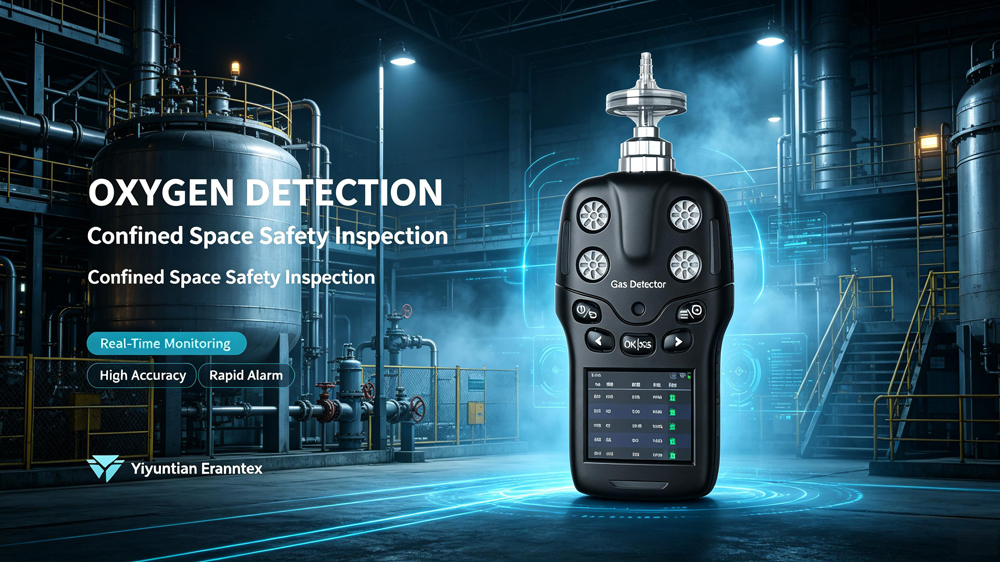
In enclosed spaces like storage tanks, reactors, cellars, and ship compartments, inert gases (e.g., nitrogen, argon) are often used for purging, creating high risks of localized oxygen depletion. Fixed oxygen detectors should be installed at entrances and critical areas within these spaces. For deep compartments, layered placement at the bottom, middle, and top is recommended to detect potential stratification (especially during poor ventilation).
Industrial Facilities and Laboratories
In areas utilizing significant quantities of compressed gases (e.g., liquid nitrogen Dewar flasks, oxygen generators, welding shielding gases), detectors should be installed downwind and adjacent to gas usage points or storage zones. While oxygen itself does not readily accumulate, nitrogen leaks can cause oxygen depletion. Nitrogen, being nearly as dense as air, tends to pool locally. Therefore, installation is recommended within 1–3 meters of potential leak sources at personnel activity height.
HVAC Systems or Poorly Ventilated Corners
In large facilities, certain areas may form “dead zones” due to stagnant airflow, where oxygen is slowly displaced without detection. Monitoring points can be established in these areas as supplementary safeguards for overall air quality.
III. Placement of Portable Detectors
For personnel entering confined spaces or conducting patrol inspections, portable oxygen detectors should be worn near the breathing zone (e.g., on the chest or shoulder), not placed in tool kits or on belts. This is because:
Readings must reflect the actual oxygen concentration in the air the person breathes;
To prevent clothing from obstructing the air intake;
To facilitate real-time viewing and audible alarm detection.
Additionally, prior to entry, conduct multi-point testing with the portable detector at the entrance, midpoint, and bottom of the space. Entry should only proceed after confirming oxygen concentrations throughout the entire space fall within the safe range (19.5%–23.5% vol).
IV. Commonly Avoided Installation Locations
Near doors, windows, or high-ventilation areas: External fresh air dilutes localized gases, causing “false normal” readings that mask internal hypoxia risks.
High-temperature, high-humidity, or oily areas: May damage sensors or trigger false alarms.
Inside fully enclosed cabinets: Unless specifically monitoring cabinet atmosphere, it does not reflect the environment occupants are exposed to.
Installation solely on ceilings or floors: Unless clear evidence of gas stratification exists, this configuration contradicts oxygen diffusion characteristics and constitutes resource waste.
V. Regulatory and Standard References
Multiple international standards provide guidance on oxygen monitoring locations:
OSHA 1910.146 (U.S. Confined Space Standard) requires gas testing at “top, middle, and bottom” prior to entry;
EN 60079-29-2 (EU Combustible Gas and Oxygen Detection Standard) recommends sensors be placed in “areas where personnel exposure is most likely to occur”;
NFPA 55 / CGA G-4 also provides specific recommendations for monitoring layouts in industrial gas storage areas.
The installation location of an oxygen detectors may seem straightforward, but it actually involves a comprehensive assessment of gas physical properties, risk source analysis, and ergonomics. For users, adhering to the principle of “close to personnel, near to risks, and away from interference,” while flexibly placing detectors based on specific application scenarios, is essential to truly leverage the device's early warning capabilities. Remember: Even the most advanced sensor becomes ineffective if installed in the wrong location. Scientific placement is a critical element in safeguarding lives that must not be overlooked.
Related information
-
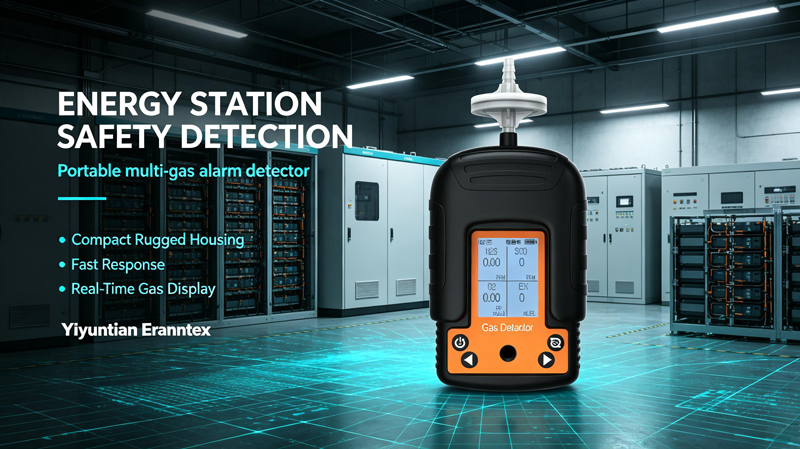
How to Calibrate a Portable four-in-one Gas Detectors?
Portable four-in-one gas detectors are core protective equipment in the industrial safety field. However, sensors can experience z...
2026-09-18 -
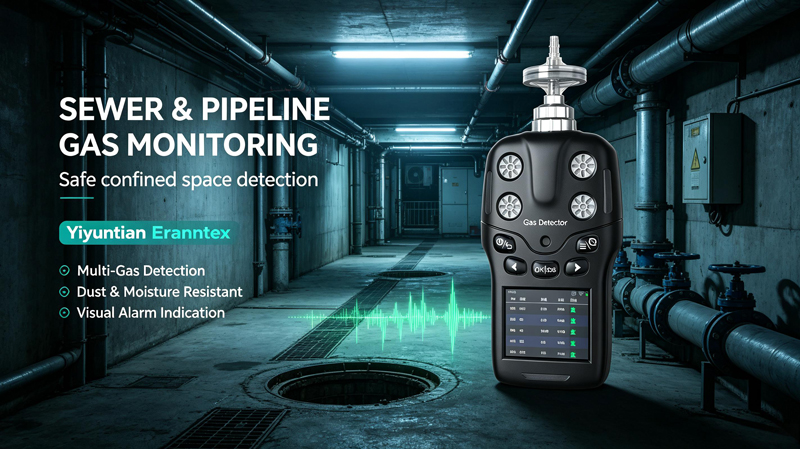
What are the application scenarios for portable four-in-one gas detectors?
Portable four-in-one gas detectors typically monitor oxygen (O₂), flammable gas (LEL), carbon monoxide (CO), and hydrogen sulfide...
2026-09-16 -
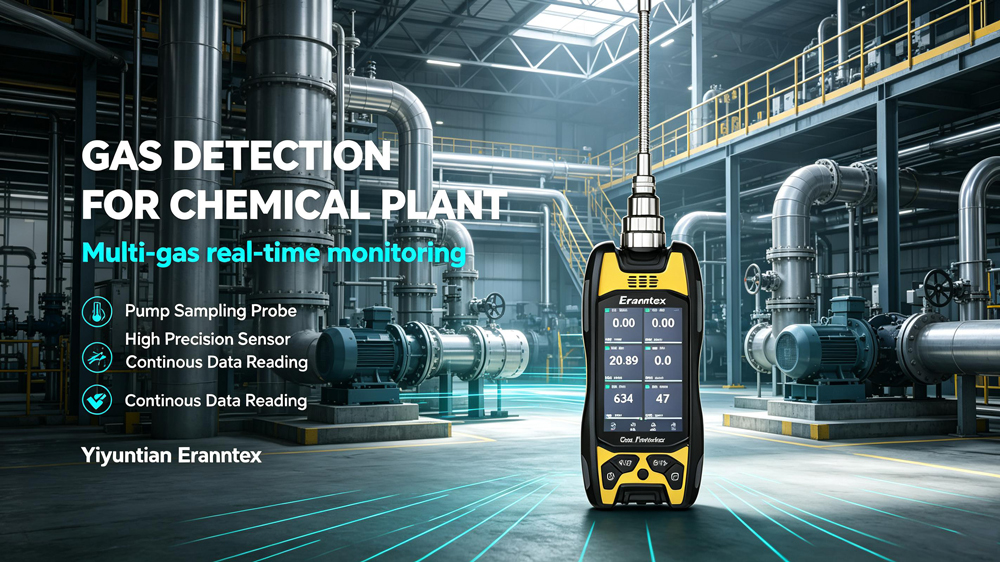
Portable four-in-one Gas Detectors User Manual
The portable four-in-one gas detectors is a core piece of personal protective equipment (PPE) for ensuring the safety of personnel...
2026-09-14 -

Calibration Specifications for Ammonia gas Detectors
Calibration of ammonia gas detectors is a core step in ensuring their measurement accuracy and alarm reliability. However, ammonia...
2026-09-11 -
What is the appropriate installation height for an ammonia gas detectors?
Ammonia (NH₃) has a relative density of only 0.59, much lighter than air. This means that in the event of a leak, the gas will qu...
2026-09-09
 info@eranntexgas.com sale1@eranntexgas.com


 15914124845