
Where should a carbon monoxide detectors be placed?
Publication Date:2026/01/23Carbon monoxide (CO) is known as the “silent killer.” This colorless, odorless, and tasteless gas poses an extremely dangerous, invisible threat in industrial settings. For safety managers and business owners, simply purchasing a high-quality carbon monoxide detectors is not enough; deploying it in the correct location is crucial to ensuring it can effectively provide early warnings and save lives. Improper placement may cause the detector to overlook hazards or trigger frequent false alarms in safe conditions. Based on the gas's physical properties and international safety standards (such as U.S. OSHA, NFPA, and EU EN standards), Yiyuntian Eranntex provides a detailed analysis of optimal deployment strategies for carbon monoxide detectors.
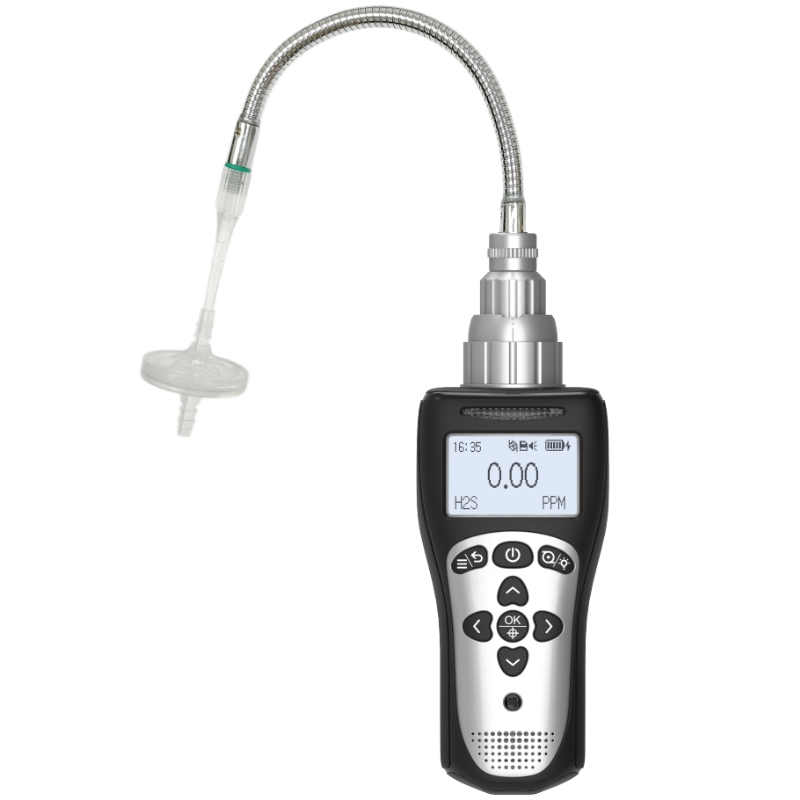
I. Understanding Core Principles: Gas Density and Hot Air Rise
To determine the optimal installation location for a carbon monoxide detectors, one must first understand the physical properties of carbon monoxide (CO) and its behavior in the air.
Gas Density: The molecular weight of carbon monoxide is slightly less than that of air (air: 29, CO: 28). This means that under identical temperature and pressure conditions, pure CO gas theoretically rises slightly.
Heat Source Influence: In real-world scenarios, CO typically originates from combustion processes (e.g., boilers, generators, heaters), meaning it is often accompanied by heat generation. Warm air naturally rises.
Therefore, the internationally recognized best practice is: Install detectors above breathing zone height or near the ceiling. This captures CO rising with warm air currents while remaining above typical breathing zones for earliest warning. For most industrial and commercial buildings, detectors should be installed 1.5 to 1.8 meters (5 to 6 feet) above floor level or 30 to 50 centimeters (12 to 20 inches) below the ceiling.
II. Deployment Strategies for Different Applications
Different environments demand tailored installation locations for CO detectors, requiring adjustments based on specific scenarios.
1. Industrial and Commercial Settings (Workshops, Factories, Boiler Rooms)
In these environments, the primary focus is protecting personnel and monitoring combustion equipment. Install CO detectors downwind of potential leak sources and within areas where people frequently linger.
Close to the source: Position above or near gas boilers, compressors, furnaces, or welding stations.
Avoid dead zones: Do not install CO detectors in poorly ventilated corners or beneath beams where CO may accumulate, causing delayed readings.
2. Vessels and Confined Spaces
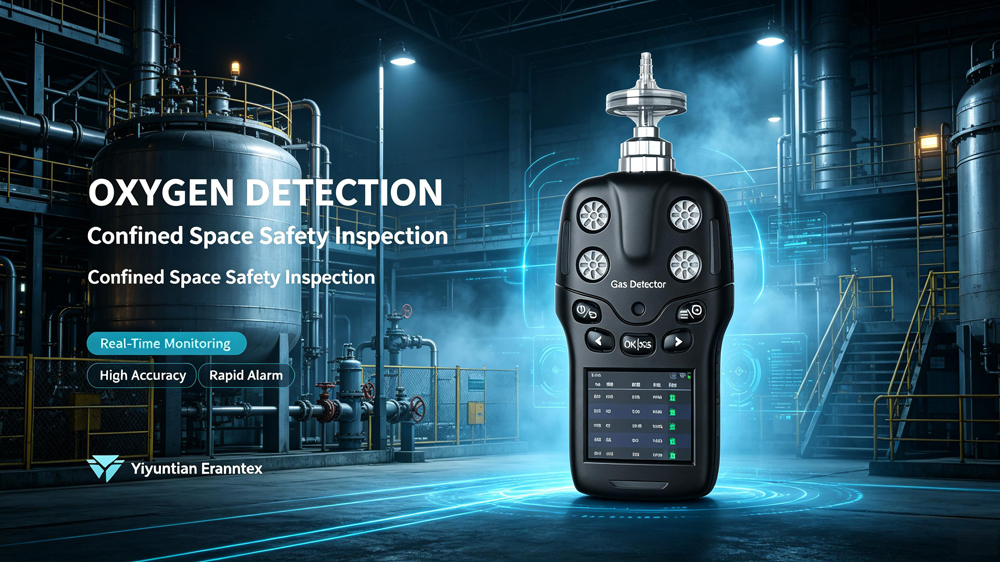
Use portable detectors before entering confined spaces like ship compartments or storage tanks. Since gases may stratify, operators should sample at multiple depths (top, middle, bottom) rather than at a single fixed location.
III. Critical “No-Go Zones”: Where Not to Install
Knowing “where not to place” is as crucial as knowing “where to place.” Incorrect placement can cause sensor poisoning, reduced sensitivity, or frequent false alarms.
Avoid Installing Near Combustion Equipment: Do not mount carbon monoxide detectors directly above gas stoves, ovens, or heaters. Excessive heat shock and cooking fumes may damage sensors, leading to malfunction.
Avoid “Dead Zones” and Corners: Do not install carbon monoxide detectors in ceiling corners or blind spots behind furniture. Poor air circulation in these areas fails to represent overall environmental air quality.
Keep away from damp areas: Do not install the detector near bathrooms, kitchen sinks, or under outdoor eaves unless the device is specifically rated as waterproof and dustproof. High humidity can clog sensor air intakes or corrode internal electronics.
Avoid chemical sources: Do not place near storage cabinets for cleaning agents, aerosols, paint, or solvents. These chemical vapors can “poison” the sensor, causing permanent failure or inaccurate readings.
Be mindful of vents and fans: Do not install directly in front of air conditioning or heating vents. Strong airflow may disperse surrounding gases, preventing the detector from promptly sensing leaks.
Deploying a carbon monoxide detectors is not arbitrary—it is a science grounded in physics and safety principles, adhering to the rule of “high placement, proximity to breathing zones, and avoidance of interference sources.” Remember, an incorrectly positioned detector not only fails to provide protection but may also create a false sense of security.
Related information
-
How to Calibrate a Portable four-in-one Gas Detectors?
Portable four-in-one gas detectors are core protective equipment in the industrial safety field. However, sensors can experience z...
2026-09-18 -
What are the application scenarios for portable four-in-one gas detectors?
Portable four-in-one gas detectors typically monitor oxygen (O₂), flammable gas (LEL), carbon monoxide (CO), and hydrogen sulfide...
2026-09-16 -
Portable four-in-one Gas Detectors User Manual
The portable four-in-one gas detectors is a core piece of personal protective equipment (PPE) for ensuring the safety of personnel...
2026-09-14 -

Calibration Specifications for Ammonia gas Detectors
Calibration of ammonia gas detectors is a core step in ensuring their measurement accuracy and alarm reliability. However, ammonia...
2026-09-11 -
What is the appropriate installation height for an ammonia gas detectors?
Ammonia (NH₃) has a relative density of only 0.59, much lighter than air. This means that in the event of a leak, the gas will qu...
2026-09-09
 info@eranntexgas.com sale1@eranntexgas.com


 15914124845