
Measuring Range of Combustible Gas Detectors
Publication Date:2026/01/26In petroleum and natural gas, chemical manufacturing, mining, and numerous other industrial sectors, combustible gas detectors serve as the core defense for operational safety. However, for many safety managers and field engineers, a frequently overlooked yet critical question remains: What should be the measuring range of a combustible gas detectors?
Understanding the relationship between measurement range, full-scale capacity, and the Lower Explosive Limit (LEL) not only impacts equipment selection but directly determines the effectiveness of on-site safety management. For users, mastering measurement range knowledge based on international standards and industry best practices is key to ensuring compliant operations.
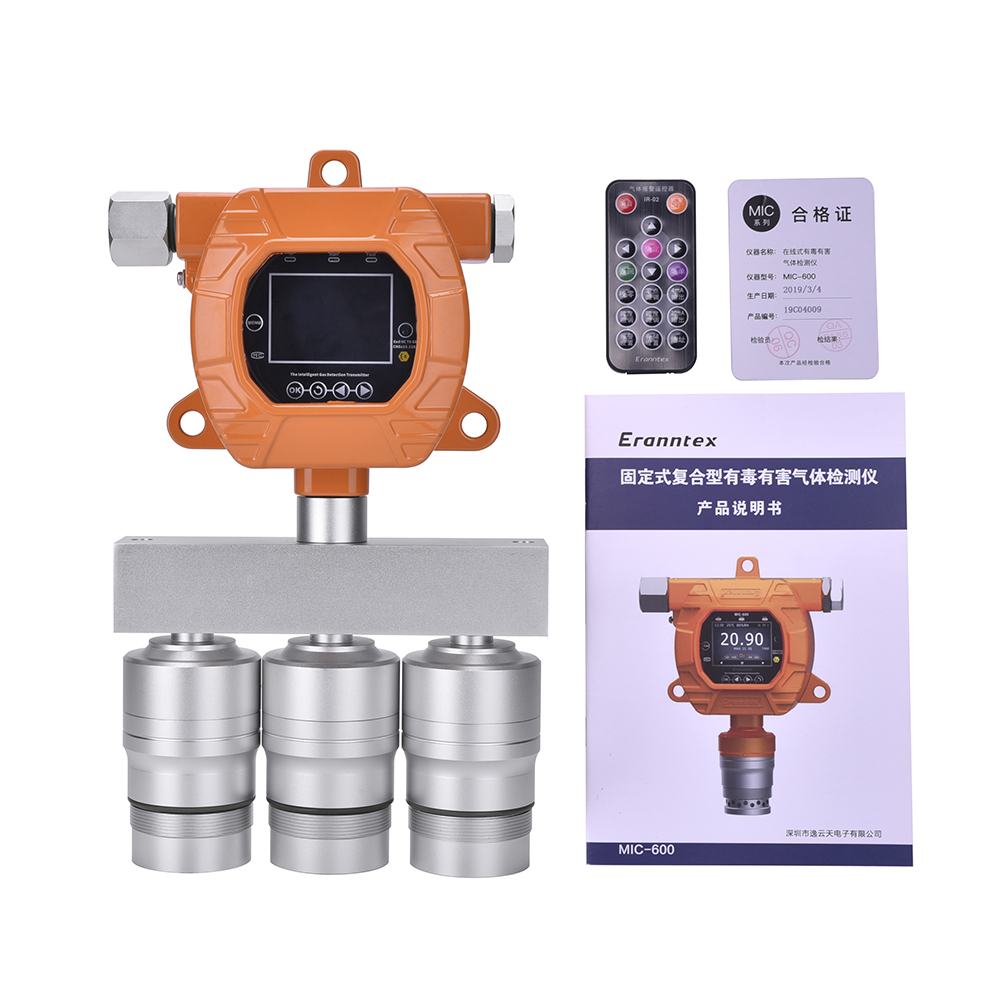
I. Core Concepts: Lower Explosive Limit (LEL) and Reading Logic
To comprehend the measurement range of a combustible gas detectors, one must first grasp its unique unit of measurement—%LEL. This differs fundamentally from the volume percentage (%Vol) familiar in everyday contexts.
Most combustible gases only ignite or explode when reaching specific concentrations in air. The lowest concentration capable of ignition is termed the Lower Explosive Limit (LEL). For example, methane's LEL is approximately 5% (meaning methane at 5% by volume in air will explode upon spark ignition). The primary function of a combustible gas detectors is to prevent concentrations from reaching this hazardous threshold.
Therefore, combustible gas detectors typically display readings in 0-100% LEL rather than 0-100% volume concentration.
0% LEL: No combustible gas present in the air.
100% LEL: The concentration of combustible gas in the air has reached the lower explosive limit for that gas (i.e., an extremely hazardous state).
Reading example: If a detector shows 50% LEL (for methane), this indicates a methane concentration of 2.5% in the air (half of 5%). Although the explosion threshold has not yet been reached, this represents a very high alert level, typically requiring immediate evacuation and gas source isolation.
II. Standard Measurement Range Setting: Why 0-100% LEL?
Based on the above logic, the standard measurement range for the vast majority of portable and fixed industrial combustible gas detectors is set to 0-100% LEL.
This setting provides sufficient warning time before the gas becomes lethal. Safety standards typically require the first-level low alarm to be set at 10-25% LEL, and the second-level high alarm at 50%
LEL (specific thresholds vary by local regulations). If the detector's measurement range is set too narrowly, it may fail to detect early trace leaks; conversely, if set too broadly (e.g., directly measuring volume percentage), its sensitivity may be insufficient to detect low-concentration leaks, thereby missing the optimal window for intervention.
III. Catalytic Combustion vs. Infrared Optics: Technology Determines Range
While the standard range is 0-100% LEL, the actual capabilities and applicable range of detectors vary based on sensor technology.
Catalytic Combustion Sensors: This most common technology is economical and durable, suitable for most industrial environments. Its standard measurement range is indeed 0-100% LEL. However, it has a physical limitation: when combustible gas concentrations become excessively high (exceeding LEL, or even reaching 100% by volume), the sensor may experience “oxygen starvation” or burn out due to high temperatures. Therefore, caution is required in “fuel-rich” environments (pure gas conditions), or flow restrictors should be used.
Infrared Optical Sensors: These sensors detect gases by utilizing their absorption of specific infrared wavelengths. Their advantage lies in their resistance to poisoning or burnout from high gas concentrations, enabling operation in oxygen-deficient environments. Beyond the standard 0-100% LEL range, many high-end infrared sensors can switch modes to directly measure 0-100% Vol (volume percentage). This proves invaluable for scenarios requiring verification of pure gas pipeline integrity (e.g., natural gas pipeline validation).
IV. Specific Considerations for Different Gases
Different combustible gases possess distinct physical and chemical properties, which also influence the interpretation and application of measurement ranges.
Methane and Natural Gas: These gases are lighter than air and tend to accumulate at the top. Standard 0-100% LEL range detectors are typically sufficient.
Propane and Butane (LPG): Heavier than air, these gases tend to pool at ground level. While the detection range remains 0-100% LEL, sampling location is critical.
Hydrogen (H₂): Hydrogen has an extremely wide flammability range and a very low lower explosive limit (4%). Detecting hydrogen requires specialized sensors. Although readings are still expressed as %LEL, hydrogen's high diffusivity demands superior response speed and lower-limit sensitivity.
Key Parameters Beyond Range: Resolution and Response Time
While considering “range,” users should also focus on resolution, which determines measurement precision.
For the 0-100% LEL range, standard industrial detectors typically offer 1% LEL resolution. This means they can detect a 1% change in the lower explosive limit.
In highly leak-sensitive industries like semiconductors or laboratories, high-precision instruments with 0.1% LEL resolution may be used to capture minute leaks.
Additionally, response time (T90) is another critical range-related metric. It represents the time required for the sensor reading to reach 90% of its stable value after exposure to a concentrated gas. If the measurement range is extensive but the response time is excessively long, the device may fail to trigger an alarm in time during rapid leaks, allowing gas concentrations to exceed safety thresholds.
Conclusion: The Golden Window for Safety Alerts
In summary, the measurement range of a combustible gas detectors is not merely a numerical label but the cornerstone of a safety warning system. For users, the standard 0-100% LEL range represents a “golden window” established through extensive engineering practice and international standards. It is designed to provide personnel with maximum reaction time before gas concentrations reach explosive hazards.
When selecting and using equipment, always verify compliance with local safety standards (e.g., ATEX, UL, or CSA certification) and choose appropriate sensor technology based on the gas type (light or heavy) and potential leak scenarios. Only by correctly understanding and configuring the measurement range can your combustible gas detectors truly serve as a reliable safety sentinel.
Related information
-
How to Calibrate a Portable four-in-one Gas Detectors?
Portable four-in-one gas detectors are core protective equipment in the industrial safety field. However, sensors can experience z...
2026-09-18 -
What are the application scenarios for portable four-in-one gas detectors?
Portable four-in-one gas detectors typically monitor oxygen (O₂), flammable gas (LEL), carbon monoxide (CO), and hydrogen sulfide...
2026-09-16 -
Portable four-in-one Gas Detectors User Manual
The portable four-in-one gas detectors is a core piece of personal protective equipment (PPE) for ensuring the safety of personnel...
2026-09-14 -

Calibration Specifications for Ammonia gas Detectors
Calibration of ammonia gas detectors is a core step in ensuring their measurement accuracy and alarm reliability. However, ammonia...
2026-09-11 -
What is the appropriate installation height for an ammonia gas detectors?
Ammonia (NH₃) has a relative density of only 0.59, much lighter than air. This means that in the event of a leak, the gas will qu...
2026-09-09
 info@eranntexgas.com sale1@eranntexgas.com


 15914124845