
Is mandatory verification required for combustible gas detectors?
Publication Date:2026/01/28In many countries, particularly regions with stringent industrial safety standards like Europe and the United States, whether combustible gas detectors require mandatory verification is a frequently asked question. For enterprises, understanding relevant regulations is especially crucial. Below, Yiyuntian Eranntex will clearly outline the requirements for mandatory verification of combustible gas detectors from four perspectives: regulatory basis, practical implementation, international comparisons, and recommendations.
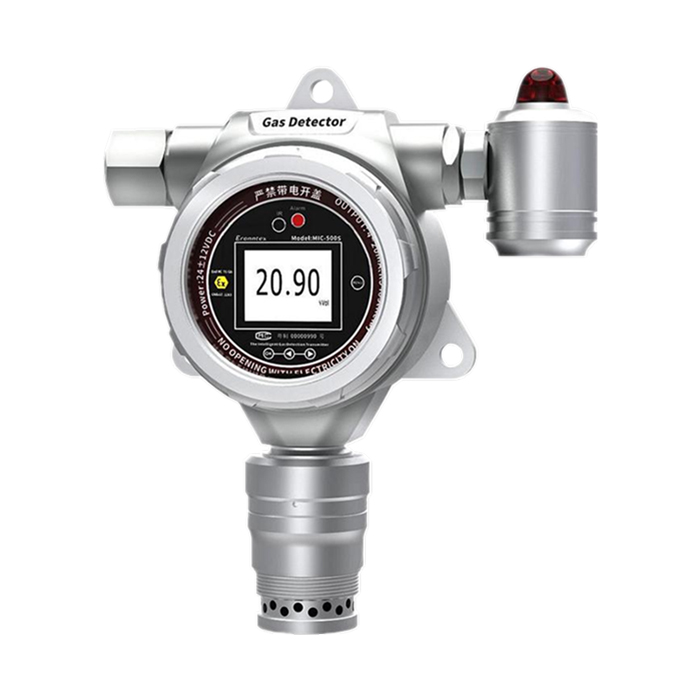
First, from a legal perspective, China implements a classification management system for measuring instruments. According to its implementation rules, the state enforces a mandatory verification system for measuring instruments used in areas such as “trade settlement, safety protection, healthcare, and environmental monitoring.” Combustible gas detectors are typically classified as “safety protection” measuring instruments. Therefore, they indeed fall under the mandatory verification scope in specific application scenarios. For instance, fixed or portable combustible gas detectors used in high-risk industries like petrochemicals, natural gas transmission, and coal mining must undergo regular verification by authorized metrology institutions if deployed to safeguard personnel safety or prevent major accidents.
Second, the specific implementation of mandatory verification is handled by metrology verification institutions under local market supervision administrations (formerly quality supervision bureaus). The verification cycle is generally one year, though the exact frequency may vary based on the usage environment, instrument type, or local regulations. It is important to note that not all combustible gas detectors are automatically included in the mandatory verification catalog. Only products listed in the Catalog of Measuring Instruments Subject to Mandatory Management (latest version issued by the State Administration for Market Regulation) require mandatory verification. Currently, this catalog explicitly includes “combustible gas detectors and alarms used for safety protection,” meaning most industrial-use equipment falls within the mandatory scope, while simple detectors for household or non-critical applications are generally excluded.
From an international perspective, this approach shares similarities and differences with practices in Europe and the United States. For instance, in the United States, while OSHA (Occupational Safety and Health Administration) and NFPA (National Fire Protection Association) do not directly mandate “mandatory verification,” they require employers to ensure gas detection equipment is “accurate and reliable,” typically achieved through regular calibration to meet compliance requirements. The European Union, guided by the ATEX Directive and relevant EN standards, emphasizes performance verification throughout the equipment's lifecycle. However, it relies more heavily on manufacturer declarations and user self-inspection rather than government-mandated mandatory verification. In contrast, China's system leans toward government-led periodic statutory verification, carrying stronger administrative enforceability.
For foreign enterprises operating in China or international companies collaborating with Chinese supply chains, understanding and adhering to this regulation is critical. Neglecting mandatory verification may not only result in administrative penalties but also expose companies to legal liability in the event of safety incidents. Enterprises are advised to establish comprehensive equipment management records, clearly documenting the purpose, installation location, and verification status of each combustible gas detectors, while maintaining partnerships with qualified third-party verification institutions. Additionally, during the procurement phase, it is essential to confirm whether the product has obtained the China Type Approval for Measuring Instruments (CPA certificate), as this is one of the prerequisites for subsequent legal mandatory verification.
In summary, whether a combustible gas detectors requires mandatory verification depends on its specific application and inclusion in the national mandatory management catalog. In high-risk industrial settings, the answer is typically affirmative. Although this system differs from the “performance verification”-centric models adopted by some Western countries, their core objectives align: ensuring personnel safety and production stability. For international readers, respecting and adapting to local regulations is a critical step toward ensuring compliant operations and mitigating risks.
Related information
-
How to Calibrate a Portable four-in-one Gas Detectors?
Portable four-in-one gas detectors are core protective equipment in the industrial safety field. However, sensors can experience z...
2026-09-18 -
What are the application scenarios for portable four-in-one gas detectors?
Portable four-in-one gas detectors typically monitor oxygen (O₂), flammable gas (LEL), carbon monoxide (CO), and hydrogen sulfide...
2026-09-16 -
Portable four-in-one Gas Detectors User Manual
The portable four-in-one gas detectors is a core piece of personal protective equipment (PPE) for ensuring the safety of personnel...
2026-09-14 -

Calibration Specifications for Ammonia gas Detectors
Calibration of ammonia gas detectors is a core step in ensuring their measurement accuracy and alarm reliability. However, ammonia...
2026-09-11 -
What is the appropriate installation height for an ammonia gas detectors?
Ammonia (NH₃) has a relative density of only 0.59, much lighter than air. This means that in the event of a leak, the gas will qu...
2026-09-09
 info@eranntexgas.com sale1@eranntexgas.com


 15914124845