
What is the maintenance cycle for nitrogen oxide detectors?
Publication Date:2026/02/06In industrial emissions monitoring, chemical production process control, and environmental health and safety management, nitrogen oxide detectors play a critical role. Nitrogen oxides, primarily comprising nitrogen monoxide (NO) and nitrogen dioxide (NO₂), are not only highly toxic but also major contributors to acid rain and photochemical smog. For environmental engineers, safety managers, and facility maintenance personnel overseas, acquiring a high-precision detector is merely the first step. To ensure the authenticity and reliability of monitoring data while meeting stringent international environmental regulations, establishing a scientific and standardized maintenance cycle system is paramount. Below, Yiyuntian Eranntex will provide a detailed analysis of NOx detector maintenance strategies and best practices based on the technical characteristics of electrochemical and optical sensors.
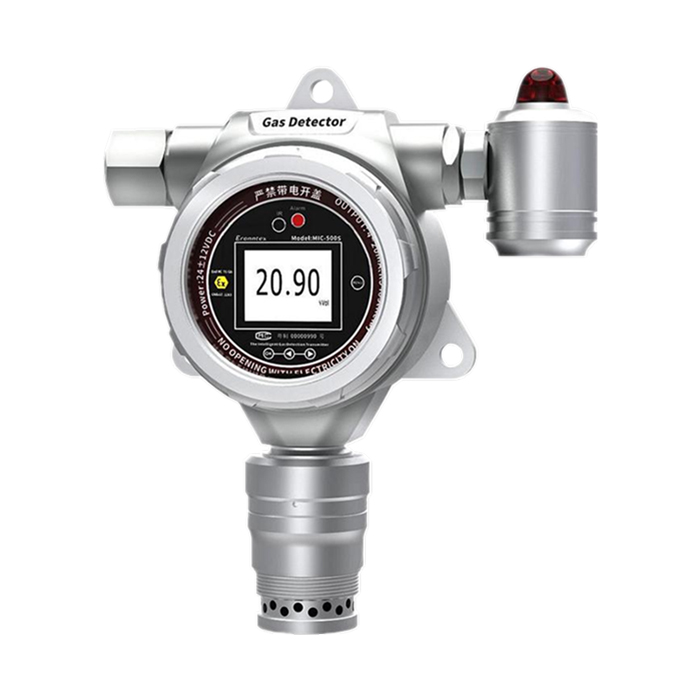
Core Principle: Distinguishing “Functional Testing” from “Full Calibration”
Before establishing a specific maintenance schedule, it is essential to clarify two concepts distinctly defined in international industrial safety standards: functional testing and full calibration. Functional testing, often referred to as a “bump test,” aims to quickly verify whether the sensor is “alive” and capable of responding to gases. The procedure involves introducing a calibration gas (e.g., NO₂ standard gas) at a concentration slightly above the alarm threshold into the NOx detector to confirm whether the device can trigger audible and visual alarms within the specified time. For portable devices, the internationally recognized best practice is to perform this test before each entry into hazardous areas (daily). In contrast, full calibration is a more rigorous process. It involves introducing zero gas and standard concentrations of NO/NO₂ gas into the device, adjusting the sensor's output via electronic circuitry to ensure readings precisely match the standard gas concentrations. This corrects for zero drift and sensitivity degradation that occur over time. Simply put, functional testing proves “it can alarm,” while full calibration ensures “it measures accurately.”
Maintenance Intervals and Sensor Lifespan in Standard Environments
For most conventional industrial settings—such as boiler rooms, incinerators, or chemical plants—maintenance schedules can follow manufacturer recommendations and the internationally recognized “3-6-9” rule. In standard environments, monthly zero checks are recommended to ensure the device returns to zero readings in clean air, effectively eliminating baseline noise caused by aging electronic components. Additionally, quarterly (every 3 months) full span calibrations are advised, precisely adjusting the sensor using NO and NO₂ standard gases of known concentrations. Note that nitrogen oxide sensors (especially NO₂ sensors) are more delicate than standard combustible gas sensors. Typically, NO sensors have an average lifespan of approximately 2 years, while NO₂ sensors often have a shorter lifespan, generally lasting between 12 to 18 months. Once a sensor approaches or exceeds this lifespan, it must be replaced immediately, even if readings appear normal, to prevent response delays or T90 response times exceeding specifications due to aging.
Special Challenges in NO₂ Maintenance
Maintaining NO₂ sensors demands particular attention in nitrogen oxide detectors upkeep. Unlike NO, NO₂ is a highly oxidizing and polar gas that exerts greater stress on the sensor's internal electrolyte and is more sensitive to temperature and humidity fluctuations. Additionally, NO₂ sensors are more susceptible to “cross-interference” than other electrochemical sensors, particularly from ozone (O₃) or chlorine (Cl₂). This means maintenance must extend beyond verifying reading accuracy to include monitoring the sensor's microenvironment. If installed near ozone-generating sources (e.g., high-voltage discharge equipment), shorten calibration intervals to monthly and consider specialized sensors with interference-filtering capabilities. Neglecting these details often leads to inflated NO₂ readings, triggering false alarms or unnecessary downtime.
Special Maintenance Strategies for Harsh Environments
Actual industrial sites often present significant challenges. For specific harsh environments, more aggressive maintenance strategies must be adopted. In high-temperature, high-humidity, or high-dust conditions, the sensor's venting membrane may become clogged or experience moisture condensation, leading to measurement failure. In such cases, maintenance extends beyond calibration to include regular inspection and replacement of dust filters or moisture traps. If discoloration or clogging of the filter membrane is detected, immediate replacement is mandatory, otherwise calibration data becomes meaningless. Another extreme scenario involves exposure to high-concentration gases. If a sensor has been exposed to nitrogen oxides exceeding its measurement range, “saturation” may occur. The sensor may then require an extended period to return to zero or may suffer permanent damage. Immediate calibration verification is required following such exposure. If readings deviate beyond ±5% of full scale or fail to return to zero, the sensor must be immediately discarded.
Establishing a Data-Driven Maintenance System and Compliance Records
For enterprises subject to stringent environmental regulations, maintenance should transition from calendar-based schedules to data-driven intelligent management. Modern high-end NOx analyzers typically feature data logging capabilities; leveraging these logs for trend analysis is prudent. If you observe that the adjustment required to achieve target values during successive calibrations progressively increases (indicating accelerated drift), this is a clear signal that the sensor is nearing failure. At this point, do not mechanically wait for the next quarterly calibration; instead, immediately shorten the interval or procure replacement parts in advance. Simultaneously, in international markets, comprehensive documentation is the lifeline of compliance. “If it isn't documented, it didn't happen” is a core principle of ISO audits. Every calibration, functional test, and sensor replacement must generate detailed logs including date, operator, standard gas batch number, concentration, pre- and post-adjustment readings, and next maintenance due date. These records are not only essential for environmental agency inspections but also serve as compelling evidence of corporate due diligence in the event of safety incidents.
The maintenance cycle for nitrogen oxide detectors is not a rigid rule but a dynamic risk management process. From “daily functional tests” to “quarterly comprehensive calibrations” and regular sensor replacements based on lifespan, each step represents a commitment to personnel safety. For users, integrating site-specific environmental factors, referencing international best practices, and maintaining exhaustive maintenance records is the essential path to building a compliant, efficient, and safe industrial operational system.
Related information
-
How to Calibrate a Portable four-in-one Gas Detectors?
Portable four-in-one gas detectors are core protective equipment in the industrial safety field. However, sensors can experience z...
2026-09-18 -
What are the application scenarios for portable four-in-one gas detectors?
Portable four-in-one gas detectors typically monitor oxygen (O₂), flammable gas (LEL), carbon monoxide (CO), and hydrogen sulfide...
2026-09-16 -
Portable four-in-one Gas Detectors User Manual
The portable four-in-one gas detectors is a core piece of personal protective equipment (PPE) for ensuring the safety of personnel...
2026-09-14 -

Calibration Specifications for Ammonia gas Detectors
Calibration of ammonia gas detectors is a core step in ensuring their measurement accuracy and alarm reliability. However, ammonia...
2026-09-11 -
What is the appropriate installation height for an ammonia gas detectors?
Ammonia (NH₃) has a relative density of only 0.59, much lighter than air. This means that in the event of a leak, the gas will qu...
2026-09-09
 info@eranntexgas.com sale1@eranntexgas.com


 15914124845