
How is the calibration cycle for oxygen detectors determined?
Publication Date:2026/03/06Determining the calibration cycle for an oxygen detectors is not a simple “one-size-fits-all” decision. Instead, it is a dynamic decision-making process based on risk assessment, manufacturer recommendations, and actual field operational data. In industrial environments overseas that prioritize compliance and preventive maintenance, establishing a scientific calibration plan not only ensures personnel safety but also effectively reduces the equipment's total lifecycle cost. Below, Yiyuntian Eranntex will delve into how to determine the optimal calibration cycle.
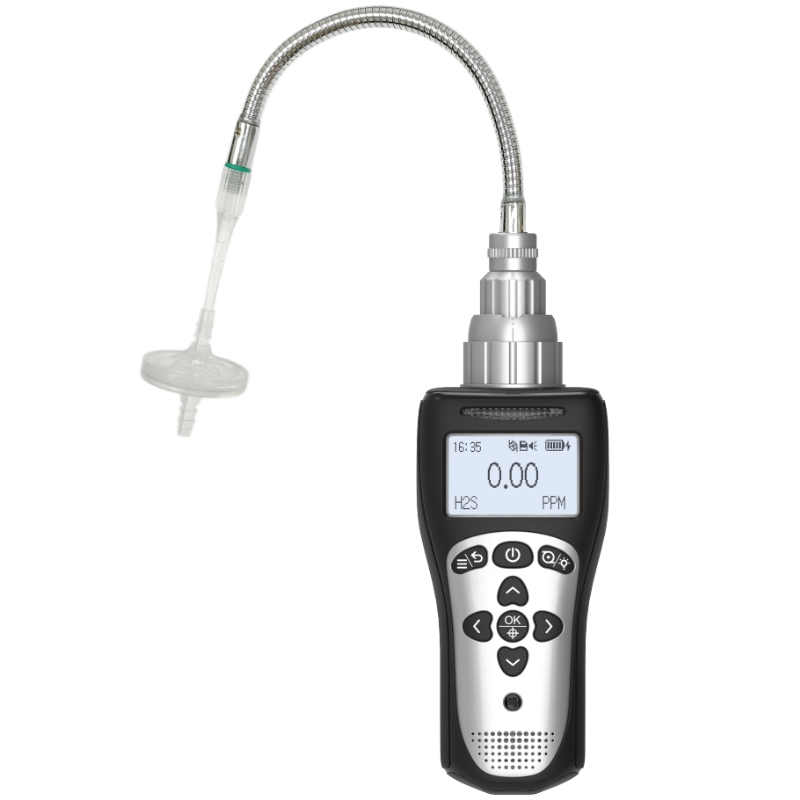
Starting Point and Benchmark: Adhering to Manufacturer Recommendations and Regulatory Requirements
For every oxygen detectors shipped from the factory, manufacturers explicitly state the recommended calibration cycle in technical manuals or user guides. This typically serves as the logical starting point for determining calibration frequency. Most manufacturers suggest a standard calibration cycle of every 3 to 6 months, but this is merely a baseline value.
In developed countries like Europe and the US, compliance serves as a hard constraint for cycle determination. For instance, agencies such as the US OSHA (Occupational Safety and Health Administration) or the UK HSE (Health and Safety Executive) may impose stricter regulations for specific industries (e.g., confined space entry operations). If local regulations mandate “functional testing before each use” or “full-range calibration quarterly,” enterprises must adhere to the most stringent standard. In short, regulatory requirements form the baseline, while manufacturer recommendations serve as a reference. The stricter of the two should be adopted as the initial calibration schedule.
Risk Assessment: Impact of Environmental Factors on Sensor Degradation
The core of determining calibration intervals lies in “risk assessment.” Different industrial environments exert vastly different levels of “wear and tear” on oxygen sensors (whether electrochemical or paramagnetic).
First, consider environmental contaminants. If detectors are continuously exposed to air containing silicones, hydrogen sulfide, or halogenated hydrocarbons, electrochemical sensors are highly susceptible to “poisoning” or “inhibition,” causing reading drift. In such highly polluted environments (e.g., petrochemical refineries, wastewater treatment plants, or spray booths), calibration intervals must be significantly shortened—potentially requiring adjustment from standard quarterly calibrations to monthly or even weekly calibrations.
Second, temperature and humidity fluctuations are critical variables. While modern detectors feature temperature compensation, extreme thermal cycling or prolonged high humidity can accelerate electrolyte evaporation or medium degradation. For outdoor use or areas with unstable environmental control, increased calibration frequency is recommended to counteract measurement deviations caused by environmental factors.
Sensor Technology Types: Differences Between Electrochemical and Infrared
Determining calibration intervals also requires consideration of the sensor technology employed. Most mainstream oxygen detectors currently use electrochemical sensors. These sensors are consumables; their internal electrolyte naturally dissipates over time, and they exhibit a gradual decline in sensitivity (typically lasting 2-3 years). Therefore, for electrochemical sensors, calibration intervals are typically set conservatively (e.g., every 3 months) to monitor the rate of sensitivity decline and ensure timely replacement before performance degradation occurs.
In contrast, non-consumable oxygen sensors utilizing ultrasonic or laser technology generally have longer lifespans and calibration intervals. These sensors do not suffer from electrolyte depletion issues and offer higher stability. If enterprises utilize such high-end equipment, calibration intervals can be extended to 6 or even 12 months under controlled risk conditions, but this must be supported by long-term stability data.
Historical Data and Trend Analysis: Shifting from “Scheduled” to “Predictive”
Mature plant management increasingly favors data-driven decision-making. Companies should establish detailed equipment calibration records, documenting the deviation values before each calibration. If consecutive calibrations consistently show highly accurate readings with minimal deviation (e.g., within ±1%) and sufficient margin, this indicates the current environment has minimal impact on the sensor. In such cases, companies may consider appropriately extending calibration intervals.
Conversely, if historical records show that each calibration requires significant adjustments to potentiometers or software parameters, this indicates high drift rates for the equipment in that environment. In such cases, rigid adherence to the original cycle should be avoided. Instead, proactively shorten calibration intervals or even replace the sensor type with one better suited to the environment. This “trend analysis”-based approach optimizes maintenance resources, reducing unnecessary downtime and labor costs while ensuring safety.
Emergency Situations and Functional Testing: Routine Maintenance Beyond Calibration
Finally, determining calibration intervals must account for exceptional circumstances. Immediate recalibration is required following any physical impact (such as a drop), exposure to high-concentration gas surges, or prolonged use in dusty environments—regardless of whether the scheduled interval has been reached.
Furthermore, industry best practices emphasize the distinction between “functional testing” and “calibration.” Calibration adjusts the instrument to meet standards, while functional testing verifies alarm accuracy using gases of known concentration. Many safety experts recommend that operators perform simple “shock tests” between full-range calibrations (e.g., daily or weekly). This ensures the detector remains combat-ready at all times, filling safety gaps even when calibration intervals are extended through routine validation mechanisms.
In summary, determining oxygen detectors calibration intervals is a comprehensive technical decision. It begins with manufacturer guidelines and regulatory thresholds, is influenced by the severity of the field environment, relies on sensor technology characteristics, and is ultimately dynamically adjusted based on historical data trends. For enterprises, the most prudent approach is to establish a conservative initial plan, then progressively optimize it based on operational data to achieve the optimal balance between safety compliance and operational efficiency.
Related information
-
How to Calibrate a Portable four-in-one Gas Detectors?
Portable four-in-one gas detectors are core protective equipment in the industrial safety field. However, sensors can experience z...
2026-09-18 -
What are the application scenarios for portable four-in-one gas detectors?
Portable four-in-one gas detectors typically monitor oxygen (O₂), flammable gas (LEL), carbon monoxide (CO), and hydrogen sulfide...
2026-09-16 -
Portable four-in-one Gas Detectors User Manual
The portable four-in-one gas detectors is a core piece of personal protective equipment (PPE) for ensuring the safety of personnel...
2026-09-14 -

Calibration Specifications for Ammonia gas Detectors
Calibration of ammonia gas detectors is a core step in ensuring their measurement accuracy and alarm reliability. However, ammonia...
2026-09-11 -
What is the appropriate installation height for an ammonia gas detectors?
Ammonia (NH₃) has a relative density of only 0.59, much lighter than air. This means that in the event of a leak, the gas will qu...
2026-09-09
 info@eranntexgas.com sale1@eranntexgas.com


 15914124845