
How long is the service life of a carbon dioxide detectors?
Publication Date:2026/03/04The service life of a carbon dioxide detectors is a core concern for many users during procurement, deployment, and maintenance. Unlike disposable consumer goods, carbon dioxide detectors represent a long-term investment. Their lifespan not only impacts operational costs but also directly affects data reliability and personnel safety. However, the lifespan of a CO₂ detector is not a fixed figure. It is a combined result determined by sensor technology, operating environment, maintenance frequency, and device design. Understanding these factors helps users make more informed decisions. Below, Yiyuntian Eranntex provides a detailed explanation.
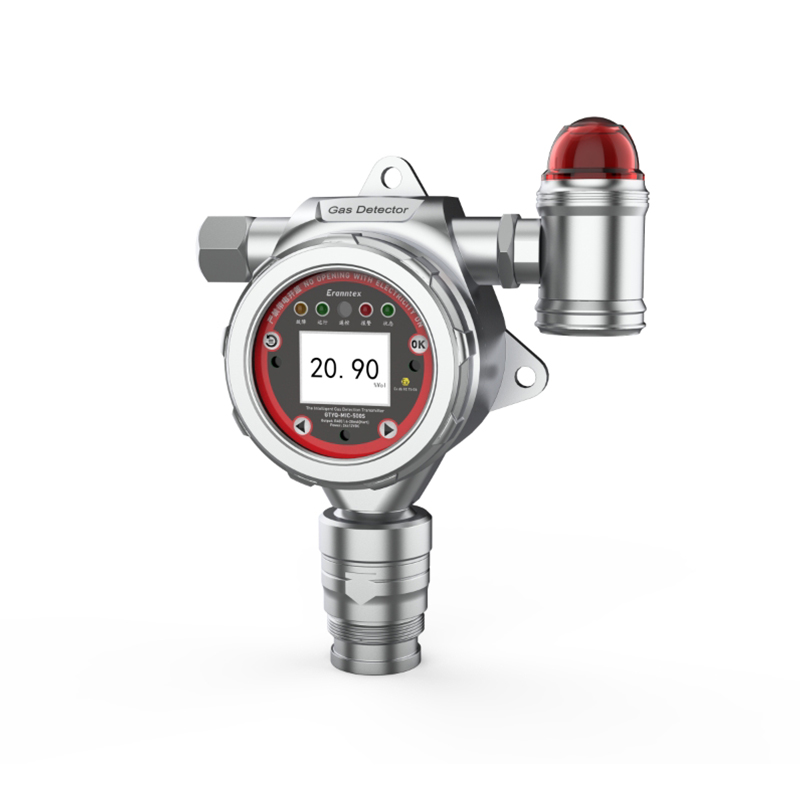
Currently, the vast majority of professional-grade CO₂ detectors utilize non-dispersive infrared (NDIR) sensing technology. This internationally recognized mainstream solution is widely applied in building automation, greenhouse cultivation, indoor air quality monitoring, and industrial process control due to its high selectivity, low drift, and long lifespan. NDIR sensors themselves involve no consumable chemical reactions and can theoretically operate for over 10 years. However, the overall device lifespan is typically constrained by other components—such as electronic circuits, displays, batteries, pumps (if aspirated), and the degree of optical window contamination. Therefore, a properly maintained CO₂ monitor typically has an effective operational lifespan of 5 to 10 years.
In contrast, some low-cost devices may employ metal oxide semiconductor (MOS) sensors or indirect estimation methods (e.g., calculating CO₂ from VOCs or temperature/humidity). These sensors have shorter lifespans (typically 1–3 years), are susceptible to interference from alcohol, cleaning agents, or other volatile substances, and exhibit poor long-term stability. For users who genuinely rely on CO₂ data for decision-making, selecting devices based on NDIR technology is essential for extending service life and ensuring accuracy.
Of course, technology is only the foundation; the operating environment significantly impacts longevity. In clean, temperature- and humidity-controlled offices or residences, CO₂ detectors require almost no maintenance and can approach their maximum lifespan. However, in environments with high dust, humidity, corrosive gases (like ammonia or hydrogen sulfide), or extreme temperatures, the optical window may become contaminated, and internal components may age more rapidly. For instance, in livestock farms, wastewater treatment plants, or industrial workshops, models with protective filters and an IP65 or higher rating are recommended. Additionally, regularly cleaning the air intake helps prevent performance degradation.
Maintenance strategies also significantly impact actual lifespan. While NDIR sensors don't require frequent replacement like electrochemical sensors, regular calibration remains essential. Most manufacturers recommend calibration every 6–12 months. Some CO₂ detectors feature automatic baseline correction (ABC), which compensates for minor drift by identifying the long-term minimum CO₂ value. However, ABC may fail in persistently high-concentration environments (e.g., greenhouses or fermentation facilities), necessitating manual calibration. Neglecting calibration leads to inaccurate readings. Even if the device “still functions,” the data becomes unreliable—effectively ending its useful life from a practical standpoint.
Additionally, batteries and power systems represent another longevity bottleneck. CO₂ detectors using non-replaceable lithium batteries typically have a cycle life of 2–5 years. Fixed installations employing external power supplies with backup batteries generally achieve longer overall lifespans. Users should prioritize manufacturers offering modular designs—such as replaceable sensors or mainboards—which significantly reduce long-term ownership costs.
Finally, from international compliance and asset management perspectives, many enterprises enforce mandatory retirement cycles for gas detection equipment regardless of operational status. This risk-control measure addresses challenges in maintaining compliance with aging devices: even if functional, they may become non-compliant due to discontinued spare parts, software incompatibility, or difficulties in calibration traceability.
In summary, a CO₂ detector employing NDIR technology for routine environmental monitoring, when properly maintained, typically has a service life of 5 to 10 years. To maximize its value, users should: select reliable brands with appropriate protection ratings, avoid harsh exposure, perform regular calibrations, and establish equipment lifecycle management records. For professionals, treating CO₂ detectors as “long-term assets” rather than “disposable items” and planning procurement and maintenance budgets accordingly represents best practice for achieving safety, efficiency, and sustainability.
Related information
-
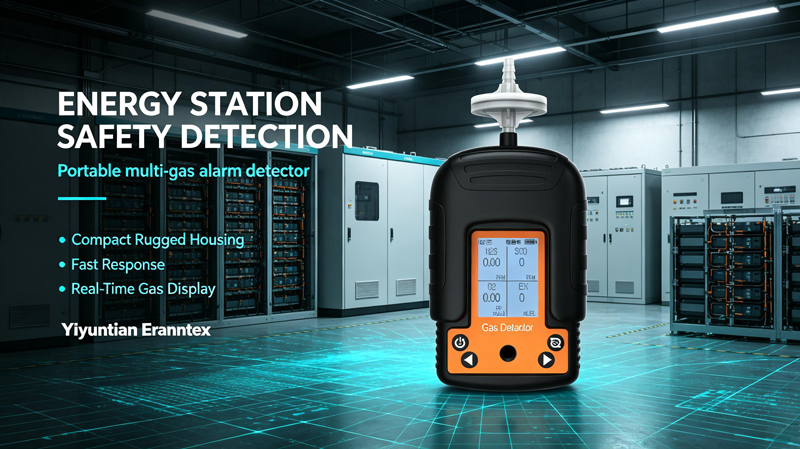
How to Calibrate a Portable four-in-one Gas Detectors?
Portable four-in-one gas detectors are core protective equipment in the industrial safety field. However, sensors can experience z...
2026-09-18 -
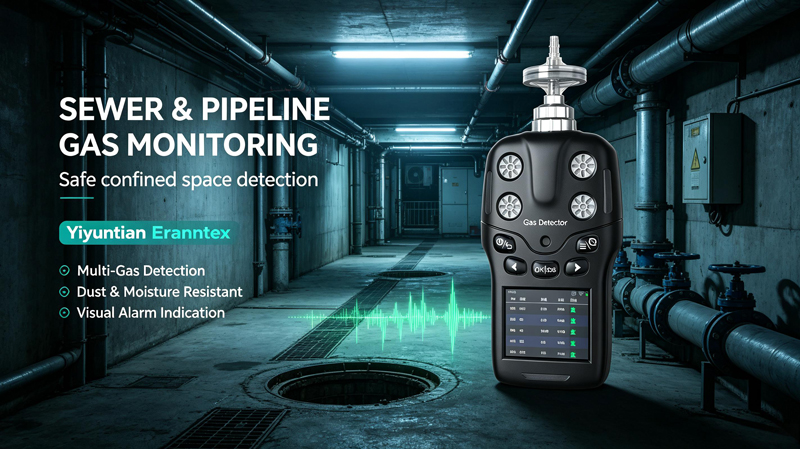
What are the application scenarios for portable four-in-one gas detectors?
Portable four-in-one gas detectors typically monitor oxygen (O₂), flammable gas (LEL), carbon monoxide (CO), and hydrogen sulfide...
2026-09-16 -
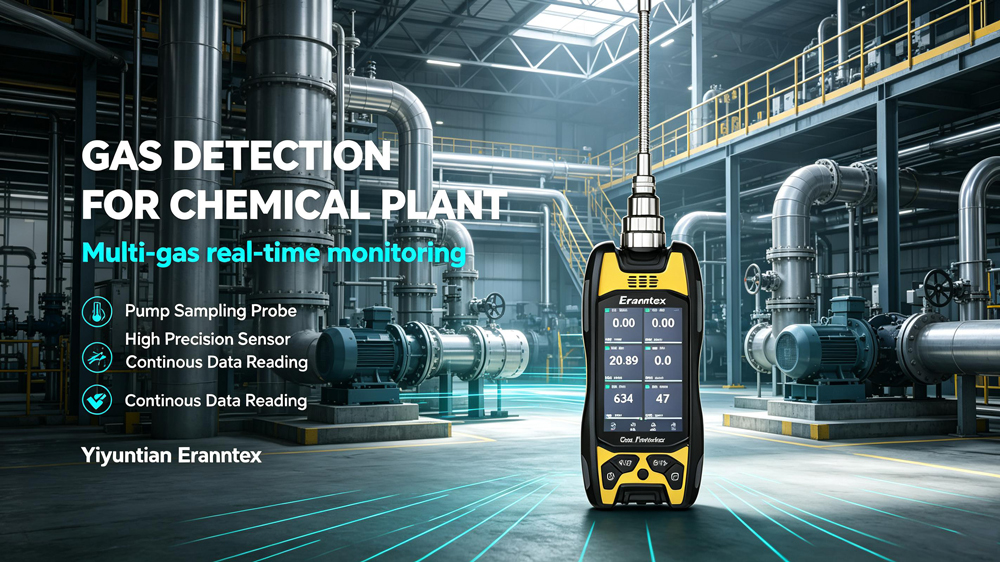
Portable four-in-one Gas Detectors User Manual
The portable four-in-one gas detectors is a core piece of personal protective equipment (PPE) for ensuring the safety of personnel...
2026-09-14 -

Calibration Specifications for Ammonia gas Detectors
Calibration of ammonia gas detectors is a core step in ensuring their measurement accuracy and alarm reliability. However, ammonia...
2026-09-11 -
What is the appropriate installation height for an ammonia gas detectors?
Ammonia (NH₃) has a relative density of only 0.59, much lighter than air. This means that in the event of a leak, the gas will qu...
2026-09-09
 info@eranntexgas.com sale1@eranntexgas.com


 15914124845