
What are the setting requirements of combustible gas alarm?
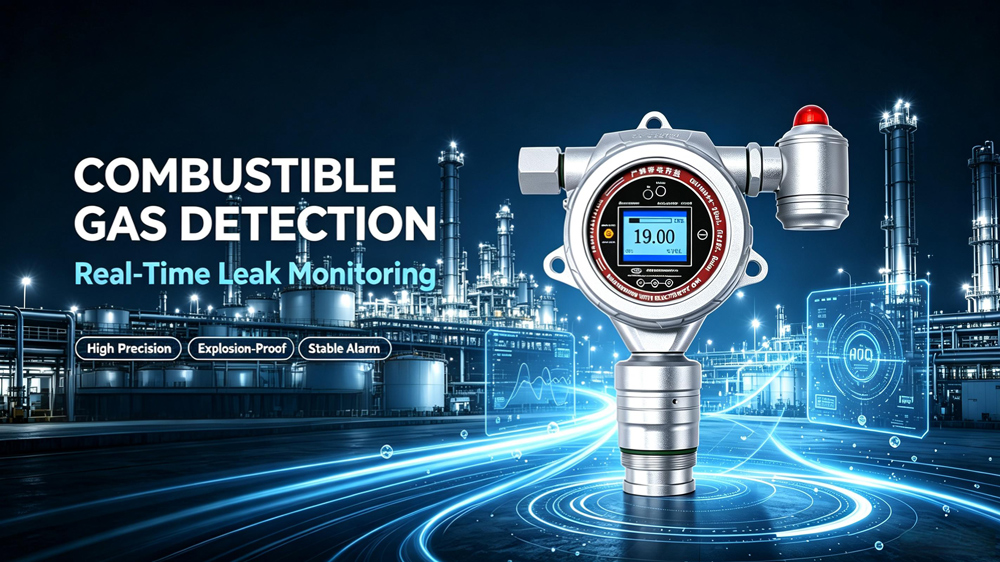
Publication Date:2023/02/17 The main function of the combustible gas alarm is to detect the change of the concentration of combustible gas, and to give an alarm in advance when the leakage concentration of combustible gas in the protected area is lower than the lower explosion limit, so as to prevent the occurrence of fire and explosion accidents caused by the leakage of combustible gas. However, we are installing a combustible gas alarm for the setting is also required. Do you know the requirements for setting up combustible gas alarm ? The following is a brief introduction by yi yun Tian:

Combustible Gas Alarm Setup Requirements:
1. The combustible gas alarm with the detected gas density less than the air density shall be set at the top of the protected space, and the combustible gas alarm with the detected gas density greater than the air density shall be set at the lower part of the protected space, when the detected gas density is equal to the air density, the combustible gas alarm can be arranged in the middle or the top of the protected space.
2. The combustible gas alarm should be installed near the place where combustible gas may be generated. The closer to the place where combustible gas may leak, the higher the sensitivity of the detector.
3. the detection and protection radius of point combustible gas alarm shall conform to the current national standard "code for design of detection and alarm of combustible gas and toxic gas in petrochemical industry" GB relevant provisions of the 50493. The protection radius of the combustible gas alarm should not be too large, otherwise the sensitivity of the detector may be reduced due to the irregular diffusion of the leaked combustible gas.
4. Linear combustible gas alarm is mainly used to detect combustible gas leakage in large space and open environment. In order to ensure the detection sensitivity of the detector, the length of the detection area should not be greater than 60m.
To sum up, it is the setting requirement of combustible gas alarm. It is worth noting that if the combustible gas alarm is set up in places with explosion-proof requirements, it should also meet the relevant explosion-proof requirements.
Related information
-
How to Calibrate a Portable four-in-one Gas Detectors?
Portable four-in-one gas detectors are core protective equipment in the industrial safety field. However, sensors can experience z...
2026-09-18 -
What are the application scenarios for portable four-in-one gas detectors?
Portable four-in-one gas detectors typically monitor oxygen (O₂), flammable gas (LEL), carbon monoxide (CO), and hydrogen sulfide...
2026-09-16 -
Portable four-in-one Gas Detectors User Manual
The portable four-in-one gas detectors is a core piece of personal protective equipment (PPE) for ensuring the safety of personnel...
2026-09-14 -

Calibration Specifications for Ammonia gas Detectors
Calibration of ammonia gas detectors is a core step in ensuring their measurement accuracy and alarm reliability. However, ammonia...
2026-09-11 -
What is the appropriate installation height for an ammonia gas detectors?
Ammonia (NH₃) has a relative density of only 0.59, much lighter than air. This means that in the event of a leak, the gas will qu...
2026-09-09
 info@eranntexgas.com sale1@eranntexgas.com


 15914124845