
How to adjust the alarm limit of the oxygen detector in different application scenarios?
Publication Date:2024/07/19 In industrial environments, the safe range of oxygen concentration may vary depending on the production process, equipment type, and other factors. Therefore, we need to carefully adjust the alarm limit of the oxygen detector according to the characteristics and requirements of different application scenarios to meet the needs of different industrial environments. Do you know how to adjust the alarm limit of oxygen detector in different application scenarios? The following is an introduction to yiyuntian electronic editor:

how to adjust the alarm limit of oxygen detector in different application scenarios:
1. Generic Principles
/span>
(1) Safety range:
According to national standards and relevant industry standards, the safe range of oxygen concentration is usually between 19.5%VOL and 23.5%VOL.Therefore, in most cases, the oxygen detector alarm setting can be set to 19.5%VOL for oxygen deficiency and 23.5%VOL for oxygen enrichment.
(2) Industry standards:
Different industries may have their own specific standards. Therefore, when setting the alarm limit of the oxygen detector, you should refer to the specific requirements of the industry.
(3) User requirements:
The alarm limit can be flexibly adjusted according to the characteristics of specific application scenarios and user requirements. For example, in the field of fire safety, it may be necessary to set the alarm limit of the oxygen detector to be lower in order to detect fire hazards in time.
2. adjustments for specific application scenarios
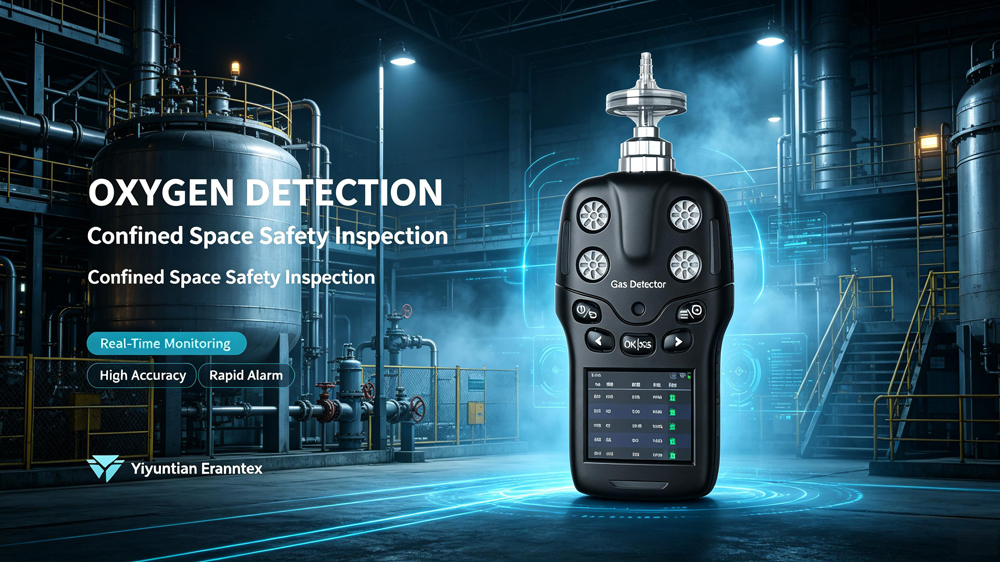
Before performing confined space operations, an oxygen detector should be used for gas testing to confirm that the oxygen concentration meets safety standards (generally 19.5%VOL to 23.5%VOL).If the site conditions are complex, there may be a risk of rapid oxygen concentration change, and the oxygen deficiency alarm value can be appropriately reduced to improve the alarm sensitivity.
(2) Closed Vessel Monitoring
(3) Applications in Medical Environments
(4) Laboratories and Research Sites
In scientific research sites involving oxygen-sensitive experiments or the use of high-purity oxygen, oxygen concentration changes should be closely monitored. At this time, the oxygen detector should set accurate alarm limits according to the experimental requirements, and ensure that it is linked with the ventilation system, emergency cut-off device, etc., to form a complete safety protection system.
To sum up, it is the adjustment method of the alarm limit of the oxygen detector under different application scenarios.Through reasonable settings and adjustments, we can ensure that the oxygen detector plays an important role at critical moments, thereby ensuring the safety of personnel and the stability of the production environment.
Related information
-
How to Calibrate a Portable four-in-one Gas Detectors?
Portable four-in-one gas detectors are core protective equipment in the industrial safety field. However, sensors can experience z...
2026-09-18 -
What are the application scenarios for portable four-in-one gas detectors?
Portable four-in-one gas detectors typically monitor oxygen (O₂), flammable gas (LEL), carbon monoxide (CO), and hydrogen sulfide...
2026-09-16 -
Portable four-in-one Gas Detectors User Manual
The portable four-in-one gas detectors is a core piece of personal protective equipment (PPE) for ensuring the safety of personnel...
2026-09-14 -

Calibration Specifications for Ammonia gas Detectors
Calibration of ammonia gas detectors is a core step in ensuring their measurement accuracy and alarm reliability. However, ammonia...
2026-09-11 -
What is the appropriate installation height for an ammonia gas detectors?
Ammonia (NH₃) has a relative density of only 0.59, much lighter than air. This means that in the event of a leak, the gas will qu...
2026-09-09
 info@eranntexgas.com sale1@eranntexgas.com


 15914124845