
What is the gas detector showing negative drift?
Publication Date:2024/08/30 We are in the process of using the gas detector, for various reasons, sometimes there will be negative drift. The negative drift of the gas detector means that the measurement display result has a negative shift or drift, which usually indicates that the measurement result of the gas detector is inaccurate, and the detected value will be smaller than the actual value. So do you know how Gas Detector shows negative drift? The following is a brief introduction by yiyuntian electronics:
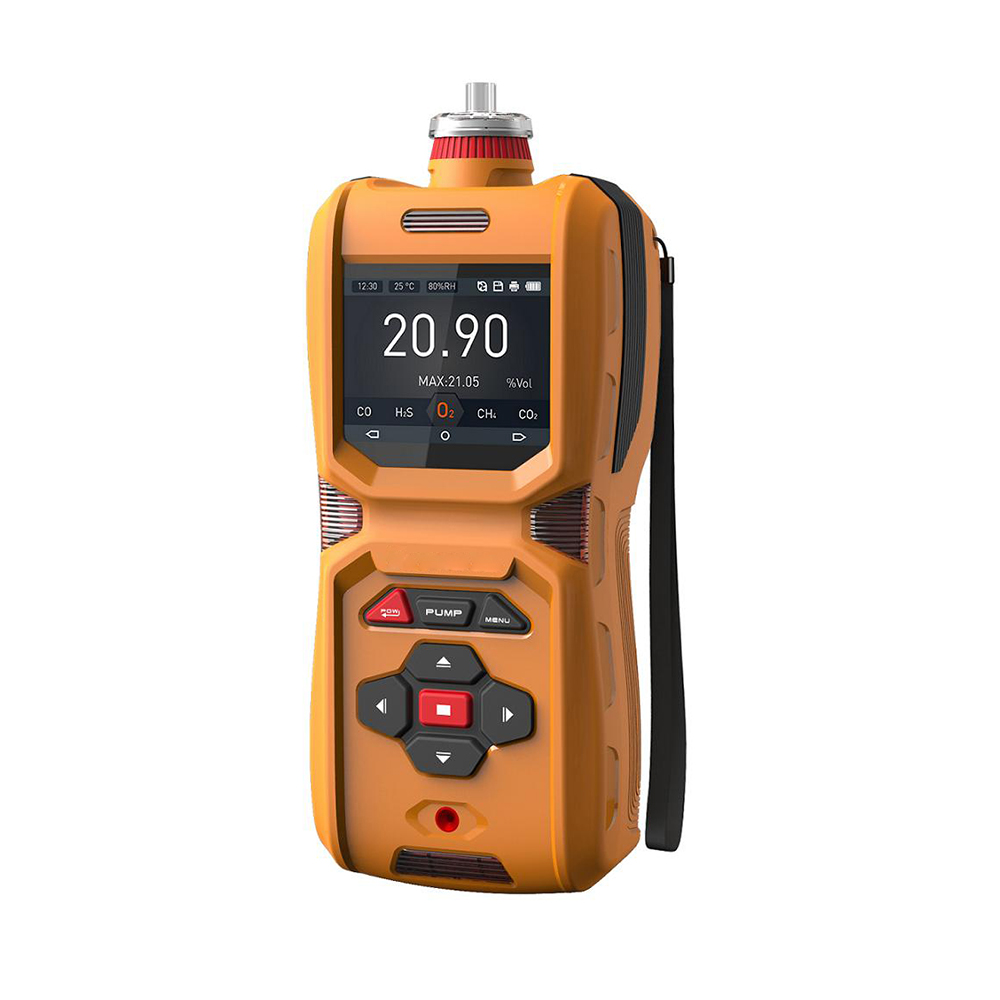
1. negative drift causes
/strong>
(1) Zero drift:
Definition: Due to the influence of factors such as temperature change and unstable power supply voltage in the field working environment where the gas detector is located, the voltage at the output end of the circuit deviates from the original fixed value and moves up and down.Specifically, when the gas detector detects that the gas concentration value is 0 when it is normal, 0 should be displayed, but after zero drift occurs, the measurement result displayed by the gas detector may not be 0, but a negative value. Therefore, the zero drift will cause the measurement results of the gas detector to be inaccurate, and then affect the judgment of the gas concentration.
(2) Negative cross-talk:
When the gas detector sensor is placed in a gas that produces negative cross interference, it may also produce negative readings. For example, a sulfur dioxide sensor in a nitrogen dioxide environment may produce negative cross-talk, resulting in a negative reading.
(3) Zero Miscalibration:
The zero point of the gas detector is calibrated in an environment actually containing a certain concentration of target gas. When the gas concentration content in the environment is less than the concentration value at the time of calibration, the gas detector will display a negative gas concentration.
(4) Instrument failure:
Sensor failure, internal circuit board, wiring, and software problems may cause the gas detector to display negative drift.
2. countermeasures
(1) Re-calibrate zero:
Recalibrate the gas detector at zero point in a clean air or high-purity nitrogen environment without the target gas. Specific operation can refer to the gas detector manual or contact the manufacturer for technical support.
(2) Check environmental factors:
Check whether the environment of the gas detector has temperature changes, unstable power supply voltage and other factors that may cause zero drift, and take corresponding measures to improve it.
(3) Avoid negative cross-talk:
Understand and avoid placing the sensor in a gas environment that may produce negative cross interference. If it is unavoidable, consider using multiple gas detectors and using multiple sensors at the same time to obtain more accurate data.
(4) Periodic maintenance and calibration:
The gas detector should be maintained and calibrated regularly to ensure its accuracy and reliability. According to the requirements of the metrological verification regulations, the gas detector shall be submitted for metrological verification at least once a year.
(5) Contact after-sales personnel:
If none of the above measures can solve the problem, it is recommended to contact the after-sales personnel of the gas detector or the technical support of the manufacturer in time to obtain professional help and solutions.
In summary, we can see that the negative drift of the gas detector is a problem that needs attention, which may affect the accuracy and reliability of the measurement results.Therefore, when the gas detector shows negative drift, we can take appropriate measures and solutions to effectively solve these 1 problems and ensure the normal operation of the gas detector.
Related information
-
How to Calibrate a Portable four-in-one Gas Detectors?
Portable four-in-one gas detectors are core protective equipment in the industrial safety field. However, sensors can experience z...
2026-09-18 -
What are the application scenarios for portable four-in-one gas detectors?
Portable four-in-one gas detectors typically monitor oxygen (O₂), flammable gas (LEL), carbon monoxide (CO), and hydrogen sulfide...
2026-09-16 -

Portable four-in-one Gas Detectors User Manual
The portable four-in-one gas detectors is a core piece of personal protective equipment (PPE) for ensuring the safety of personnel...
2026-09-14 -

Calibration Specifications for Ammonia gas Detectors
Calibration of ammonia gas detectors is a core step in ensuring their measurement accuracy and alarm reliability. However, ammonia...
2026-09-11 -
What is the appropriate installation height for an ammonia gas detectors?
Ammonia (NH₃) has a relative density of only 0.59, much lighter than air. This means that in the event of a leak, the gas will qu...
2026-09-09



 info@eranntexgas.com sale1@eranntexgas.com


 15914124845