
What are the reasons for the inaccurate zero adjustment of the hydrogen detector?
Publication Date:2024/11/20 After completing the zeroing procedure of the hydrogen detector, if the displayed value still fails to return to zero, or there is a large deviation from the theoretical expected value, this often means that there are some unresolved problems or anomalies. This phenomenon not only affects the accuracy and reliability of the hydrogen detector, but also poses a potential threat to production safety. Do you know the reasons for inaccurate zeroing of hydrogen detector ? The following is a brief introduction by yiyuntian electronics:
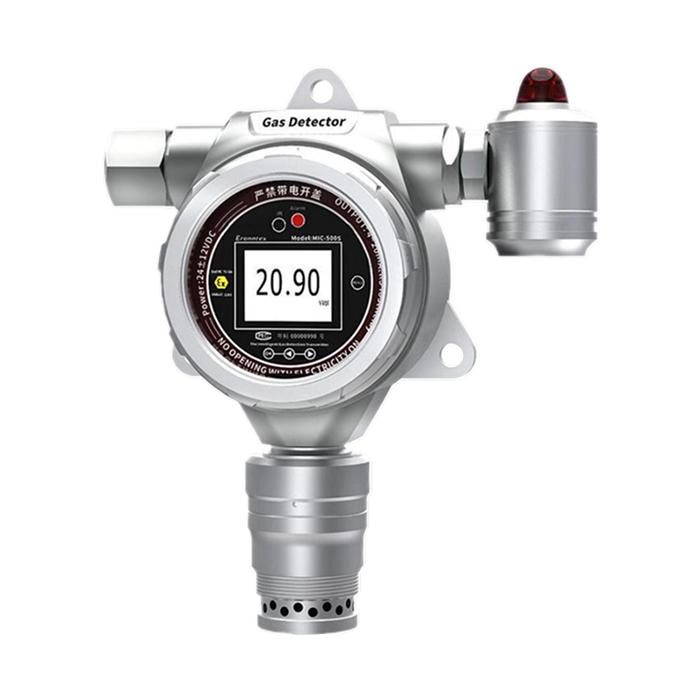
possible reasons for inaccurate zero adjustment of hydrogen detector:
(1) Environmental factors:
Once there is hydrogen or other interference gases in the environment when the hydrogen detector is zeroed, it will affect the reading of the sensor and cause the zeroing to be inaccurate.At the same time, changes in environmental conditions such as temperature and humidity may also affect the performance of the sensor, thereby affecting the accuracy of zeroing.
(2) Sensor problem:
The sensor is aged or damaged, resulting in reduced or unstable response of the hydrogen detector to hydrogen. If the sensor surface is contaminated, such as dust, oil, etc., will also affect its measurement accuracy.
(3) Instrument failure:
The internal circuit or component of the hydrogen detector fails, causing the instrument to fail to work normally or the measurement is inaccurate. At the same time, the calibration parameters of the hydrogen detector are mistakenly changed or lost, which will also affect its measurement accuracy.
(4) Improper operation:
During the zeroing process, the correct operation was not performed according to the instructions in the operation manual. If the zero adjustment does not wait for the hydrogen detector to fully warm up or stabilize, the zero adjustment result will be inaccurate.
Solution to Inaccurate Zero Adjustment of Hydrogen Detector:
(1) Optimize the zeroing environment:
Ensure that the hydrogen detector zeroing environment is safe and stable, away from potential sources of hydrogen leakage.Before zeroing, purge the sensor with clean dry air or nitrogen to remove impurities and gas residues. At the same time, the temperature and humidity of the zeroing environment are controlled to reduce the impact on sensor performance.
(2) Inspect and maintain the sensor:
Regularly check the status of the sensor to ensure that the surface of the hydrogen detector is clean and free of pollution. If the sensor is found to be aging or damaged, it should be replaced with a new sensor in time.
(3) Inspection and maintenance of instruments:
If you suspect that there is an internal failure of the hydrogen detector, you should contact the manufacturer or professional maintenance personnel for inspection and maintenance. At the same time, it should be ensured that the calibration parameters of the hydrogen detector are correct, and if necessary, recalibration can be carried out.
(4) Standardize the operation process:
Carefully read and follow the instructions in the operation manual for zeroing. Before zeroing, ensure that the hydrogen detector is sufficiently warmed up and stable. If you are not sure how to do this, you can contact the manufacturer or professional for guidance.
In summary, we can see that the inaccurate zeroing of the hydrogen detector may be caused by a variety of factors. We must deeply analyze and identify the specific reasons for the inaccurate zeroing, and take corresponding corrective measures, to ensure that the hydrogen detector can be accurate and stable operation, so as to provide a strong guarantee for industrial safety.
Related information
-
How to Calibrate a Portable four-in-one Gas Detectors?
Portable four-in-one gas detectors are core protective equipment in the industrial safety field. However, sensors can experience z...
2026-09-18 -
What are the application scenarios for portable four-in-one gas detectors?
Portable four-in-one gas detectors typically monitor oxygen (O₂), flammable gas (LEL), carbon monoxide (CO), and hydrogen sulfide...
2026-09-16 -

Portable four-in-one Gas Detectors User Manual
The portable four-in-one gas detectors is a core piece of personal protective equipment (PPE) for ensuring the safety of personnel...
2026-09-14 -

Calibration Specifications for Ammonia gas Detectors
Calibration of ammonia gas detectors is a core step in ensuring their measurement accuracy and alarm reliability. However, ammonia...
2026-09-11 -
What is the appropriate installation height for an ammonia gas detectors?
Ammonia (NH₃) has a relative density of only 0.59, much lighter than air. This means that in the event of a leak, the gas will qu...
2026-09-09



 info@eranntexgas.com sale1@eranntexgas.com


 15914124845